Built in Trieste, Tihany carried coal along the Kotor–Bar route. It ran aground in February 1917. Although it was pulled free, damage to the hull allowed water in and the vessel sank. No casualties were recorded. Surviving anchors, winches and bridge equipment help tell the story of everyday maritime trade.
Steamship / Boka Kotorska Bay
SS Tihany
A coal carrier whose final voyage ended near Mamula.
Original photogrammetry6.3 MB · interactive 3D · 5 points of interest
Explore SS Tihany.
The real site, captured in three dimensions.
Points of interest
Select a point to fly to it on the scan and read what divers find there.
From the collection
Closer to the evidence.
The research narrative
A deeper reading.
Steamship Tihany
Resting almost upright on a sandy seabed near Mamula Island, the Austro-Hungarian steamship Tihany is one of the most impressive and best-preserved historic wrecks in the Bay of Kotor. Its recognizable hull, surviving machinery and abundant marine life make it an exceptional underwater heritage site—but its depth of approximately 40 metres means that it is suitable only for experienced, properly qualified divers.
Built for coastal trade
Tihany was a steel passenger-and-cargo steamship built in Trieste by Stabilimento Tecnico Triestino, one of Austria-Hungary’s leading shipyards. Construction began in 1907, and the vessel was completed in 1908 under yard number 385. It was commissioned by the Hungarian-Croatian Sea Steamship Company—Società in Azioni Ungaro-Croata di Navigazione Marittima a Vapore—based in Fiume, present-day Rijeka.
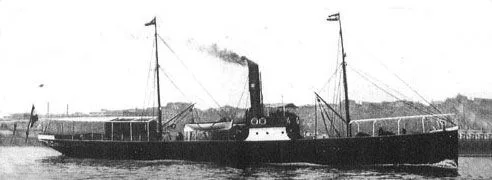
The vessel measured approximately 45.4 metres in length and 5.75 metres across the beam, with a draught of about 3 metres. It was powered by a triple-expansion steam engine driving a single propeller and reportedly reached a service speed of around 12 knots.
With two masts, a single tall funnel and cargo-handling equipment at both ends of the vessel, Tihany was typical of the smaller steamships that connected ports and island communities along the eastern Adriatic in the early twentieth century.
The name Tihany
The ship was named after Tihany, a historic settlement on the peninsula of the same name on Lake Balaton in western Hungary. The name reflected the vessel’s association with the Hungarian-Croatian shipping company that ordered and operated it.
Its home port was recorded as Unije, an island in the northern Adriatic. After entering service, Tihany operated principally between Rijeka, Zadar and Mali Lošinj, with occasional calls at ports such as Pula, Kraljevica and Bakar.
An expanding network
The construction of Tihany coincided with a period of rapid development in Adriatic shipping. Railway expansion through Bosnia and Herzegovina connected inland centres with ports such as Metković, Gruž, Split and Šibenik, while new links to the Bay of Kotor increased the movement of passengers, mail, coal and commercial goods.
Small steamships played an essential role in this transport network. They supplied islands and coastal settlements, carried passengers between regional ports and connected local economies with the larger commercial centres of Rijeka and Trieste.
Wartime service
Regular commercial navigation became increasingly difficult after the outbreak of the First World War in 1914. When Italy entered the conflict against Austria-Hungary in May 1915, Italian warships and submarines posed a direct threat to Austro-Hungarian merchant traffic in the Adriatic.
Like many civilian vessels, Tihany was withdrawn from regular service and later requisitioned for military transport. Following the Austro-Hungarian occupation of Montenegro in January 1916, the ship carried supplies between the Bay of Kotor and Antivari, present-day Bar.
These coastal voyages supported Austro-Hungarian forces in Montenegro and northern Albania. The routes were nevertheless dangerous because of enemy submarines, defensive minefields, drifting mines and the narrow navigation corridors leading through the entrance to the Bay of Kotor.
The final voyage
On 12 February 1917, Tihany departed Kotor for Bar under the command of Captain Mate Tonković. The vessel was transporting coal and oil—essential supplies for ships and military operations along the southern Adriatic coast.
At approximately 19:00, while navigating between Cape Arza and Cape Veslo, the steamship ran aground. Contemporary accounts attribute the accident to a navigational error, although darkness, wartime restrictions and the need to remain within a safe route through the defensive minefields would have made the passage especially difficult.
The ship’s crew was initially unable to free the vessel. A rescue craft arrived and successfully pulled Tihany away from the shore, but the grounding had opened the hull below the waterline.
The struggle to save her
Once refloated, Tihany began taking on water as it was towed toward the shelter of the Bay of Kotor. The crew attempted to keep the vessel afloat and reduce its weight by throwing coal overboard.
Despite these efforts, water continued to enter through the damaged hull. At approximately 21:20, only a little more than two hours after the grounding, Tihany sank near Lastavica Island—better known today as Mamula.
All members of the crew, including Captain Tonković, survived. The accident therefore left behind an important shipwreck but, unlike many wartime losses in Montenegrin waters, no maritime grave.
The wreck today
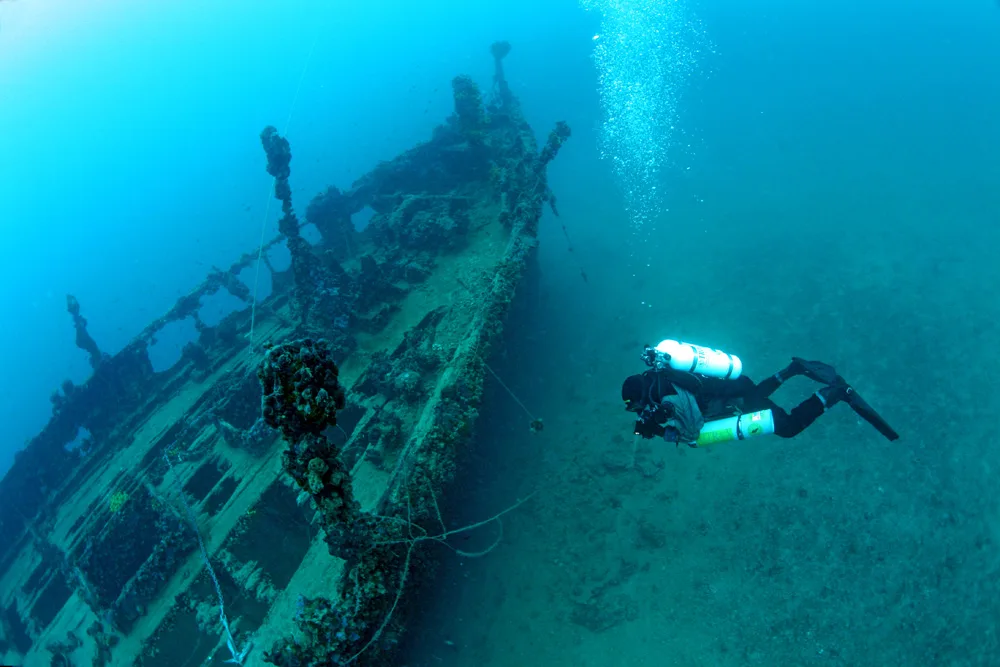
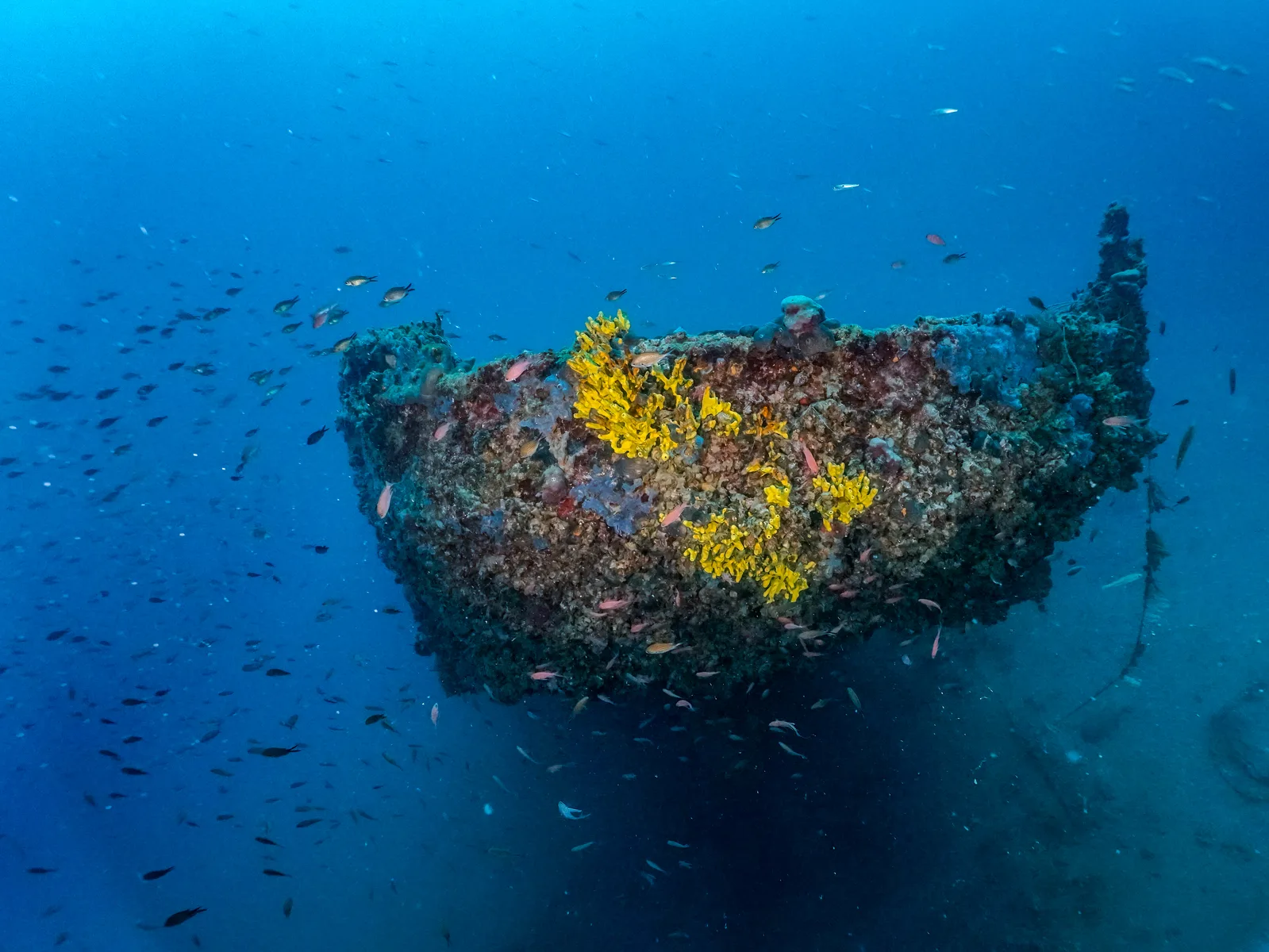
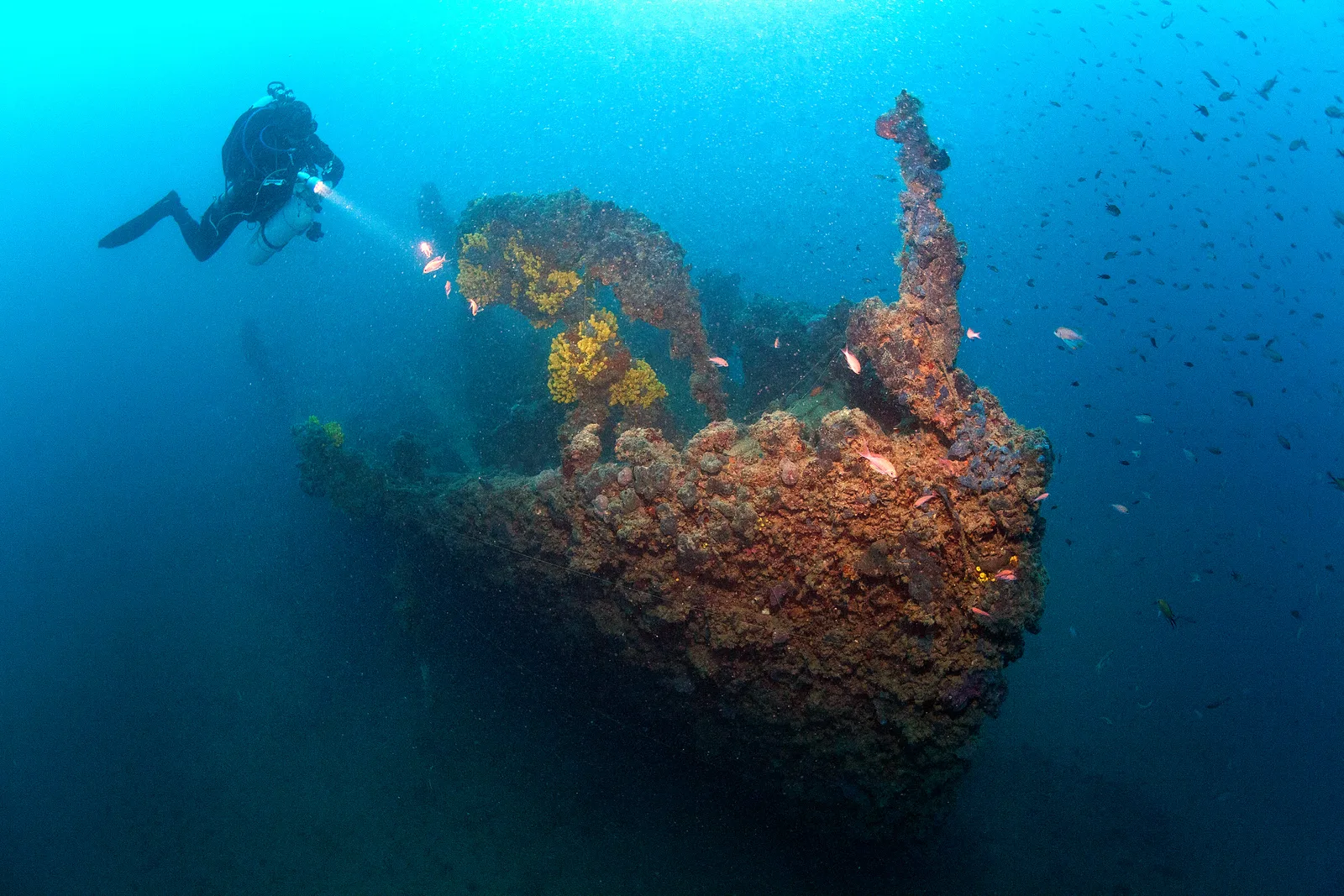
Tihany lies approximately 400 metres north of Mamula Island on a sandy seabed. The keel rests at a maximum depth of around 40 metres, while the upper parts of the wreck rise several metres above the bottom. Some published diving guides give a depth of 45 metres, probably reflecting different measurements, reference points or local seabed variation.
The hull remains largely intact and retains the clear outline of an early twentieth-century coastal steamship. It rests on its keel with a slight list, although published descriptions disagree over whether the vessel leans to port or starboard. A new archaeological survey would be required to record its present orientation and condition precisely.
The damage that caused the sinking remains visible in the hull. The site consequently preserves not only the vessel’s construction but also direct physical evidence of its grounding and unsuccessful rescue.
Surviving equipment
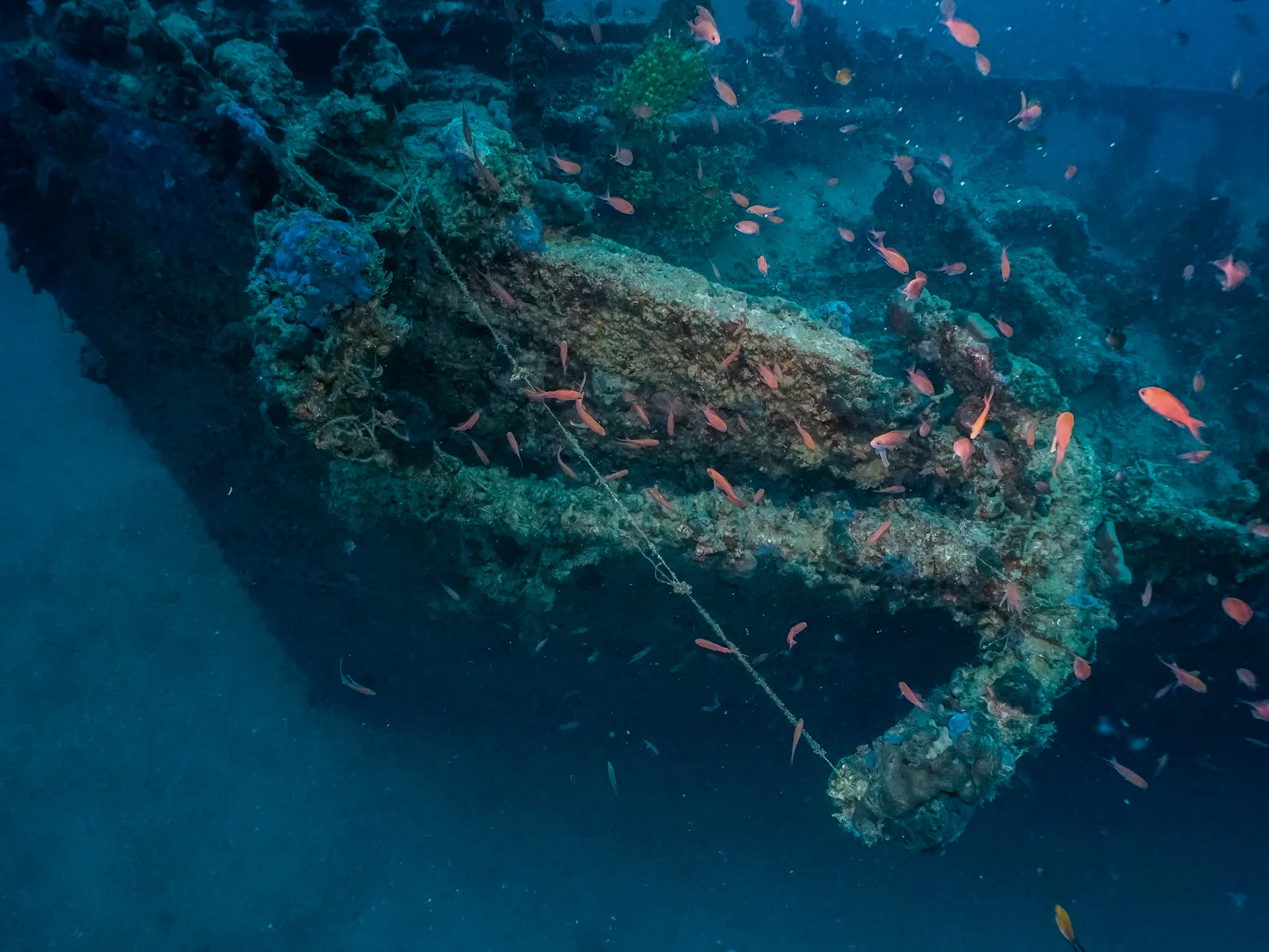
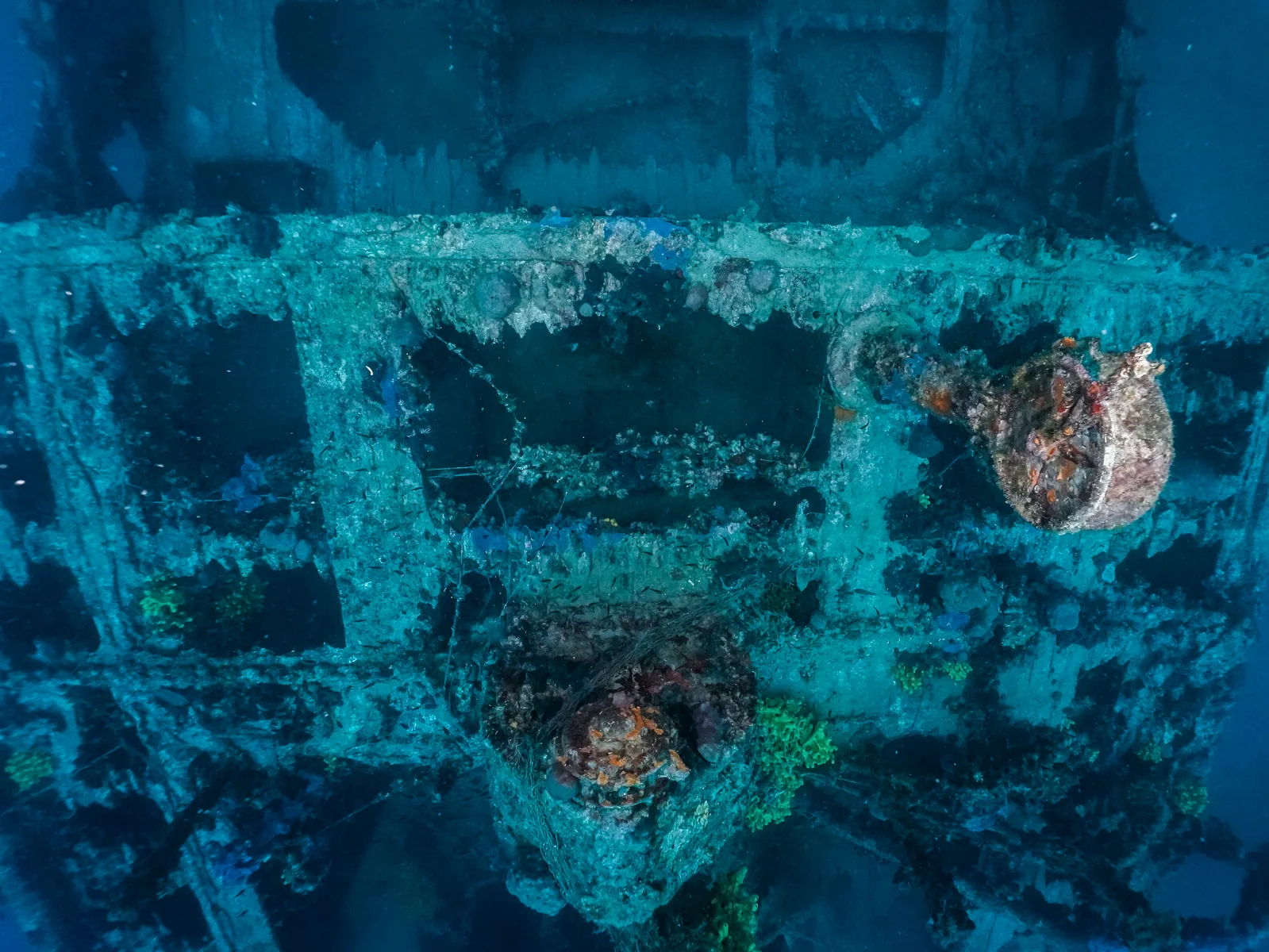
Much of Tihany’s original equipment can still be identified. At the bow are two anchors, their chains and anchor-handling machinery, together with a cargo winch. Spare anchors and other deck fittings remain within the wreck.
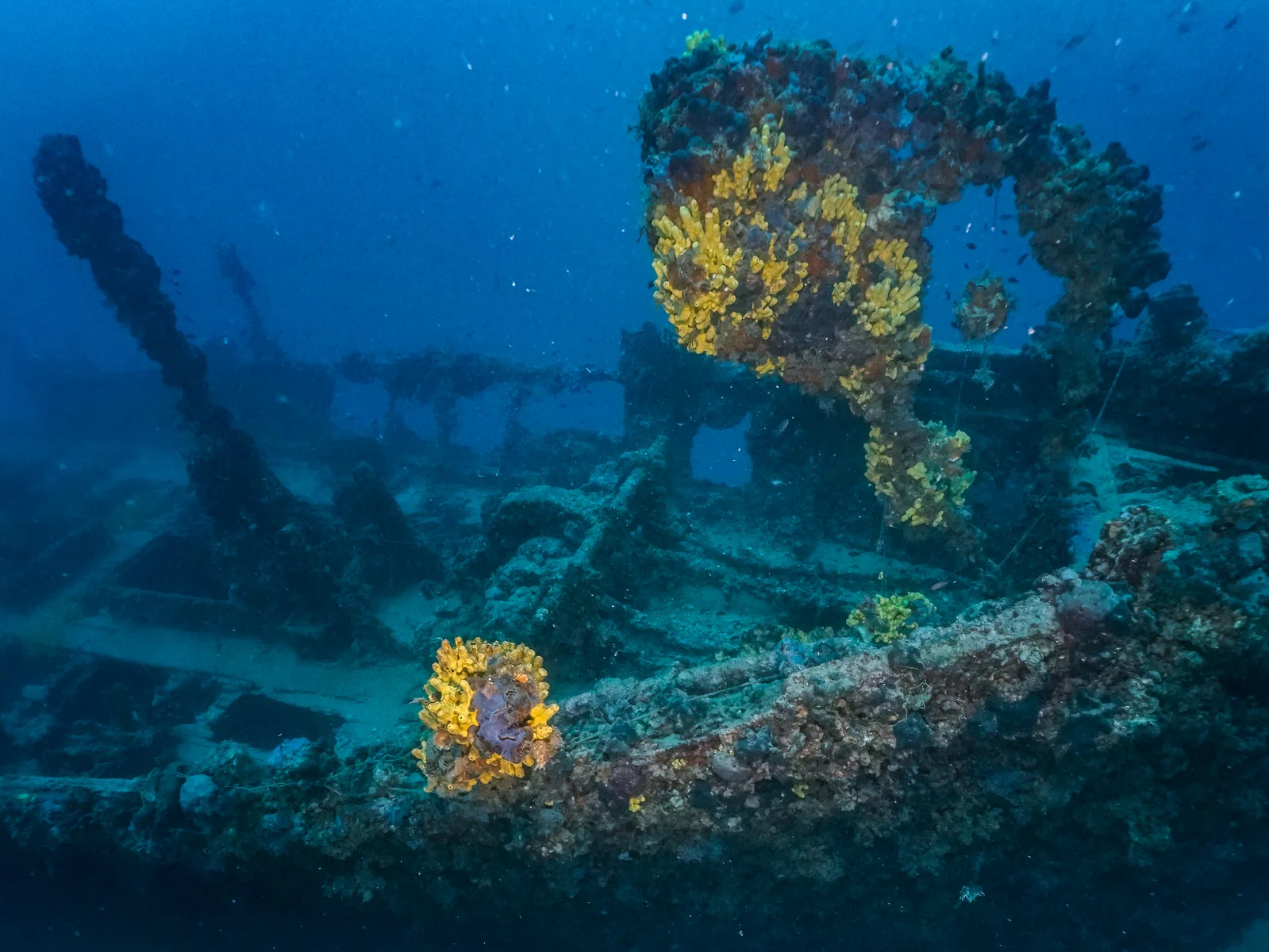
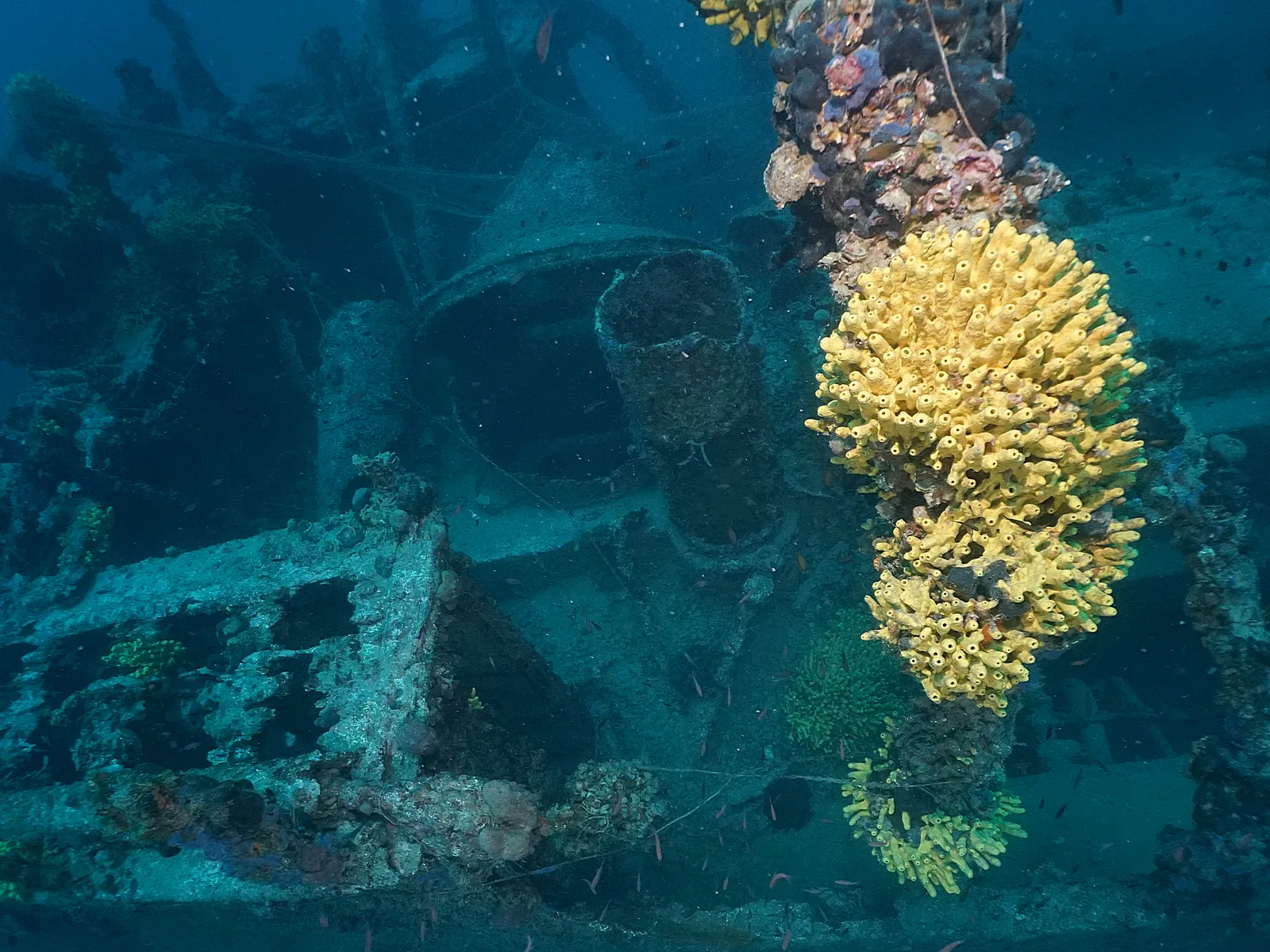
Around the former bridge area, divers have reported the engine-order telegraph, steering controls and structural elements associated with the command position. Other recognizable features include cargo-handling equipment, remains of the crew and passenger spaces, sanitary fittings and parts of the steam-propulsion system.
The quantity of surviving equipment makes Tihany particularly valuable for archaeological research. It offers an opportunity to study how a small Austro-Hungarian passenger-and-cargo steamship was constructed, arranged and operated.
A marine habitat
More than a century underwater has transformed Tihany into an artificial reef. Colourful sponges and other marine organisms cover parts of the steel hull, while schools of fish gather around the superstructure and open spaces.
This combination of preserved maritime technology and marine life creates a distinctive diving experience. The wreck can rarely be appreciated fully during a single visit: its bow equipment, bridge area, cargo spaces, machinery and stern each reward closer observation.
Identifying Tihany
For many years, local divers knew the site simply as the “steamship,” while its historical identity remained uncertain. Its approximate dimensions and location eventually led Dragan Gačević, an underwater explorer, to associate the wreck with Tihany.
The identification was strengthened by the discovery of the ship’s bell bearing the inscription “TIHANY 1908.” The vessel’s dimensions, approximately 45 metres in length, also correspond with surviving registry and shipyard information.
The bell and a brass shipyard plate were reportedly removed from the wreck during earlier recreational dives. The plate, inscribed with the name Stabilimento Tecnico Triestino, the construction year and yard number 385, was later recovered from a private collector. Such incidents demonstrate how the removal of even a small object can deprive an underwater site of evidence essential to its identification and interpretation.
A Boka heritage site
Tihany connects several important chapters of Adriatic history: the growth of coastal steam navigation, the multicultural maritime economy of Austria-Hungary, the strategic role of the Bay of Kotor and the disruption of civilian shipping during the First World War.
Its value extends beyond diving tourism. The wreck is an archaeological source, a habitat for marine life and a place through which the public can encounter the technological and human history of the Adriatic.
Through careful protection, digital documentation and responsible diving, Tihany can remain one of the Bay of Kotor’s most compelling underwater attractions without sacrificing the historical evidence that makes it unique.
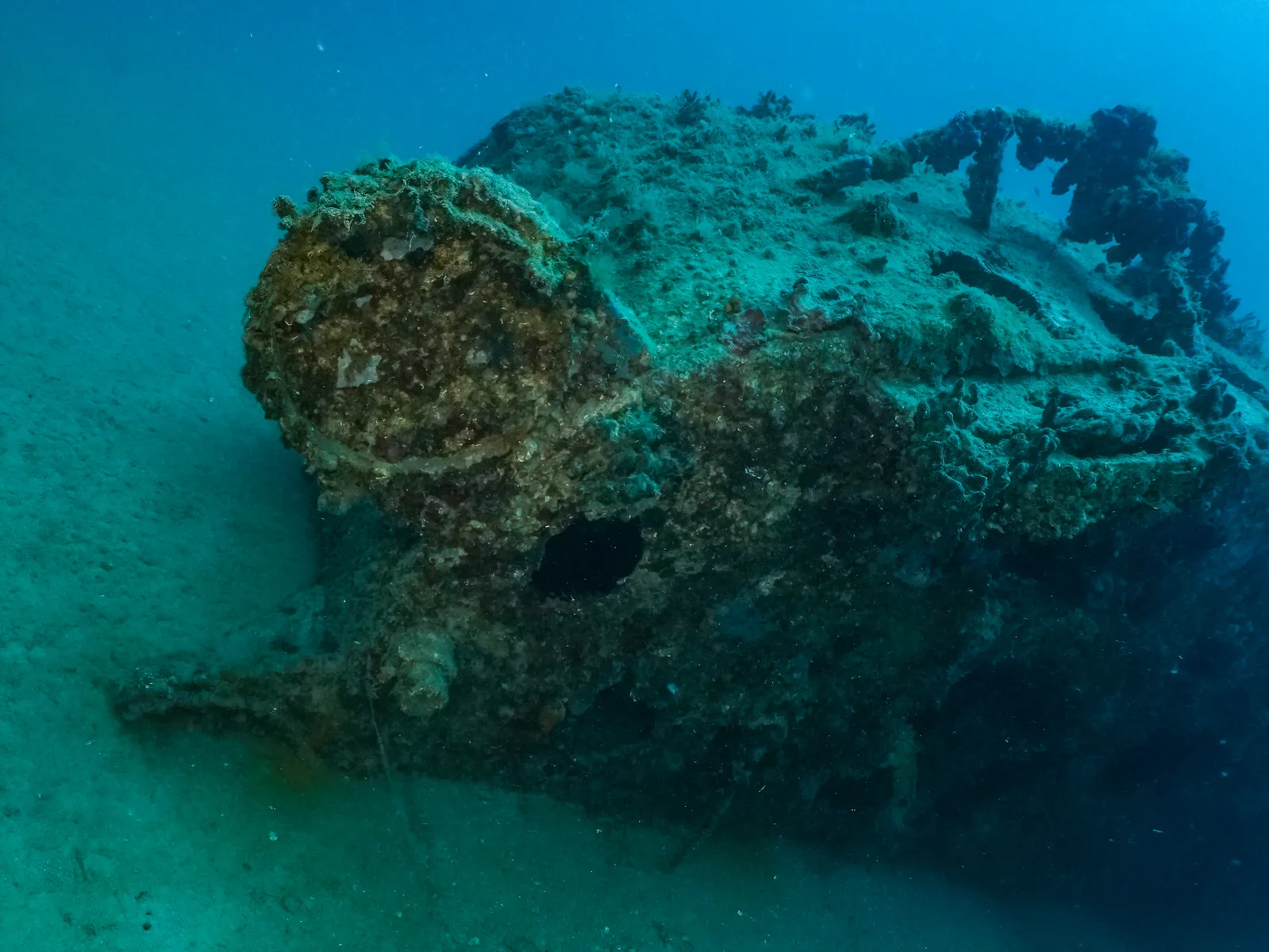 Golešnica 91Torpedo boat · Near Žanjice
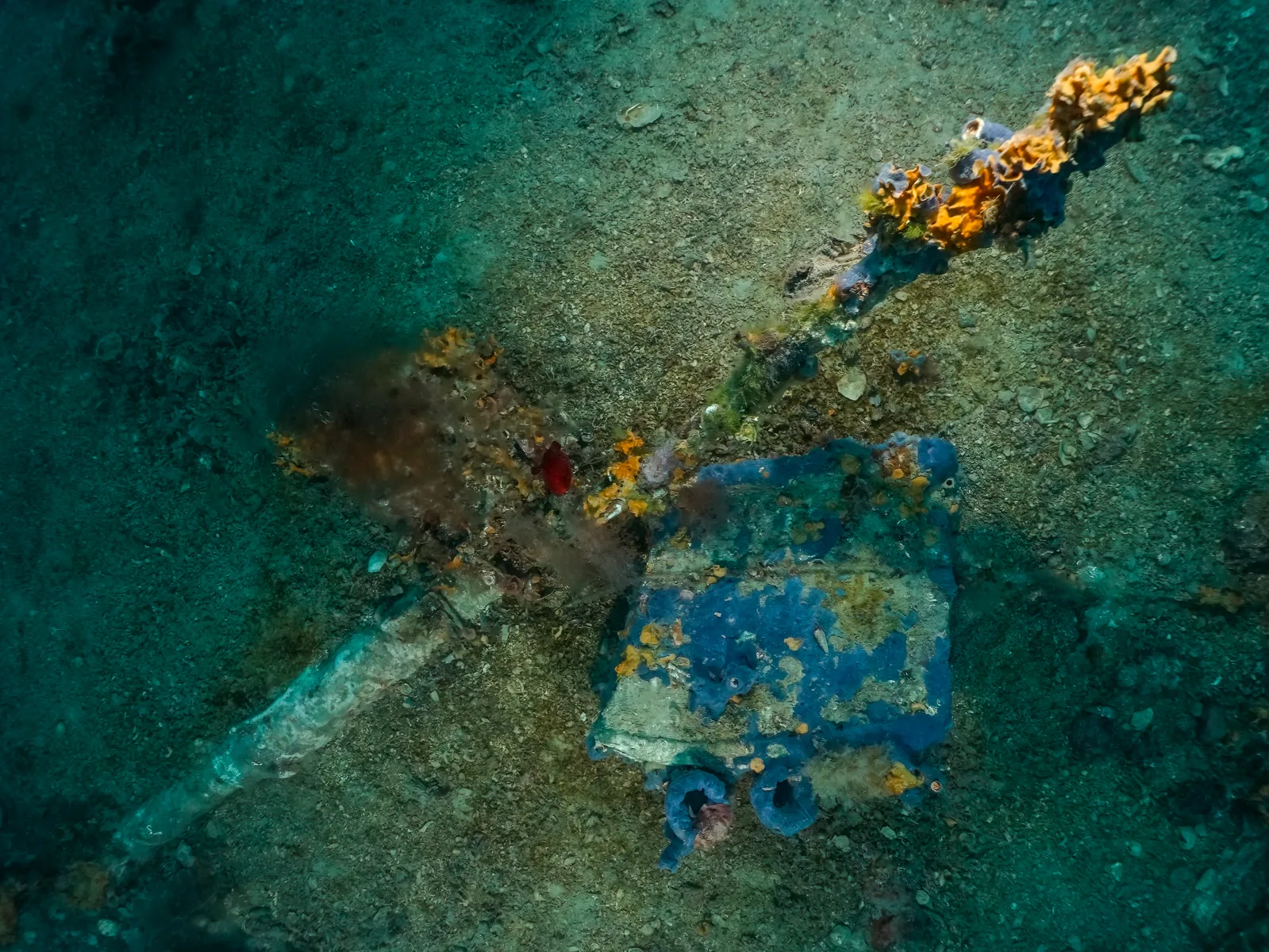 SpitfireAircraft · Cape Kabala
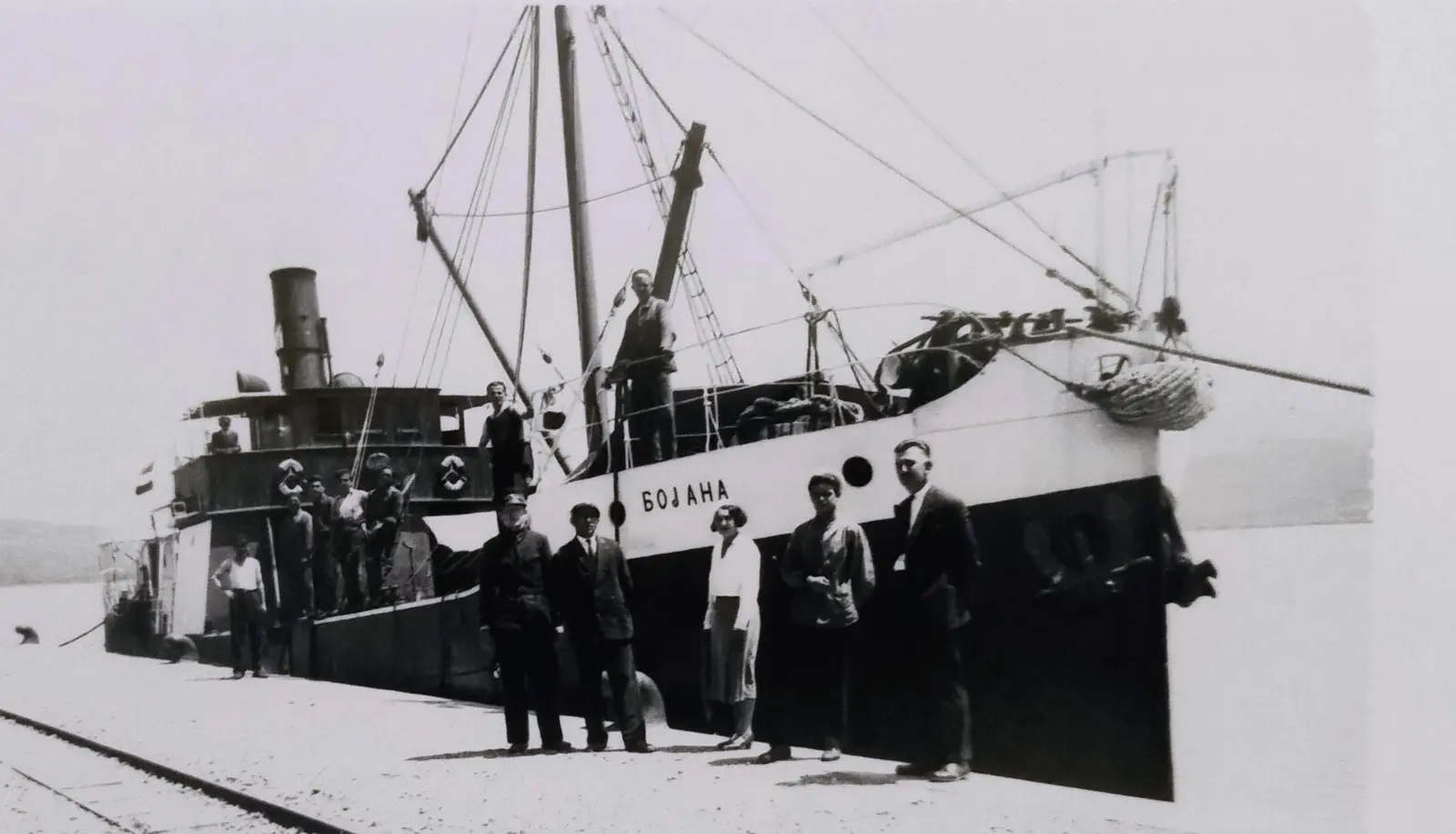 BojanaSteamship · Ulcinj coast
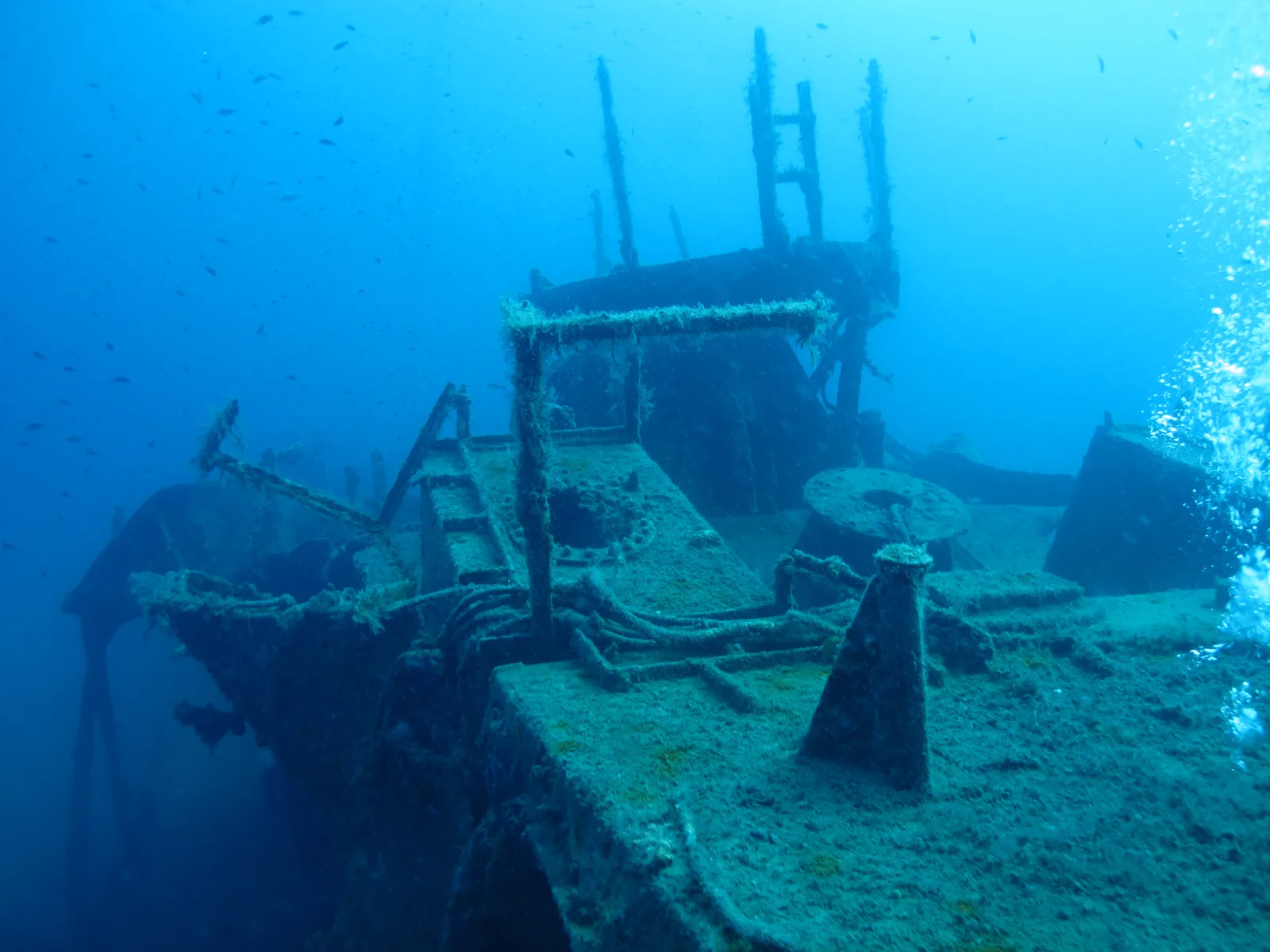 Patrol Boat PBR-512Vessel · Žanjice Bay