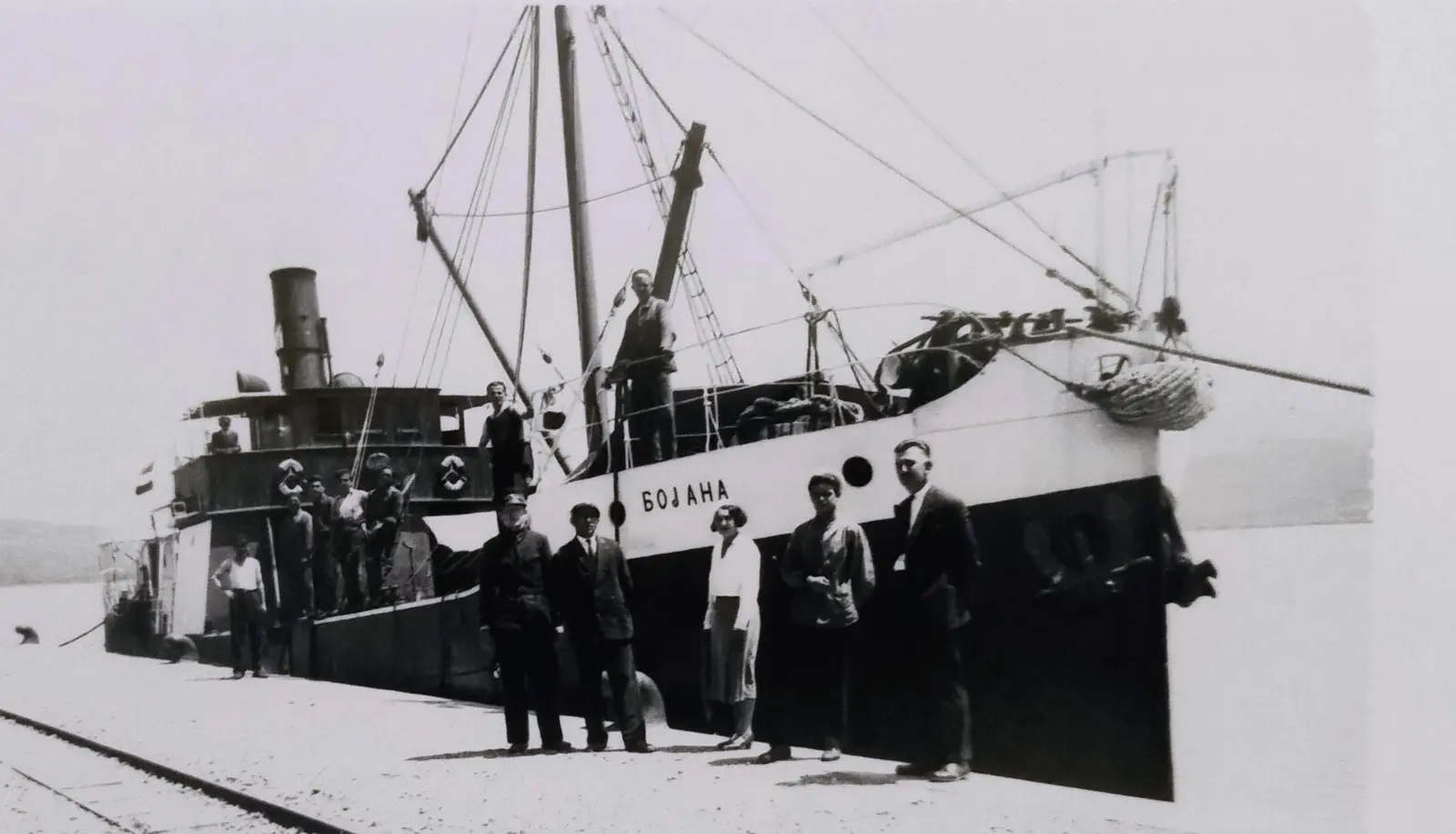
Built as Skodra in Mali Lošinj in 1904, this steamer served different owners and roles across the Adriatic, Bojana River and Lake Skadar. It later acquired the name Bojana. The circumstances of its loss remain unresolved.
Steamship / Ulcinj coast
Bojana
A working steamer whose final chapter remains uncertain.
From the collection
Closer to the evidence.
The research narrative
A deeper reading.
Steamship Bojana
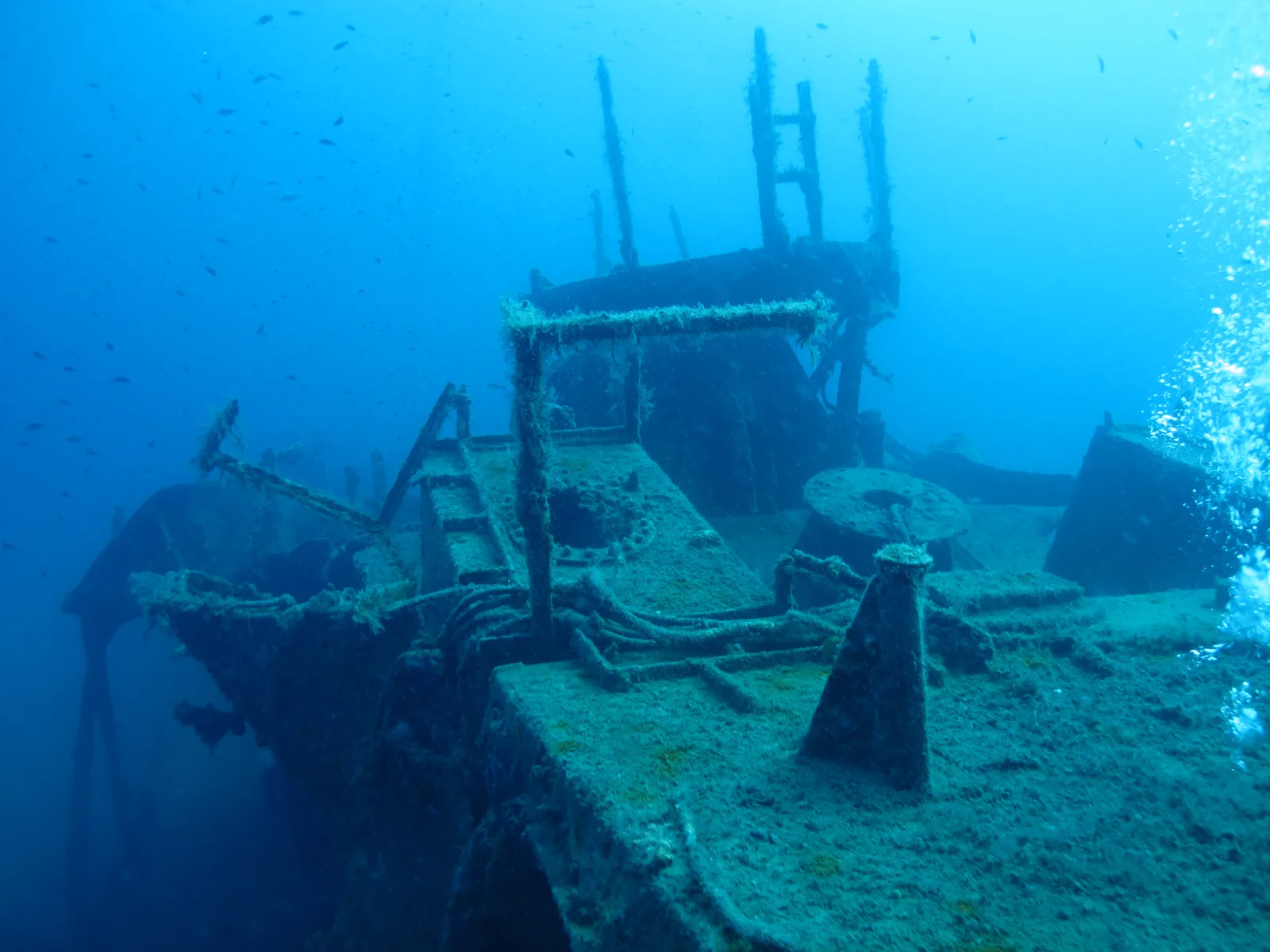
Approximately five nautical miles—around nine kilometres—off Ulcinj, the steamship Bojana rests upright on a sandy seabed at a depth of about 50–52 metres. Remarkably well preserved, the wreck represents more than a shipwreck: it is a witness to four decades of navigation, trade and conflict in the southern Adriatic, on the Bojana River and across Lake Skadar.
Built as Skodra
The vessel was built in 1904 as Skodra, the Italian name for Shkodër, at the Marco U. Martinolich shipyard in Mali Lošinj, then part of Austria-Hungary. Constructed for the Hungarian-Croatian Sea Steamship Company, commonly known as Ungaro-Croata, it was a passenger-and-cargo steamship of 249 gross register tons.
Skodra was approximately 37 metres long and equipped with a double-expansion steam engine. Published sources give slightly different measurements for its beam—between 6.3 and 6.9 metres—so these dimensions should be regarded as approximate until confirmed against the original shipyard or registration records.
Connecting coast and lake
The steamship sailed between Trieste, Rijeka and ports on the Albanian coast. Its routes extended through the mouth of the Bojana River and into Lake Skadar, linking maritime shipping in the Adriatic with inland settlements in present-day Montenegro and Albania.
The vessel carried passengers, goods and mail between communities that otherwise depended on difficult overland routes. Its shallow draught and modest size made it suitable for navigating both coastal waters and the lower reaches of the Bojana, although river navigation was demanding because of shifting sandbanks, currents and changing water levels.
The Balkan Wars
Skodra also became caught up in the political and military upheavals of the Balkan Wars of 1912–1913. At the time, Montenegro and Serbia were conducting operations against the Ottoman Empire around Shkodër and along the northern Albanian coast, while Austria-Hungary sought to protect its political and commercial interests in the region.
In March 1913, Montenegrin and Serbian forces attempted to compel Skodra to assist with military transport and rescue operations at San Giovanni di Medua, today’s Shëngjin. Contemporary reports describe armed pressure being applied to members of the crew, leading Austria-Hungary to lodge a diplomatic protest.
The available evidence therefore supports describing the vessel as temporarily seized or compelled to provide assistance, rather than formally confiscated and incorporated into the Montenegrin fleet. Claims that it regularly transported Montenegrin troops between Shëngjin and Durrës require further confirmation from archival records.
Between two wars
After the First World War and the dissolution of Austria-Hungary, the ship continued operating within the new political and commercial system of the eastern Adriatic. In 1922, Skodra entered the fleet of Jadranska plovidba, based in Sušak, in the Kingdom of Serbs, Croats and Slovenes. The following year it was sold to Skadarska plovidba of Cetinje.
In 1927, the vessel became part of the Boka shipping company of Kotor. It was renamed Bojana in 1928, after the river connecting Lake Skadar with the Adriatic Sea. When the company was reorganised as Zetska plovidba in 1934, the steamship continued serving the coastal and lake routes with which it had long been associated.
The ship’s interwar history reflects the importance of regional passenger and cargo services before the widespread development of modern roads. Vessels such as Bojana connected Ulcinj, Bar, Kotor, Dubrovnik, Durrës and Shkodër, supporting local trade and the movement of people throughout the southern Adriatic.
The final voyage
Following the Axis invasion of Yugoslavia in April 1941, Bojana came under Italian control and continued operating along the occupied Adriatic coast. Italian naval records indicate that it retained its Yugoslav name and was used for coastal service, although it was neither formally requisitioned by the Royal Italian Navy nor registered as a state auxiliary vessel.
After Italy announced its armistice with the Allies on 8 September 1943, German forces rapidly took control of former Italian positions and vessels in the Adriatic. Bojana was captured by German forces at Durrës on 10 September.
During the night of 20–21 October 1943, the ship left Durrës for Tivat, then commonly known by its Italian name, Teodo. British naval forces intercepted it during the passage, and the Royal Navy destroyer HMS Tumult sank the vessel at approximately 00:20 by placing explosive charges aboard.
This evidence corrects the later claim that Bojana was torpedoed by a British submarine. Although some local accounts repeat that version, Italian naval-loss records identify HMS Tumult and deliberate demolition charges as the cause of the sinking.
The wreck today
The wreck lies several miles south of Cape Đeran and approximately nine kilometres from both Ulcinj and the mouth of the Bojana River. It stands prominently on a sandy seabed at a reported depth of 50–52 metres.
Because of its depth, Bojana has suffered less disturbance and looting than many shallower wrecks along the Montenegrin coast. Much of its overall form remains recognizable, making it an important site for archaeological documentation and the study of early twentieth-century regional steam navigation.
The ship has also become an artificial marine habitat. Its structure provides shelter and feeding grounds for fish and other marine organisms, linking the site’s cultural significance with the natural life of the Adriatic.
Diving Bojana
Although the wreck is visually impressive, its depth places it beyond ordinary recreational diving limits. A visit requires advanced or technical diving qualifications, appropriate equipment, careful gas and decompression planning, favourable sea conditions and guidance from an experienced local diving centre.
Fishing nets and lines, reduced visibility, currents and the possibility of unstable structural elements create additional hazards. Entry into enclosed parts of the wreck should be attempted only by divers with specialist wreck-penetration training.
Bojana is a protected element of Montenegro’s underwater cultural heritage. Divers should observe and photograph the wreck without touching it, entering fragile sections or removing objects, allowing the site to retain both its archaeological context and its role as a marine habitat.
Year built: 1904
Shipyard: Marco U. Martinolich, Mali Lošinj
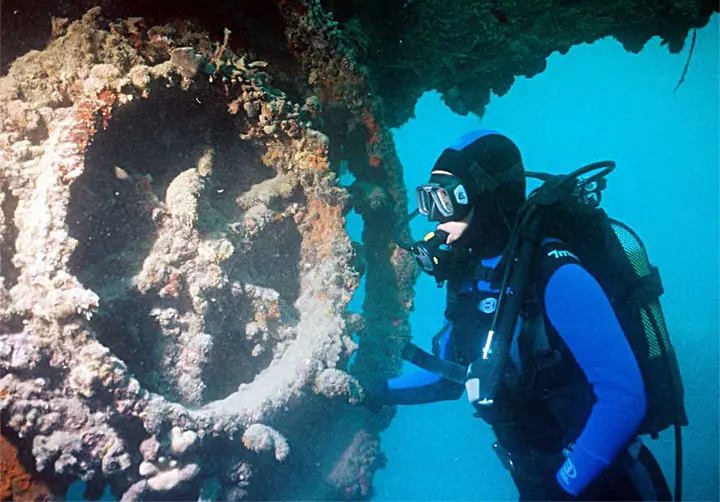 CarolaSteamship · Near Cape Đeran
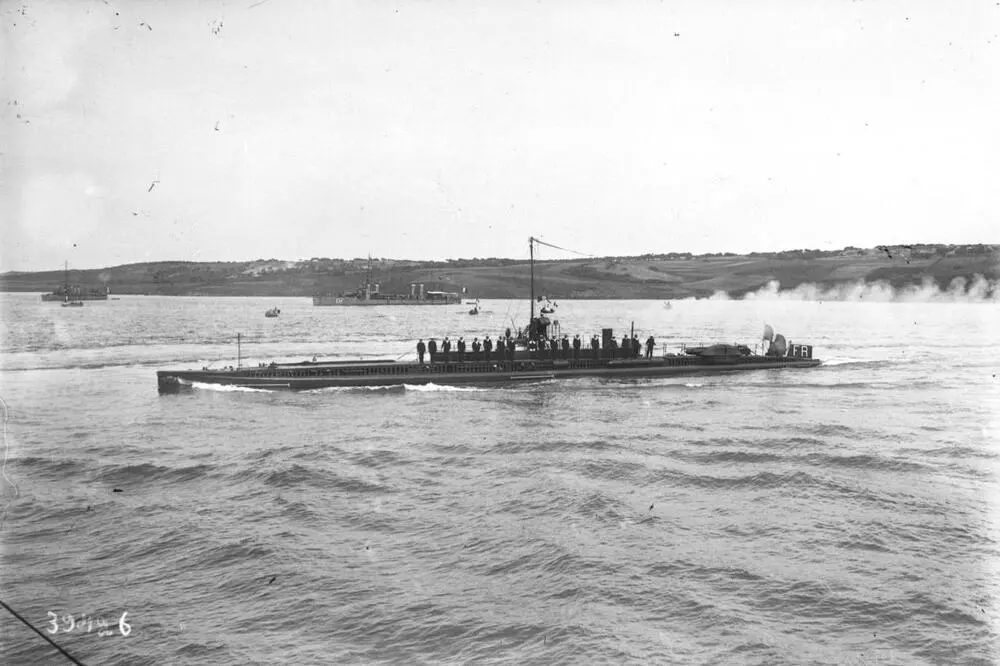 Fresnel Q65Submarine · Ada Bojana
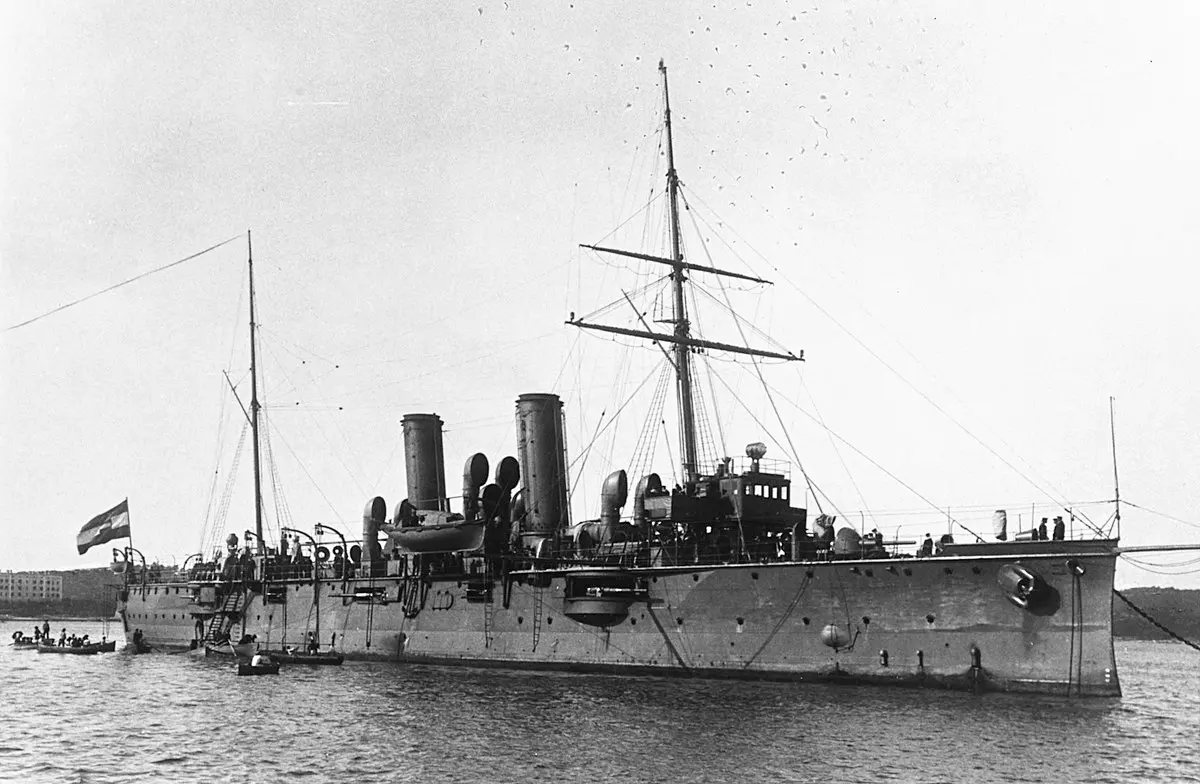 SMS ZentaCruiser · Off Petrovac
 Patrol Boat PBR-512Vessel · Žanjice Bay