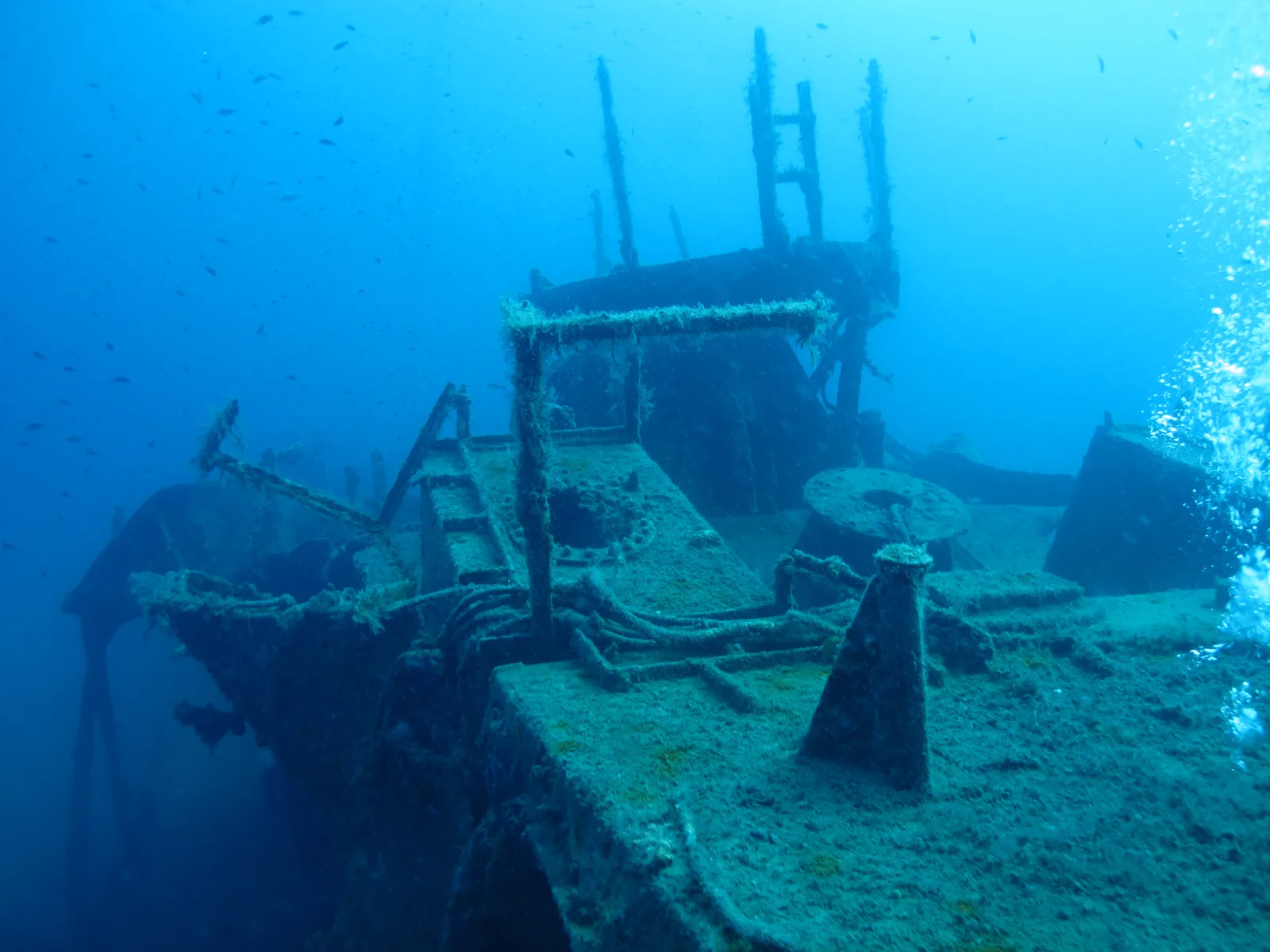
PBR-512 is a former Yugoslav Navy patrol vessel. Withdrawn from service in 1972, it was deliberately sunk during a naval exercise in 1983. Its comparatively intact structure rests upright at a maximum depth of approximately 25 metres.
Vessel / Žanjice Bay
Patrol Boat PBR-512
A Cold War patrol vessel, preserved upright beneath Žanjice Bay.
Original photogrammetry5.9 MB · interactive 3D
Explore Patrol Boat PBR-512.
The real site, captured in three dimensions.
From the collection
Closer to the evidence.
The research narrative
A deeper reading.
Patrol boat PBR-512
Resting upright in the sheltered waters of Žanjice Bay, PBR-512 is one of Montenegro’s most accessible and frequently visited military wrecks. The former Yugoslav Navy patrol vessel was deliberately sunk as a target during a naval exercise in 1983 and now lies remarkably intact at a maximum depth of approximately 25 metres. 1
A Yugoslav patrol boat
PBR-512 served with the Yugoslav Navy during the Cold War, when the eastern Adriatic formed an important part of Yugoslavia’s maritime defence system. Patrol vessels performed coastal surveillance, protected territorial waters and naval bases, supported training exercises and maintained a visible military presence along the country’s extensive coastline.
The Bay of Kotor was central to this system. Its sheltered waters, naval installations and proximity to the open Adriatic made it an important base for warships, submarines, patrol craft and auxiliary vessels.
Cold War context
Following its break with the Soviet Union in 1948, Yugoslavia developed an independent defence policy positioned between the two major Cold War blocs. Its navy was expected to defend a long and geographically complex coastline while supporting the country’s broader strategy of territorial defence.
Smaller patrol vessels were well suited to these conditions. They could monitor coastal traffic, operate between islands and bays, accompany other naval units and support exercises without requiring the resources of larger warships.
PBR-512 represents this less visible but essential element of naval history. Unlike battleships and destroyers, patrol vessels rarely attracted widespread public attention, yet they performed much of the navy’s routine operational work.
End of service
PBR-512 remained in the Yugoslav Navy until it was withdrawn from active service in 1972. After decommissioning, the vessel was retained for another purpose rather than immediately dismantled.
In 1983, more than a decade after its withdrawal, PBR-512 was used as a target during a naval missile exercise in Žanjice Bay. The attack sent the vessel to the seabed, where it became one of several deliberately sunk former naval craft in the waters near the entrance to the Bay of Kotor. 1
Because the ship was decommissioned and prepared for use as a target, its sinking was not a wartime loss. No casualties are associated with the event.
The wreck today
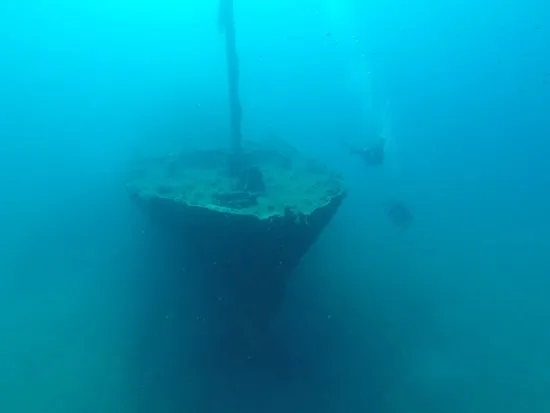
PBR-512 rests on the seabed at a maximum depth of approximately 25 metres. The wreck remains in comparatively good condition, retaining much of the recognizable form of a twentieth-century patrol vessel. 1
Its largely intact hull allows divers to appreciate the vessel’s proportions and layout more easily than at heavily fragmented wreck sites. The deck, superstructure and other surviving elements provide evidence of its former naval role, while impact damage records the circumstances of the 1983 exercise.
Although PBR-512 is a relatively recent wreck, it is already undergoing gradual transformation. Corrosion, sediment movement, marine growth and repeated human visits continue to alter its structure.
An artificial reef
Since its sinking, the patrol vessel has become an artificial marine habitat. Openings in the structure provide shelter for fish, while sponges and other organisms have colonized its metal surfaces.
The combination of a recognizable military vessel and abundant marine life contributes to the site’s popularity. It also demonstrates how a retired naval craft can acquire a new ecological role after being deposited on the seabed.
Its biological colonization should be treated as part of the site’s present identity. Divers should avoid damaging marine growth or disturbing animals sheltering within the wreck.
Digital documentation
PBR-512 has been digitally documented, allowing the wreck to be studied and presented through contemporary recording techniques. Digital models make it possible to examine the vessel’s surviving structure, monitor its condition and provide virtual access for people who cannot visit it underwater. 2
Such documentation is especially valuable at popular diving sites. Repeated surveys can reveal structural collapse, corrosion, sediment changes and damage caused by anchors or inappropriate contact.
Digital interpretation can also place the wreck within the wider history of the Yugoslav Navy and the Bay of Kotor, transforming a recreational dive into an educational encounter with Montenegro’s recent maritime past.
 AigretteGunboat · Near Bar
 Junkers Ju 88Aircraft · Off Čanj
 CarlottaCargo vessel · Cape Platamuni
 RumijaRoyal yacht · Port of Bar