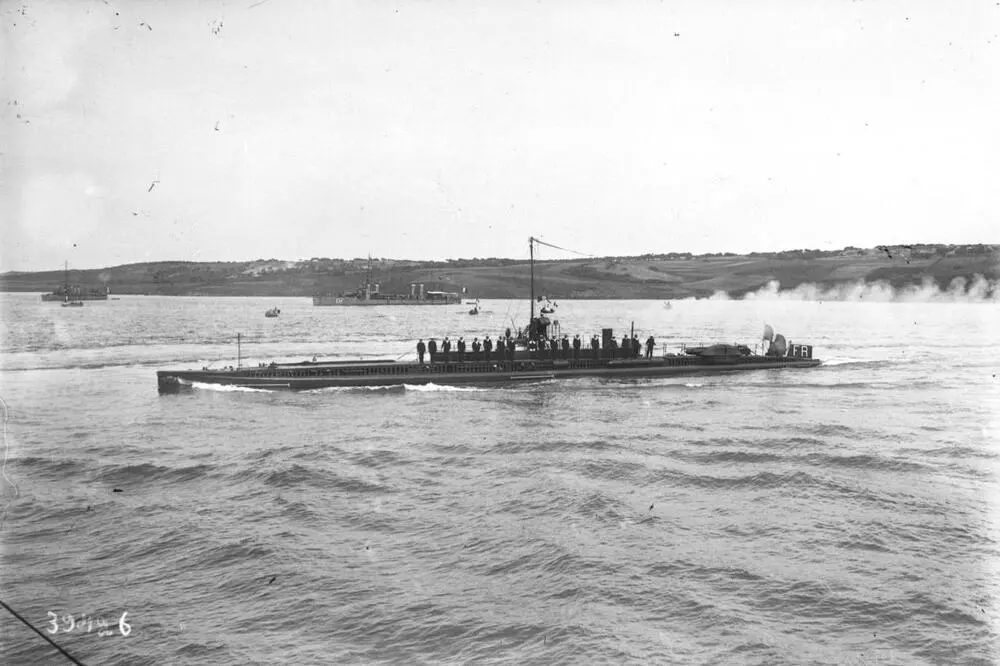
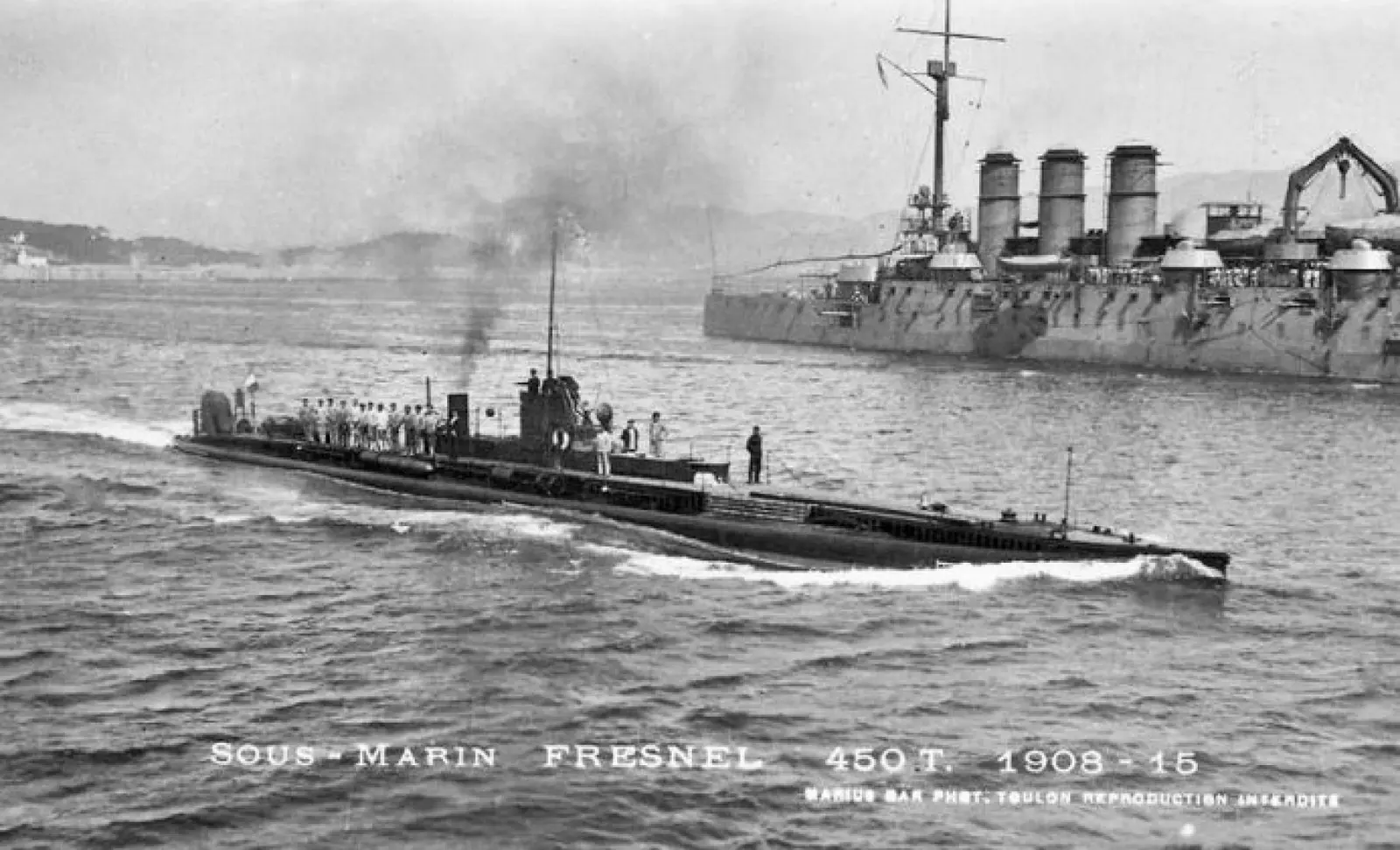
Fresnel was a French Pluviôse-class submarine powered by steam at the surface and electricity underwater. Pursued in December 1915, it grounded near Bojana and was disabled by shellfire. The wreck is a war grave; shifting sediment has alternately concealed and revealed it.
Submarine / Ada Bojana
Fresnel Q65
A submarine revealed again by shifting sand.
From the collection
Closer to the evidence.
The research narrative
A deeper reading.
French Submarine Fresnel Q65
Near the mouth of the Bojana River lies the remarkably preserved wreck of the French submarine Fresnel. Resting in very shallow water and periodically concealed by shifting sand, it is a rare example of early submarine technology and a powerful reminder of the First World War in the southern Adriatic.
A pioneering submarine
Fresnel, naval designation Q65, was one of 18 Pluviôse-class submarines constructed for the French Navy under its 1905 building programme. Designed by the naval engineer Maxime Laubeuf, these double-hulled vessels represented an important stage in the transition from experimental submersibles to operational ocean-going submarines.
The submarine was built at the Rochefort Naval Arsenal. It was launched on 16 June 1908 and commissioned on 22 February 1911—not placed in active service in 1908, as is sometimes stated.
Fresnel measured approximately 51.1 metres in length and 4.96 metres across the beam. It displaced about 404 tonnes on the surface and 553 tonnes when submerged.
Named after Augustin Fresnel
The vessel was named after Augustin-Jean Fresnel, the French engineer and physicist whose research helped establish the wave theory of light. His best-known practical invention, the Fresnel lens, greatly improved lighthouse illumination and maritime navigation.
The submarine’s name therefore linked two forms of maritime innovation: a scientific breakthrough that made coastlines safer and a new type of warship that was transforming naval warfare.
Steam and electricity
Unlike later submarines, which generally combined diesel engines with electric motors, the Pluviôse class used steam engines for navigation on the surface. Electric motors powered the submarine beneath the water.
The steam system provided useful range on the surface, but it made diving a slow and complicated process. Before submerging, the crew had to shut down the boilers, lower the funnels, seal the openings and change to electric propulsion—a serious disadvantage if enemy ships or aircraft appeared unexpectedly.
Fresnel carried eight 450-millimetre torpedoes. The class was equipped with external fixed launchers and a rotating pair of Drzewiecki drop collars on the stern, a distinctive arrangement characteristic of several early French submarine designs.
Some descriptions state that Fresnel carried two internal and six external torpedo tubes. This is inaccurate: the class originally combined one internal bow tube with six external launching positions, but the internal tube was removed from some vessels following an accident involving Fresnel during its trials. The exact wartime configuration of Q65 should therefore be described cautiously until confirmed from French naval plans or refit records.
The Adriatic campaign
When the First World War began, Fresnel served with the French Mediterranean Fleet. It was sent into the Adriatic as part of the Allied effort to monitor and blockade the Austro-Hungarian Navy, whose principal southern base was at Cattaro—present-day Kotor.
The narrow entrance to the Bay of Kotor was protected by coastal artillery, patrol vessels, mines and other defences. French submarines nevertheless attempted to penetrate the area and attack Austro-Hungarian warships within or near their anchorages.
On 28 April 1915, Fresnel began an operation against the Cattaro naval base. After several unsuccessful approaches, the submarine entered the bay on 2 May but was unable to locate a suitable target and withdrew without launching an attack.
The final patrol
On 4 December 1915, Fresnel left Brindisi under the command of Lieutenant René Stanislas Jouen. Its orders were to patrol the Gulf of Drin, between Cape Rodon and the area south of Shëngjin, rather than to blockade the entrance to the Bay of Kotor, as some later accounts suggest.
During the night of 4–5 December, the submarine ran aground on a sandbank at the mouth of the Bojana River. Historical summaries generally attribute the accident to a navigational error, probably made more dangerous by darkness, shallow water and the constantly changing sandbanks around the river mouth.
The vessel was therefore not driven ashore during a continuous chase from Kotor. The available accounts indicate that it grounded first and was detected the following morning while its crew was trying unsuccessfully to free it.
Attack and surrender
At approximately 07:30, Austro-Hungarian patrol vessels and a naval aircraft sighted the stranded submarine. The French crew fired at the aircraft, but Fresnel remained trapped as the tide fell and more of the surrounding sandbanks became exposed.
At about 08:30, the Austro-Hungarian destroyer SMS Warasdiner approached the site. Realizing that the submarine could not be saved, Lieutenant Jouen ordered the crew to abandon it and attempted to render the vessel unusable. The submariners reached a nearby sandbank or islet in a small boat.
After the French initially refused to surrender, Warasdiner opened fire. Its guns struck the stranded submarine, while an Austro-Hungarian aircraft reportedly dropped a bomb and used machine-gun fire. Several of Fresnel’s externally carried torpedoes exploded, damaging the ballast tanks and conning structure and leaving the submarine partly submerged and burning.
The surviving crew eventually surrendered and were taken prisoner. Contemporary reports disagree on the exact number aboard, but one French naval communication records the commander, the second officer and 26 crewmen as prisoners.
The human cost
Sources concerning casualties are not entirely consistent. Some general naval summaries state that the entire crew survived, while French commemorative records identify Quartermaster Electrician Augustin Jean Pierre Emmanuel Ducarme as having been killed on 5 December 1915. They also record that sailor Georges Protat died from his wounds in captivity two days later.
Local heritage accounts report that Ducarme’s body was never recovered and consequently describe the wreck as a war grave. Because published information varies, the most responsible interpretation is to treat the site as a potential maritime war grave and a place of remembrance, regardless of whether its formal legal designation has been fully documented.
The wreck today
The remains of Fresnel lie several hundred metres from the eastern mouth of the Bojana River, close to the Montenegrin–Albanian maritime boundary but within Montenegrin waters. Recorded water depths across the site vary from less than two metres to approximately 7.5 metres.
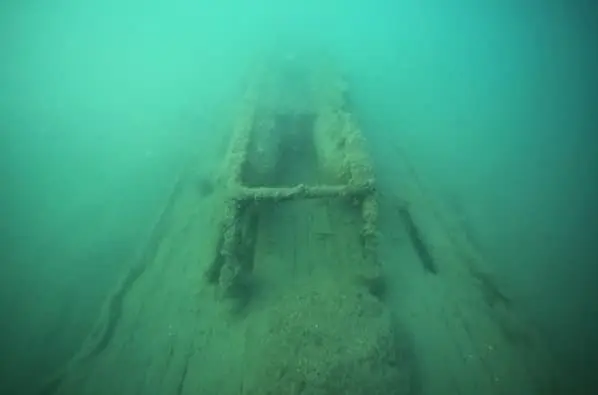
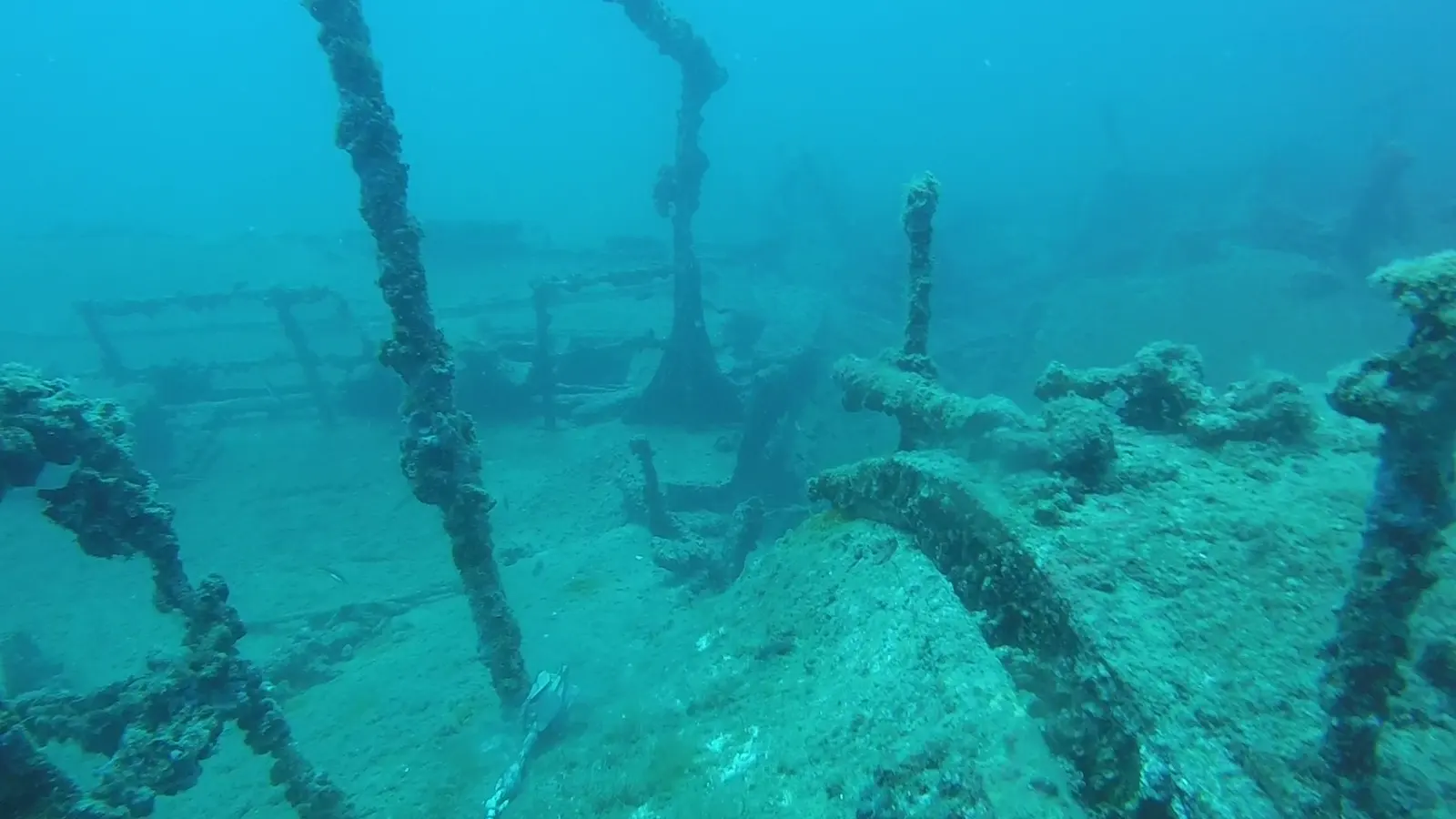
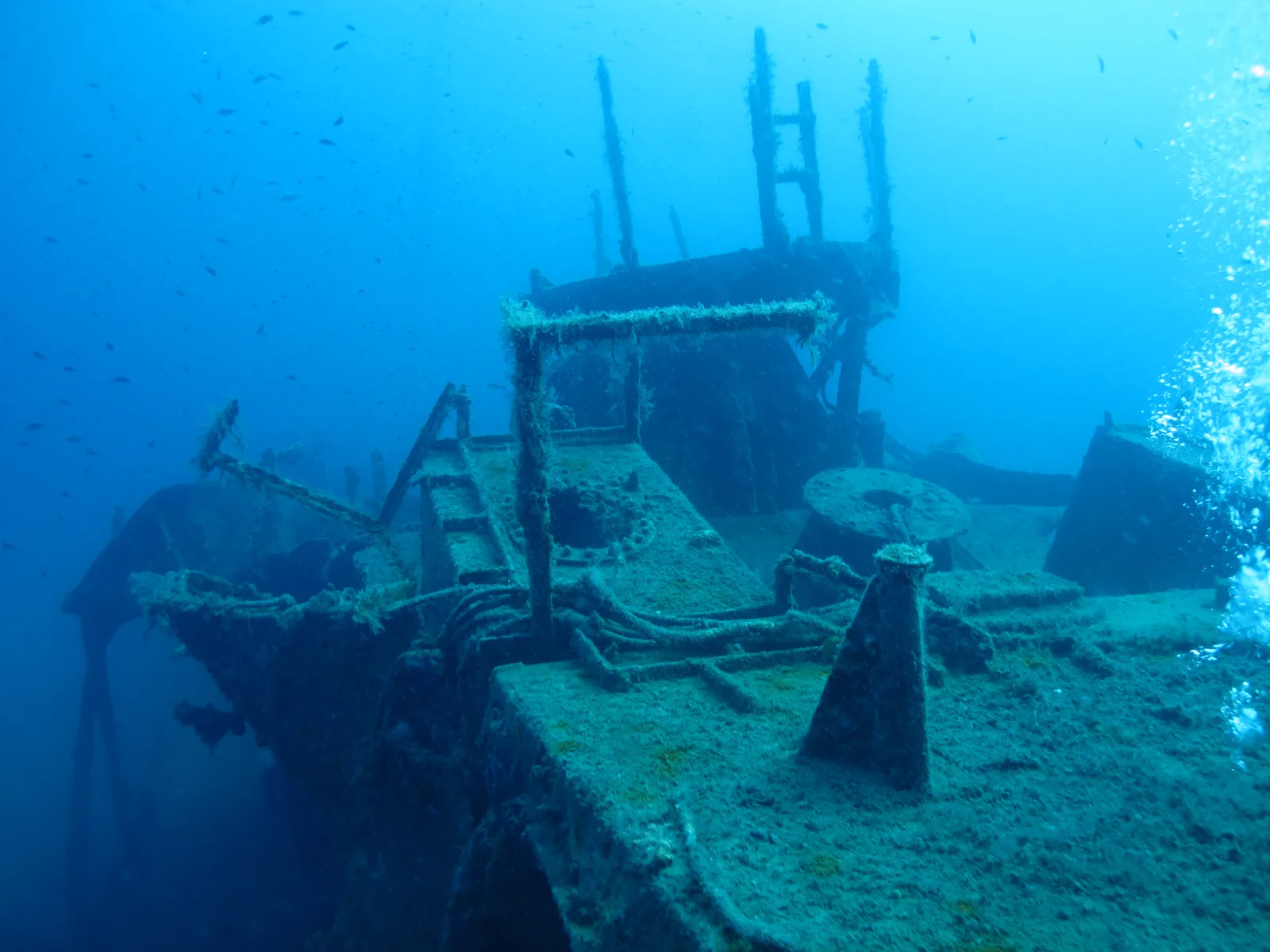
The submarine’s stern is partly buried in mud and sand deposited by the river. Strong currents, sediment movement, storms and coastal erosion can cover large portions of the wreck and later expose them again, causing its visible condition to change over time.
These natural processes explain why the wreck has sometimes appeared to vanish beneath the seabed before becoming visible again. Burial may have protected parts of the submarine from corrosion and human interference, but repeated exposure can also accelerate structural deterioration.
Identifying Fresnel
The site was known from historical records and nautical documentation long before it attracted renewed public attention in 2020. It should therefore not be described as a previously unknown warship or as a newly discovered wreck.
Its dimensions, hull form and surviving weapons correspond closely with the documented characteristics of Fresnel. Particularly important are the two Drzewiecki torpedo launchers near the stern, whose unusual design provides strong evidence for the identification.
In August 2020, Montenegrin hydrographic specialists conducted a detailed survey of the waters around Ada Bojana and Velika Plaža. Side-scan sonar images recorded the wreck and revealed recognizable structural and technological features despite the difficulties of operating sonar equipment in such shallow water.
Protection and research
The wreck’s shallow position makes it unusually accessible but also exceptionally vulnerable. Anchoring, fishing gear, unregulated diving, souvenir collection, dredging and coastal engineering could damage remains that have survived for more than a century.
The site also lies within a highly dynamic coastal environment affected by erosion and the continual movement of sediment. Plans for managing Ada Bojana, the river mouth and the surrounding coastal zone should therefore consider the submarine and its archaeological setting before any dredging, construction or shoreline intervention is undertaken.
Because Fresnel was a French naval vessel and may contain human remains, archaeological investigation should be coordinated between the competent Montenegrin authorities and France. Survey and documentation should use non-destructive methods and avoid removing objects or disturbing potentially sensitive areas.
Visiting Fresnel
Although the site is shallow, it should not be promoted as an unrestricted recreational diving attraction. Limited visibility, currents, shifting sand, sharp corroded metal, unexploded or unstable ordnance and the wreck’s possible status as a maritime war grave require a cautious approach.
Any authorized visit should prioritize observation, photography and education. Nothing should be touched, moved or removed, and boats should never anchor directly on the wreck.
With appropriate protection, remote documentation and carefully managed interpretation, Fresnel could become an important educational site. Its story brings together scientific innovation, early submarine design, the naval history of the First World War and the changing natural landscape of the Bojana River mouth.
Propulsion: steam engines on the surface; electric motors underwater
Armament: eight 450-millimetre torpedoes; external fixed launchers and Drzewiecki drop collars
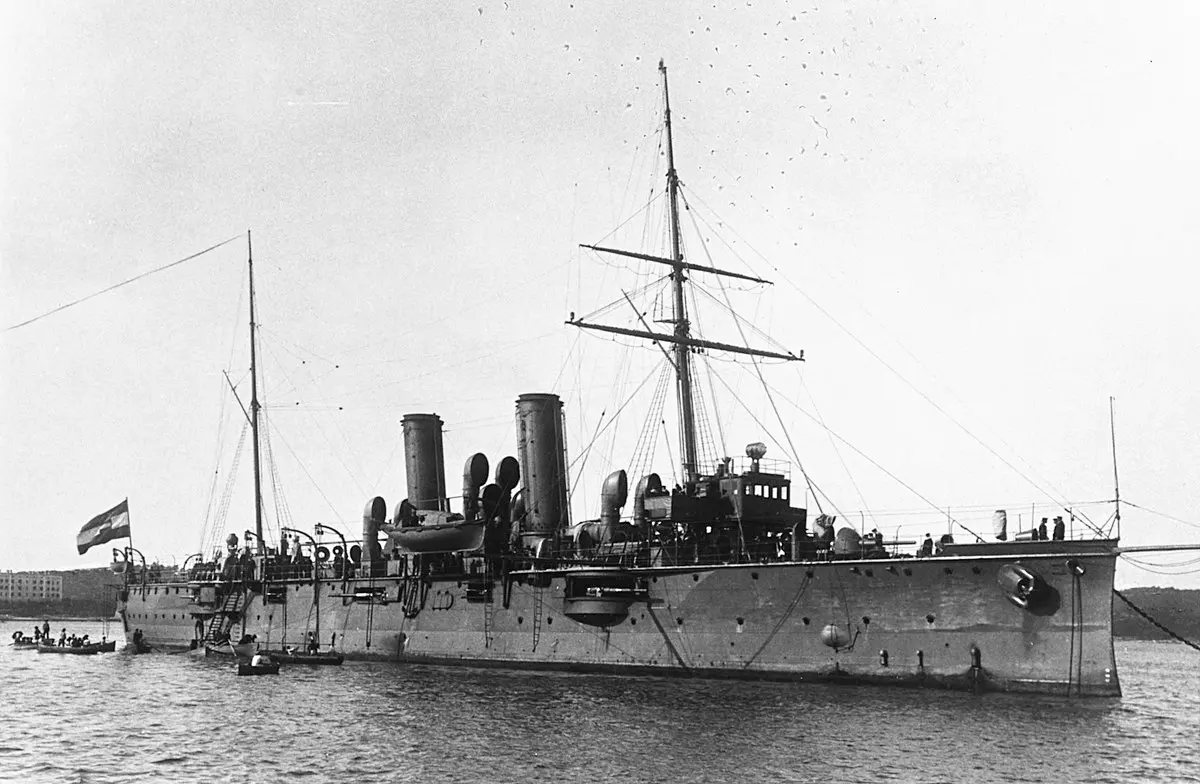 SMS ZentaCruiser · Off Petrovac
 OresteSteamship · Trsteno Bay
 Patrol Boat PBR-512Vessel · Žanjice Bay
 AigretteGunboat · Near Bar