Carola was built in Newcastle and launched in December 1891. It connected Adriatic and Mediterranean ports. During the First World War its role changed to military service. It was lost in a collision in poor visibility in June 1916.
Steamship / Near Cape Đeran
Carola
A merchant vessel lost in mist near Ulcinj.
From the collection
Closer to the evidence.
The research narrative
A deeper reading.
Steamship Carola
Only a short distance from Cape Đeran near Ulcinj, the steamship Carola rests upright on the seabed at a depth of approximately 17 metres. Its largely recognizable hull, surviving machinery and accessible depth make it one of the most impressive historic wrecks in Montenegrin waters.
Built for Adriatic trade
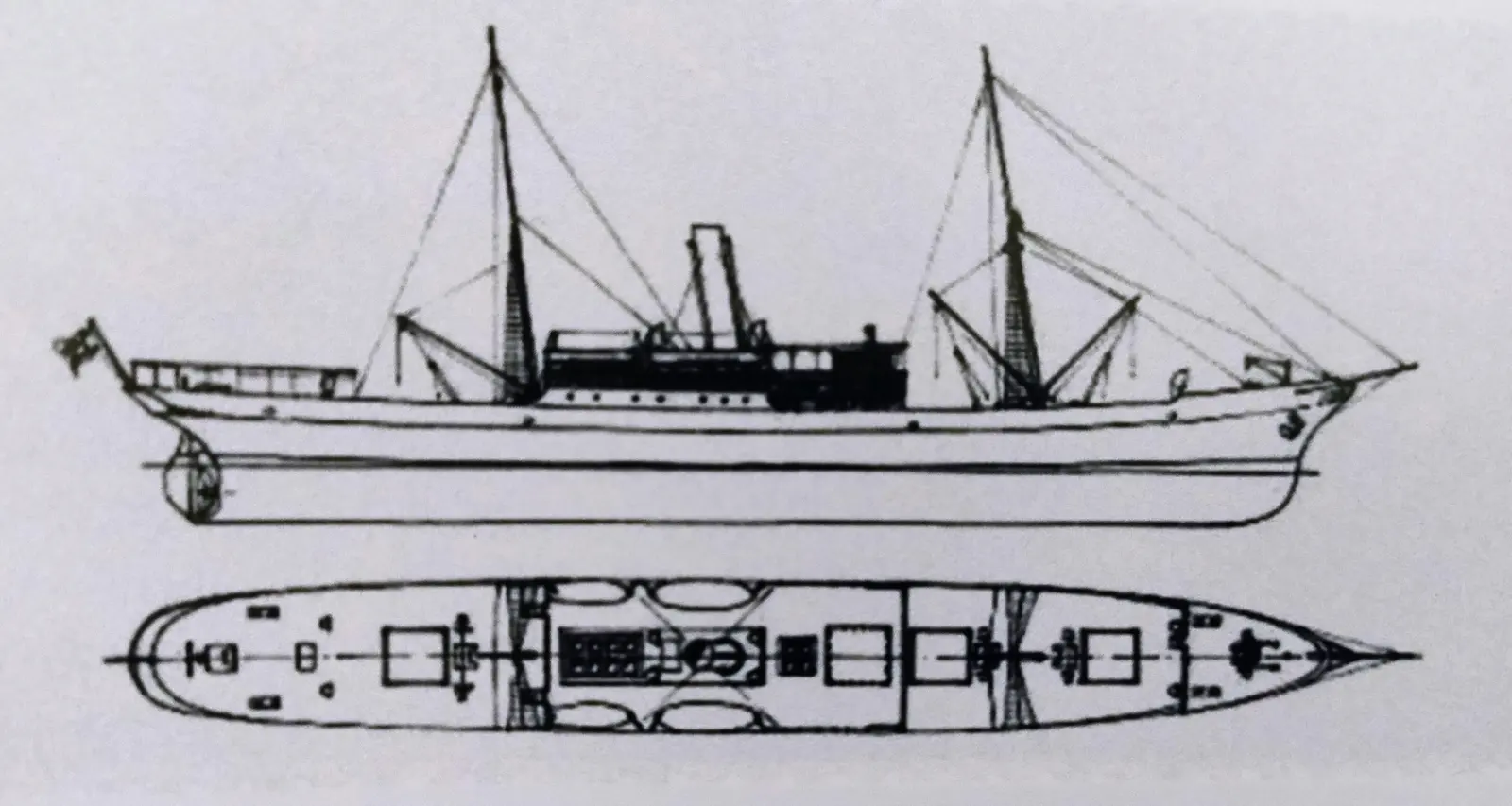
Carola was a steel passenger-and-cargo steamship built by Wigham Richardson & Co. at the Neptune Yard in Low Walker, Newcastle upon Tyne. It was launched on 16 December 1891 and completed on 9 February 1892 for the Adria Royal Hungarian Sea Navigation Company of Fiume, present-day Rijeka—not for a shipyard named Adria, as is sometimes stated.
The vessel measured approximately 65.9 metres in length and 9.1 metres across the beam. It was registered at 889 gross tons and powered by a three-cylinder triple-expansion steam engine driving a single propeller. On trials, it reached a speed of approximately 11.6 knots.
Although primarily a commercial vessel, Carola also carried passengers. Its accommodation included berths for 20 first-class and 12 second-class passengers, reflecting its combined role as a cargo carrier, mail ship and regional passenger steamer.
Mediterranean routes
Before the First World War, Carola connected Fiume with Trieste, Syracuse, Malta and Tunis. These routes formed part of a wider Austro-Hungarian commercial network linking northern Adriatic ports with the central Mediterranean and North Africa.
In 1910, the ship was transferred to a regular service between Malta and Syracuse. Contemporary research into the Adria company’s Maltese postal services records that Carola carried passengers and mail on this route, although travellers sometimes criticized the quality of its accommodation and service.
Wartime service
Following the outbreak of the First World War, Carola was requisitioned on 28 July 1914 and assigned to military transport duties. It initially operated along the Dalmatian coast and, from 1916, served the Austro-Hungarian supply routes to Albania.
These routes were strategically important. Austro-Hungarian forces depended on merchant steamships to move personnel, equipment and supplies between Adriatic ports, the Bay of Kotor and the Albanian coast. Navigation was dangerous because of naval mines, submarines, wartime restrictions and the limited visibility that frequently affected coastal traffic.
The final voyage
During the night of 22 July 1916, Carola was sailing through waters near Ulcinj when poor visibility led to a collision with the steamship Mátyás Király. Both vessels belonged to the Adria company and were then being used for Austro-Hungarian military transport.
At 1,552 gross tons, Mátyás Király was considerably larger than Carola. It struck the smaller vessel with sufficient force to open its hull, and Carola sank near Cape Đeran, approximately 600 metres offshore. Mátyás Király survived the collision.
The correct date of the sinking is 22 July 1916. References to 22 June or to an unspecified date in July appear to result from errors in later accounts; shipbuilding records, Austro-Hungarian naval summaries and Montenegro’s heritage documentation agree on 22 July.
Published information about casualties is less consistent. Montenegro’s 2016 heritage study reports that many sailors died, but the accessible shipping summaries do not provide names or a confirmed number. A precise casualty figure should therefore not be presented until it can be verified from contemporary crew lists or official accident reports.
The wreck today
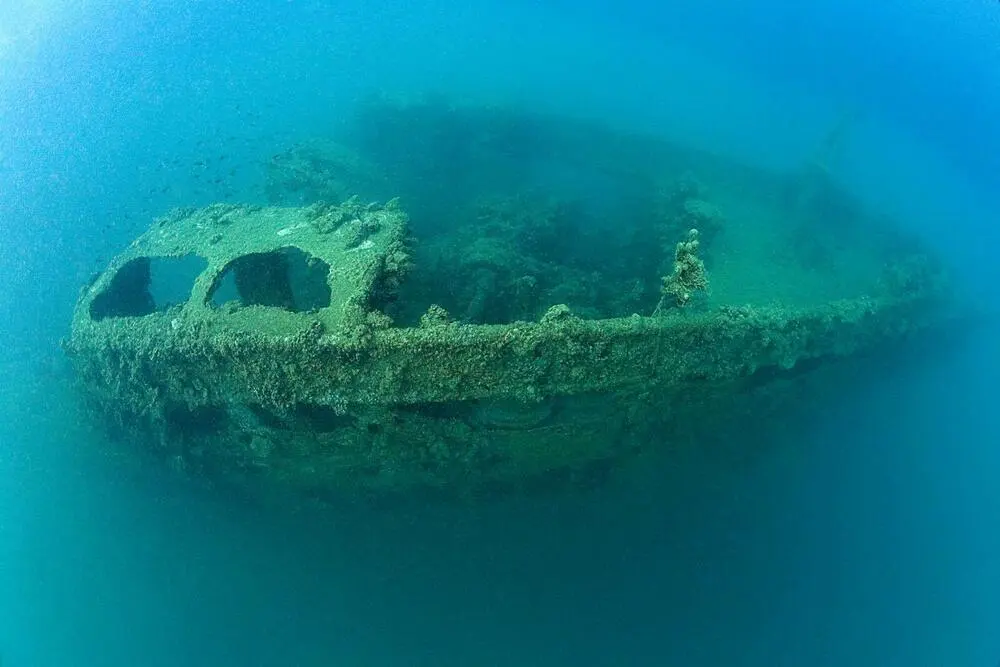
Carola came to rest upright on its keel at a depth of approximately 17 metres. Its long steel hull still preserves the vessel’s overall form, while the point of impact from the collision remains visible.
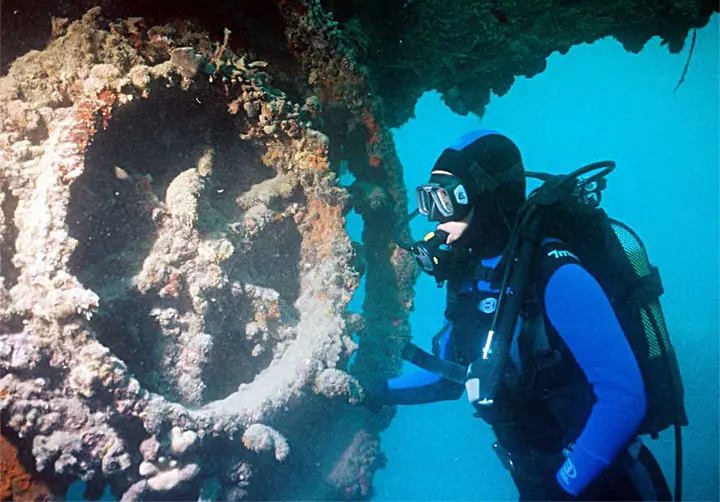
At the bow, divers can recognize the anchor-handling and cargo equipment, including a substantial winch. The central section, where the bridge and crew accommodation once stood, is more heavily damaged. The wooden deck has largely collapsed, exposing parts of the internal structure.
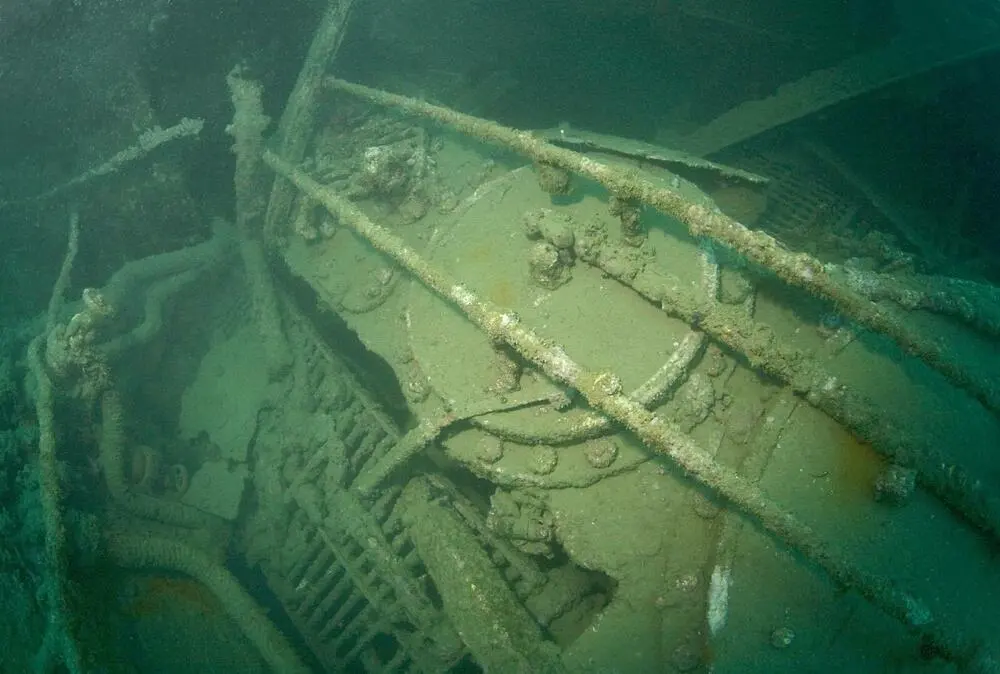
Toward the stern, sections of the steam engine, mechanical installations and ventilation system remain visible. The single propeller can still be identified, although it is partly buried in the fine sand and silt surrounding the lower hull. Parts of the deck railing and additional cargo-handling equipment also survive.
Montenegro’s official heritage study describes the wreck as well preserved but warns that material has occasionally been removed from the site. Its survival is therefore remarkable but not guaranteed, making systematic archaeological documentation and responsible diving particularly important.
A marine habitat
More than a century underwater has transformed Carola into an artificial reef. Marine growth covers much of the steel structure, while openings in the hull provide shelter for fish and other organisms.
The wreck lies in an area influenced by fine sediment carried through the coastal waters around Ulcinj. Visibility can therefore change quickly, and the lower parts of the hull are gradually being covered by sand and silt.
Diving Carola
Its relatively shallow depth, upright position and recognizable structure make Carola one of Montenegro’s most attractive wreck-diving sites. Divers can follow the outline of the hull while observing the bow equipment, damaged superstructure, engine machinery and stern.
The site nevertheless requires careful planning. Visibility can be limited, fishing lines may be present, and corroded or unsupported sections of the wreck can be unstable. Divers should visit with a qualified local guide, remain within the limits of their certification and avoid entering enclosed areas without specialist wreck-diving training.
Carola is an underwater archaeological site, not simply a recreational attraction. Nothing should be removed or displaced: even an apparently ordinary component may preserve information about the vessel, its crew and its final voyage.
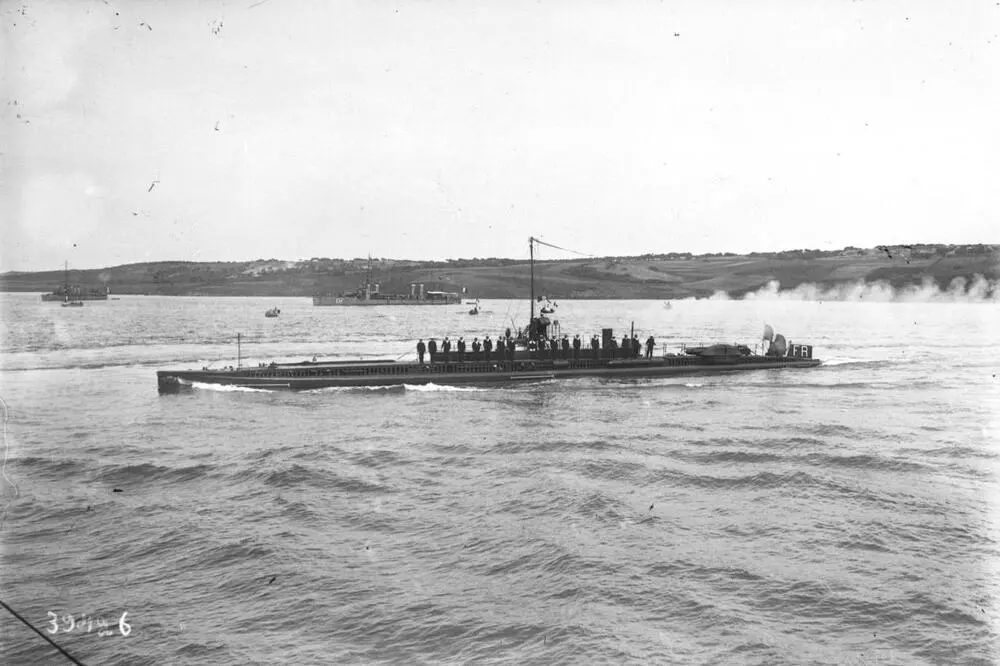 Fresnel Q65Submarine · Ada Bojana
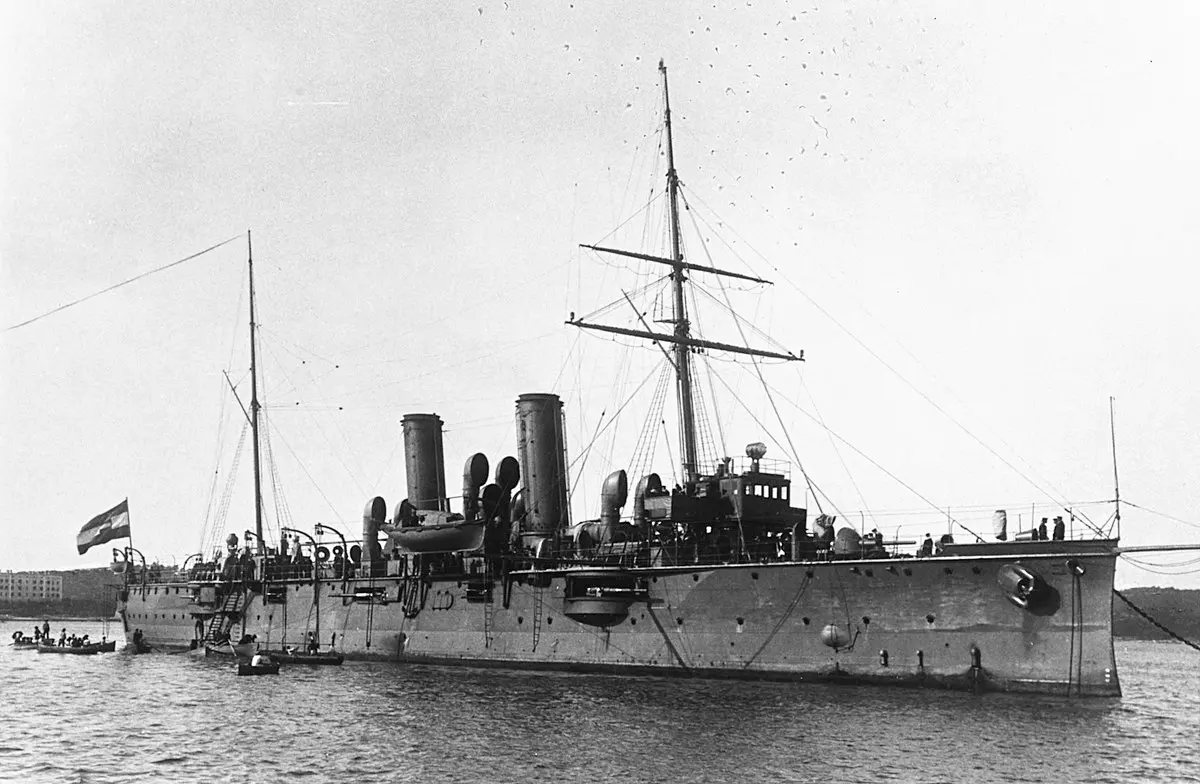 SMS ZentaCruiser · Off Petrovac
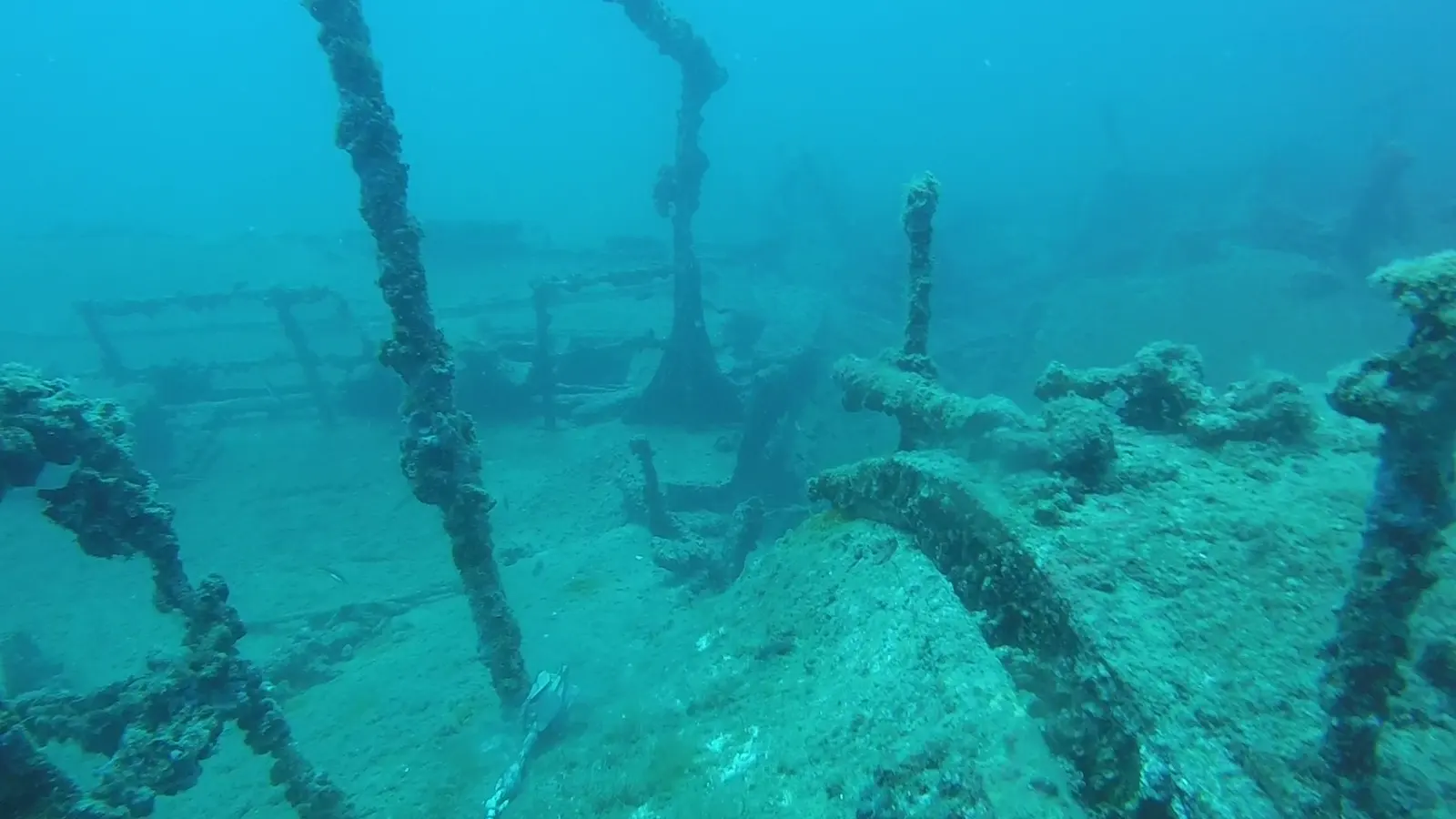 OresteSteamship · Trsteno Bay
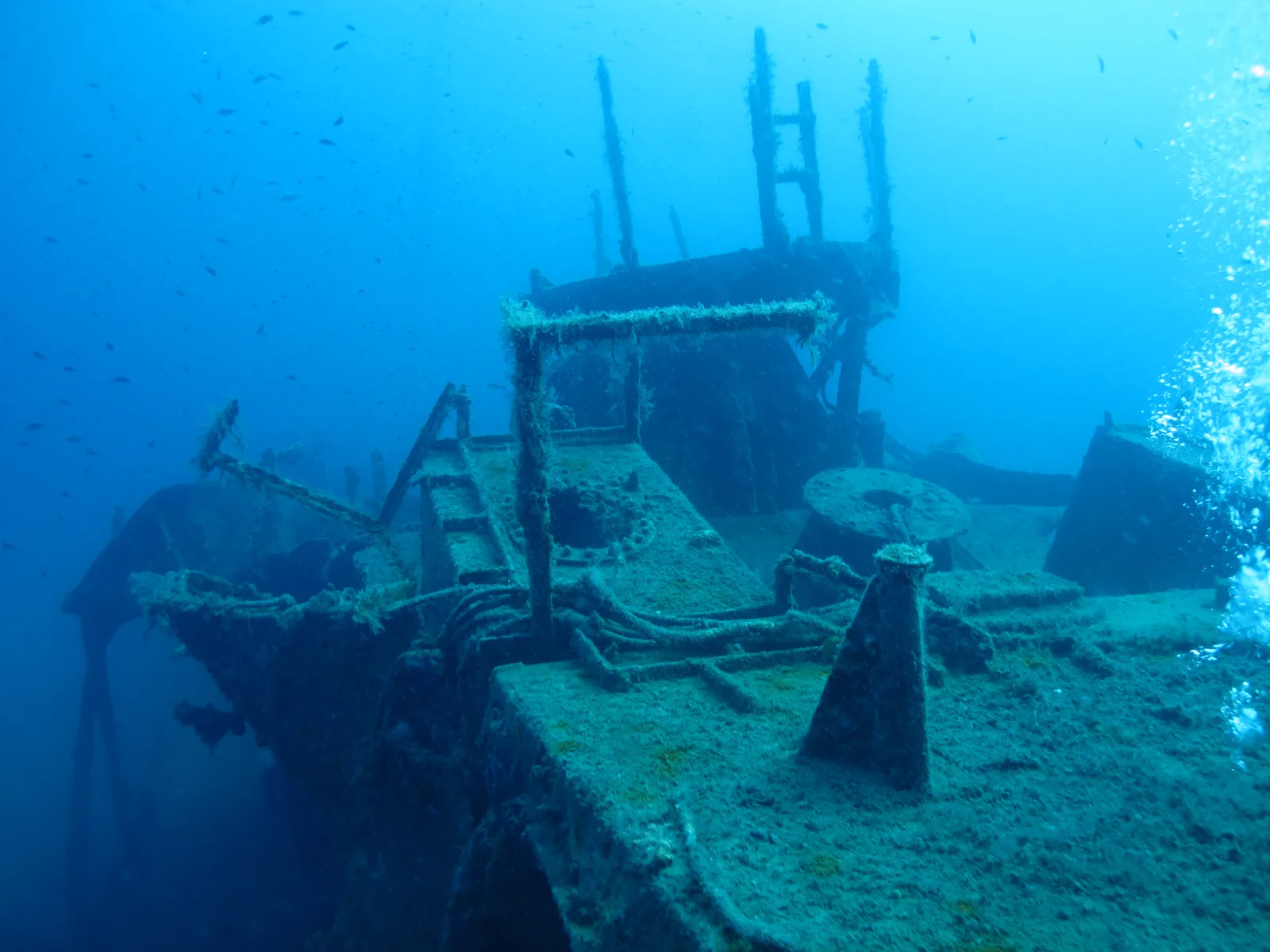 Patrol Boat PBR-512Vessel · Žanjice Bay