Built as Moorby in Stockton in 1896, the vessel later became Oreste. It struck a mine during a voyage from Split to Bar in March 1942. The wreck lies in two separated sections, with exposed machinery and deck equipment. The remains also provide a habitat for marine life.
Steamship / Trsteno Bay
Oreste
A trading ship divided by a wartime mine.
From the collection
Closer to the evidence.
The research narrative
A deeper reading.
Italian Steamship Oreste
Near Cape Jaz, in the waters between Trsteno Bay and the Platamuni headland, lie the remains of the Italian cargo steamship Oreste. Torn into two main sections by a wartime explosion, the wreck is now one of the most impressive diving sites on the Budva coast and a material witness to merchant navigation in the occupied Adriatic during the Second World War.
Built as Moorby
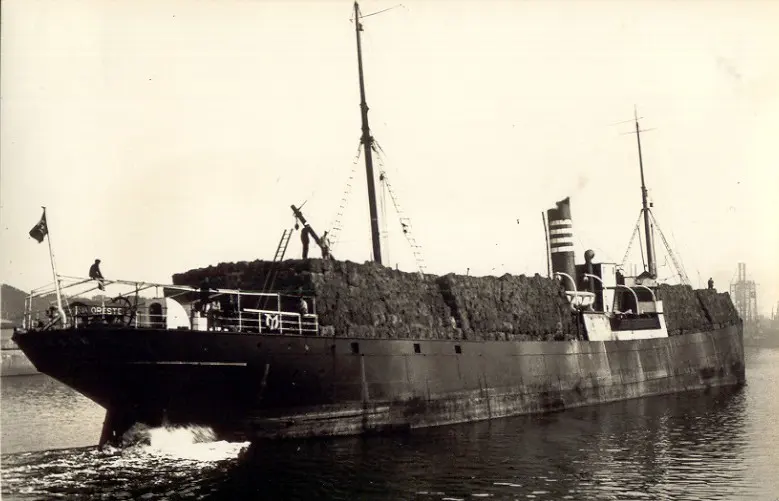
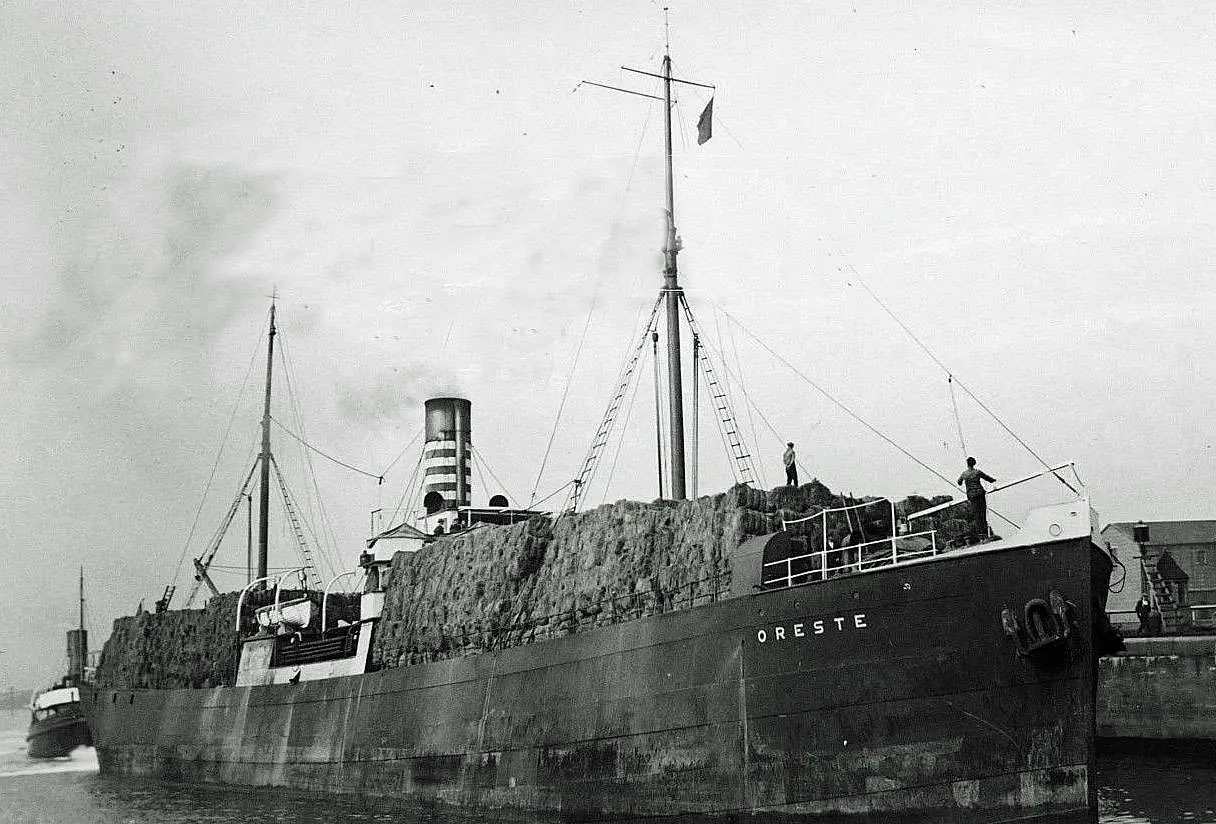
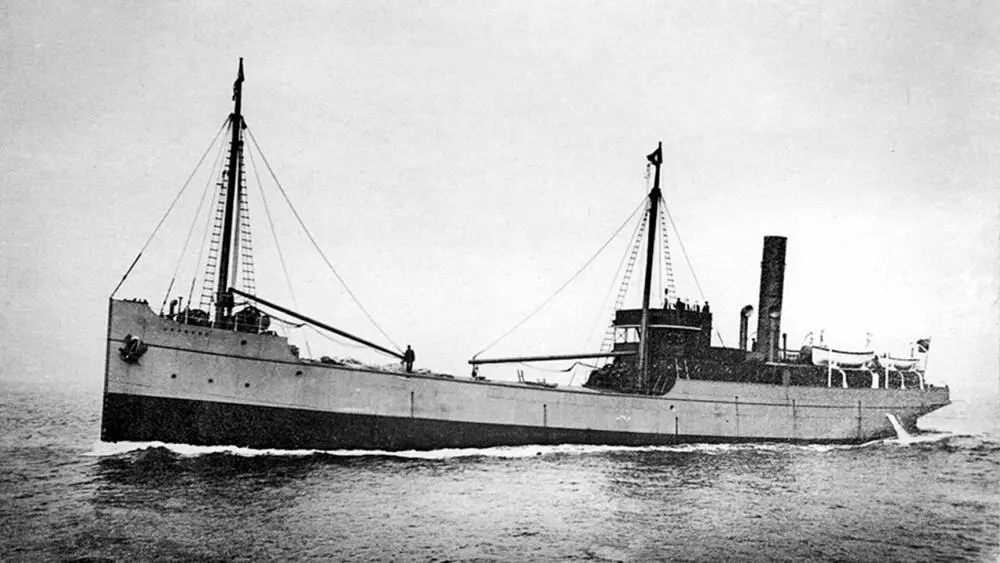
The vessel’s original name was Moorby, not Morby as it is sometimes written. It was a steel general-cargo steamship built by Ropner & Sons at Stockton-on-Tees in northeastern England for R. Ropner & Co. of West Hartlepool. The ship was launched on 26 June 1896 and completed the following month.
Moorby was approximately 91.4 metres long and 13.1 metres across the beam, with a gross registered tonnage of 2,606 tons. Its three-cylinder triple-expansion steam engine, built by Blair & Co. of Stockton-on-Tees, drove a single propeller.
Designed for the international carriage of bulk and general cargo, the vessel belonged to the great generation of British tramp steamers that transported goods between ports according to commercial demand rather than operating on a fixed passenger route.
From Britain to Italy
The steamship remained in the Ropner fleet for its first three decades. Ownership passed from R. Ropner & Co. to Sir R. Ropner & Co. in 1916 and then to the Ropner Shipping Company in 1919. British crew records confirm that Moorby was still operating under that name and the official number 102750 during the First World War.
In 1926, the vessel was sold to Matteo Scuderi of Catania, Sicily, transferred to the Italian flag and renamed Oreste. The Italian name refers to Orestes, the figure from ancient Greek mythology, but the vessel’s correct registered name was the singular Italian form—Oreste, not Orestes.
Although privately owned, the steamship later operated within the transport system serving Fascist Italy’s wartime needs. It should therefore be described as an Italian merchant cargo vessel engaged in military-related transport, rather than as a commissioned naval warship.
War on the coast
The Axis powers invaded Yugoslavia in April 1941, after which most of Montenegro came under Italian occupation; Italy also occupied or annexed extensive areas of the eastern Adriatic coast. Maritime routes between Bar, the Bay of Kotor and Split consequently became important to the movement of personnel, provisions and military supplies.
Navigation remained dangerous despite Italian control of the coastline. Wartime minefields, inadequately charted waters, air attack and the possibility of submarine operations threatened merchant vessels throughout the Adriatic.
By early 1942, Oreste was nearly 46 years old but remained in commercial service. Its last documented voyage took it from Antivari—present-day Bar—toward Split, correcting later accounts that reverse the direction of the route.
The final voyage
On 27 March 1942, while sailing north from Bar, Oreste struck a naval mine off Cape Platamuni, in the wider area between Trsteno Bay and Jaz. The explosion caused catastrophic structural damage, and the vessel sank approximately 13 nautical miles southeast of Cattaro, present-day Kotor.
Some local accounts state that the ship was attacked by British aircraft, occasionally identifying them as de Havilland Mosquitos. No documentary evidence located during this review supports that version. The contemporary shipping record identifies a mine as the cause of loss, making mine impact the most reliable explanation presently available.
The precise time of the sinking is sometimes given as around 10:00, but this detail has not been confirmed in the accessible registration and casualty records. The number of people aboard, the composition of the cargo and whether anyone died also remain uncertain; until crew lists or an official Italian loss report are located, casualty claims should not be presented as established fact.
The wreck today
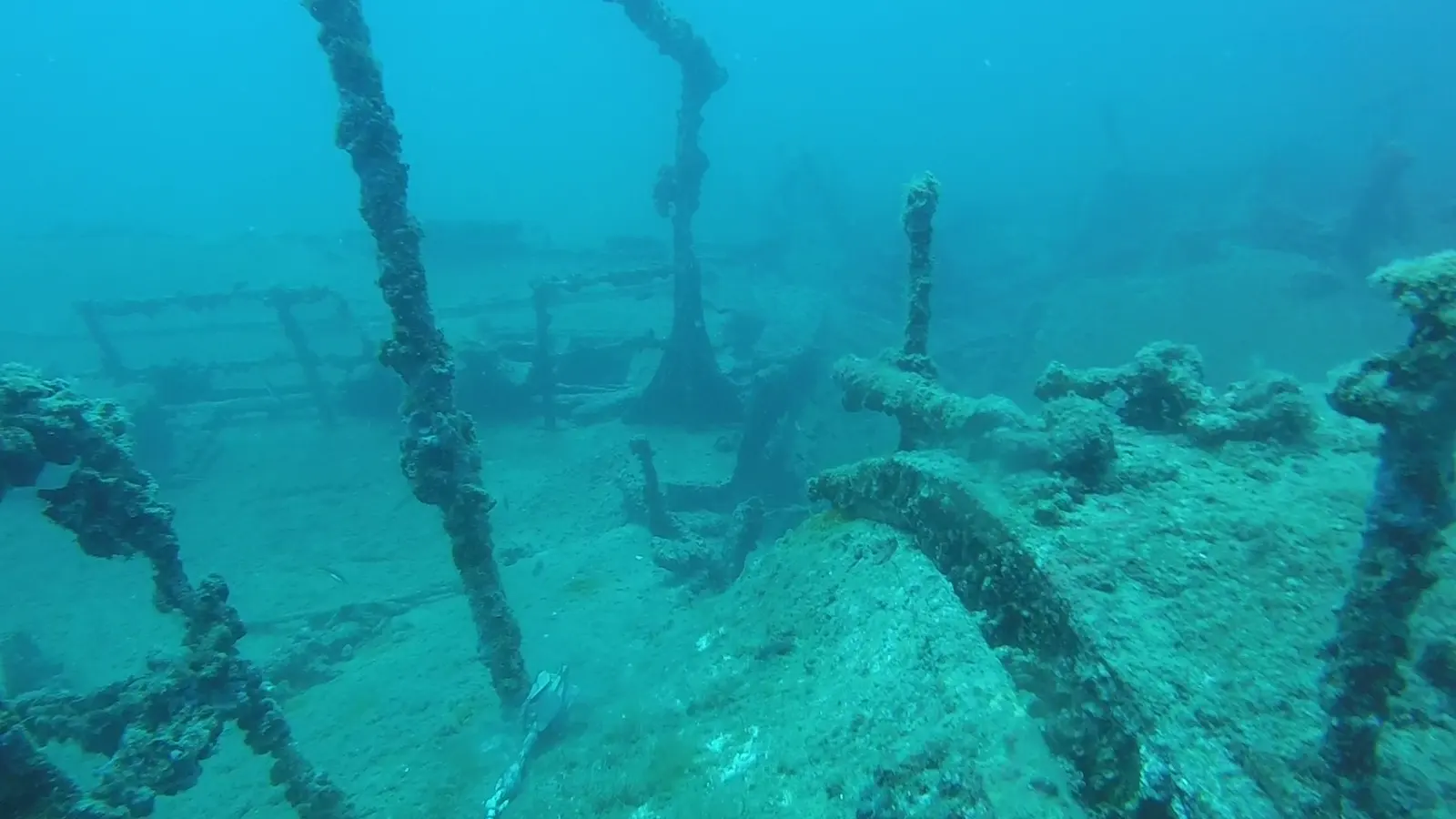
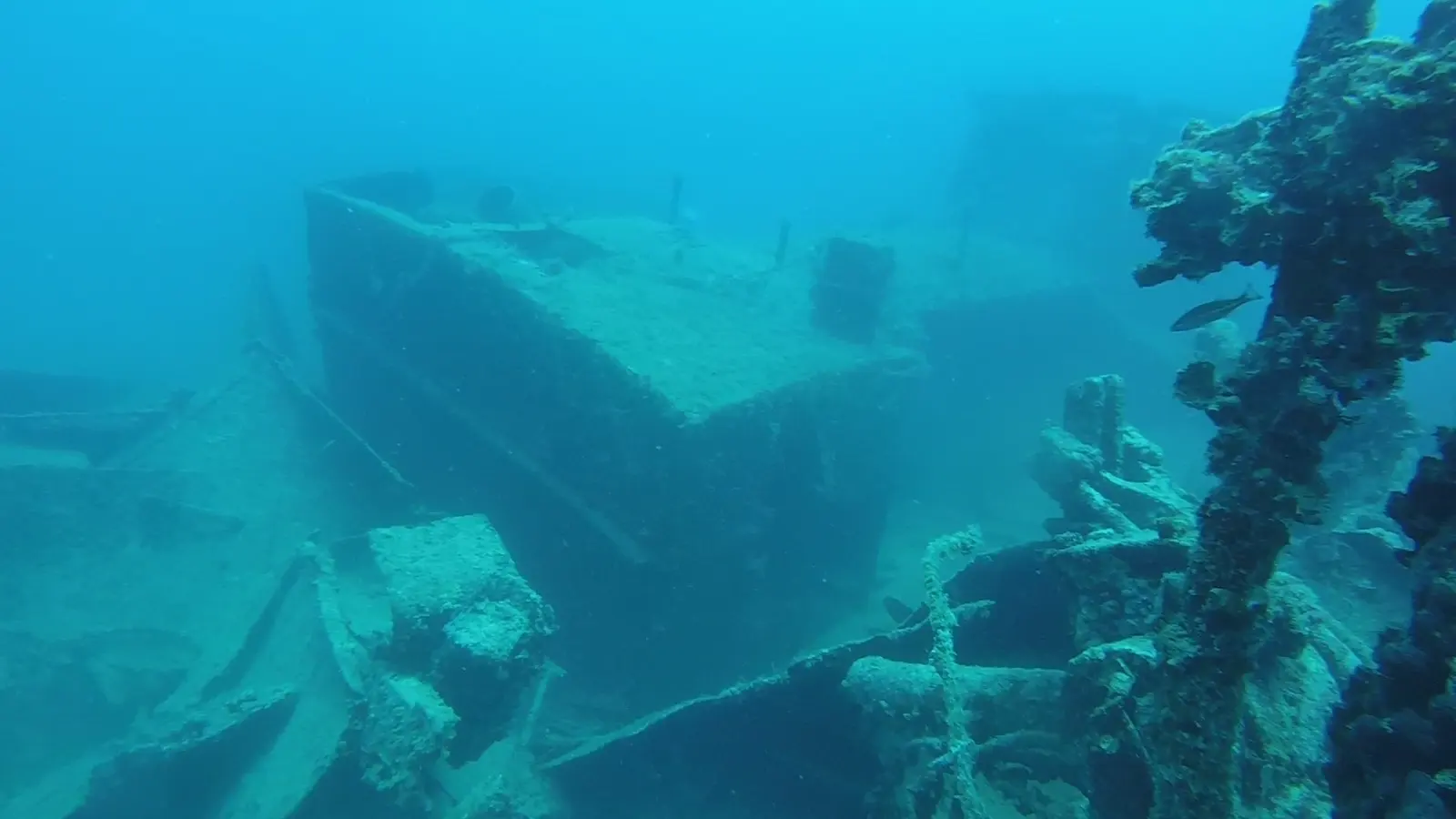
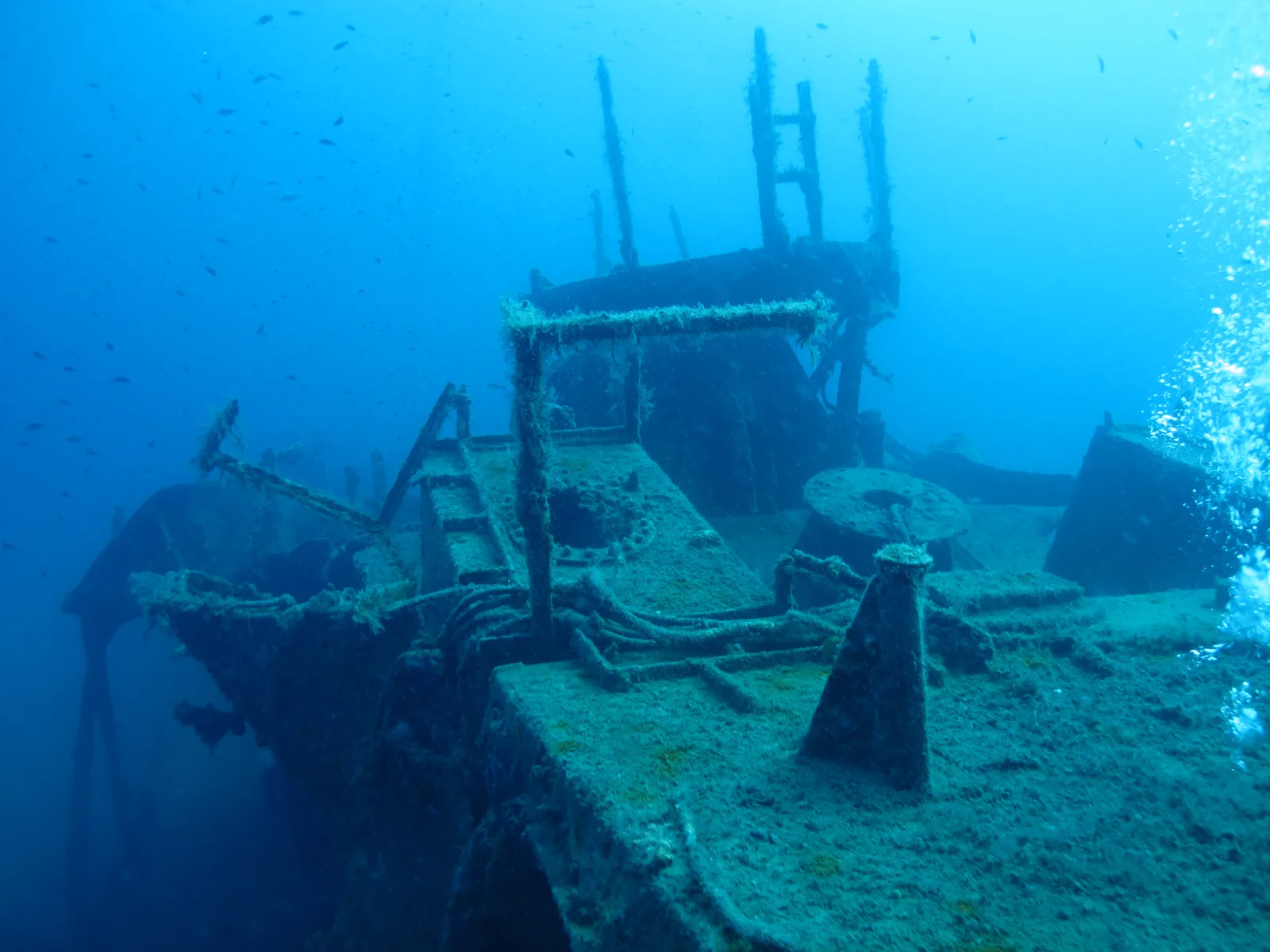
The remains of Oreste rest on a sandy seabed at a maximum depth of approximately 32–33 metres. The vessel lies broadly upright on its keel, although the explosion and decades of deterioration have caused extensive collapse.
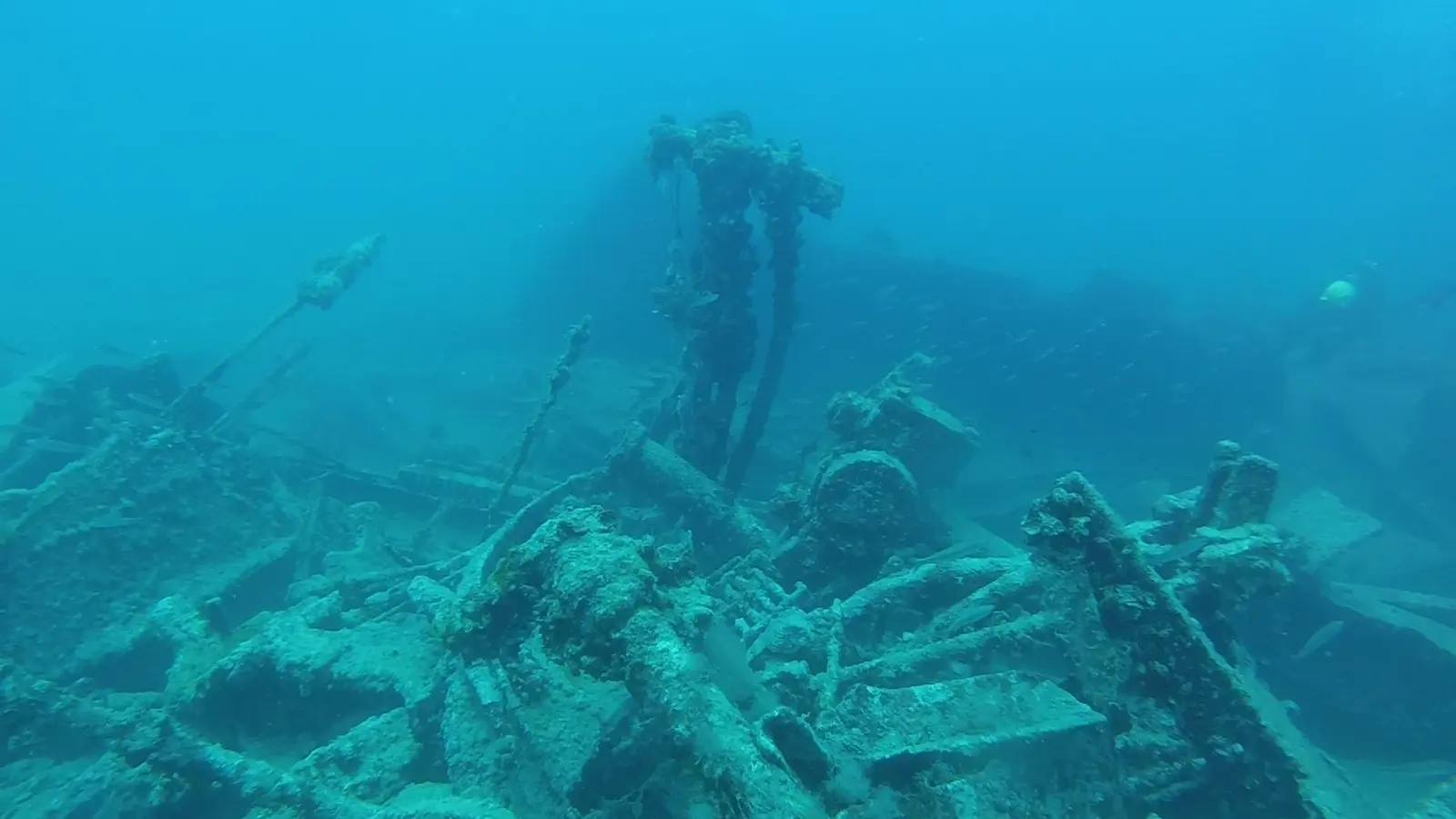
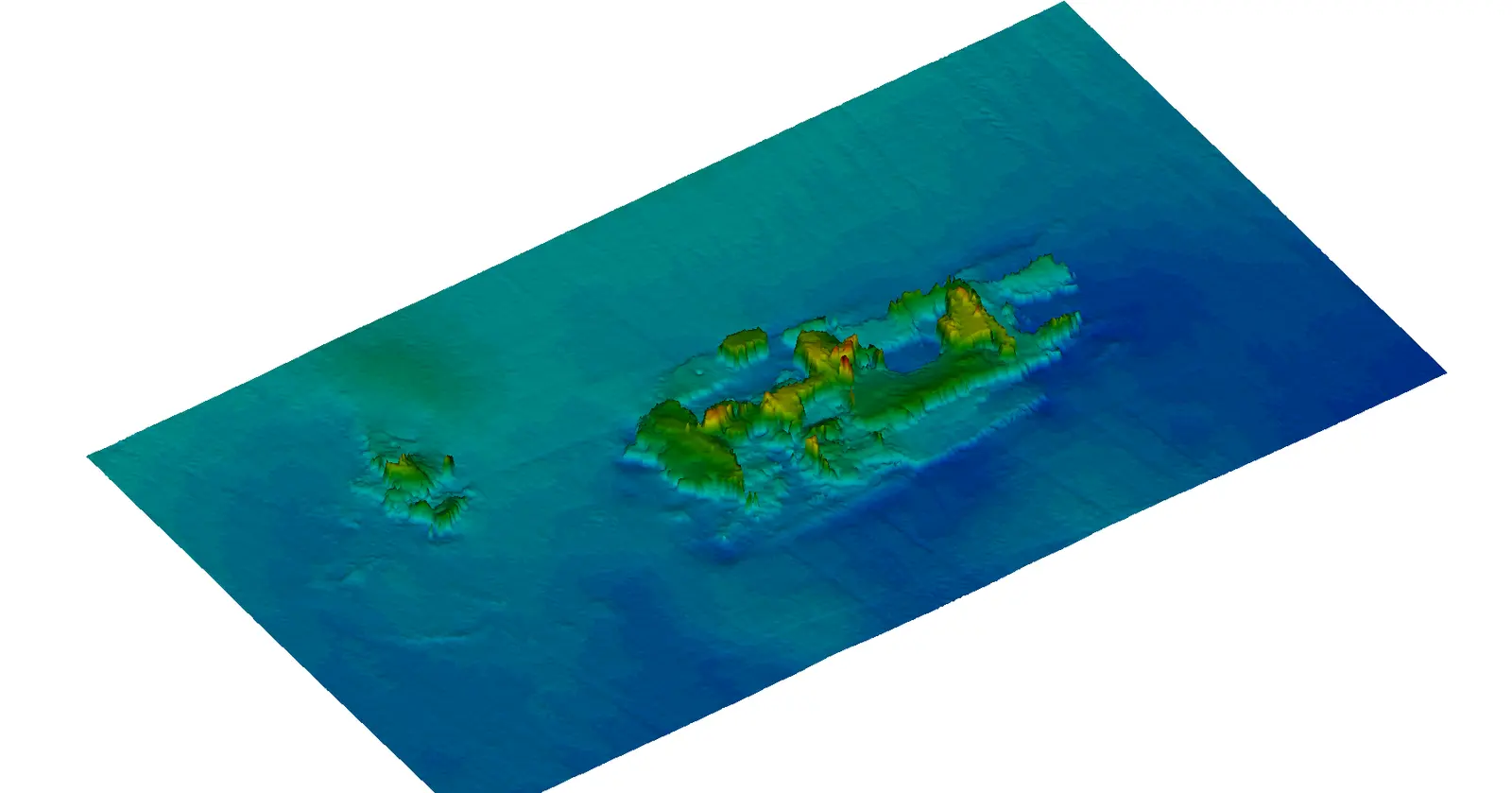
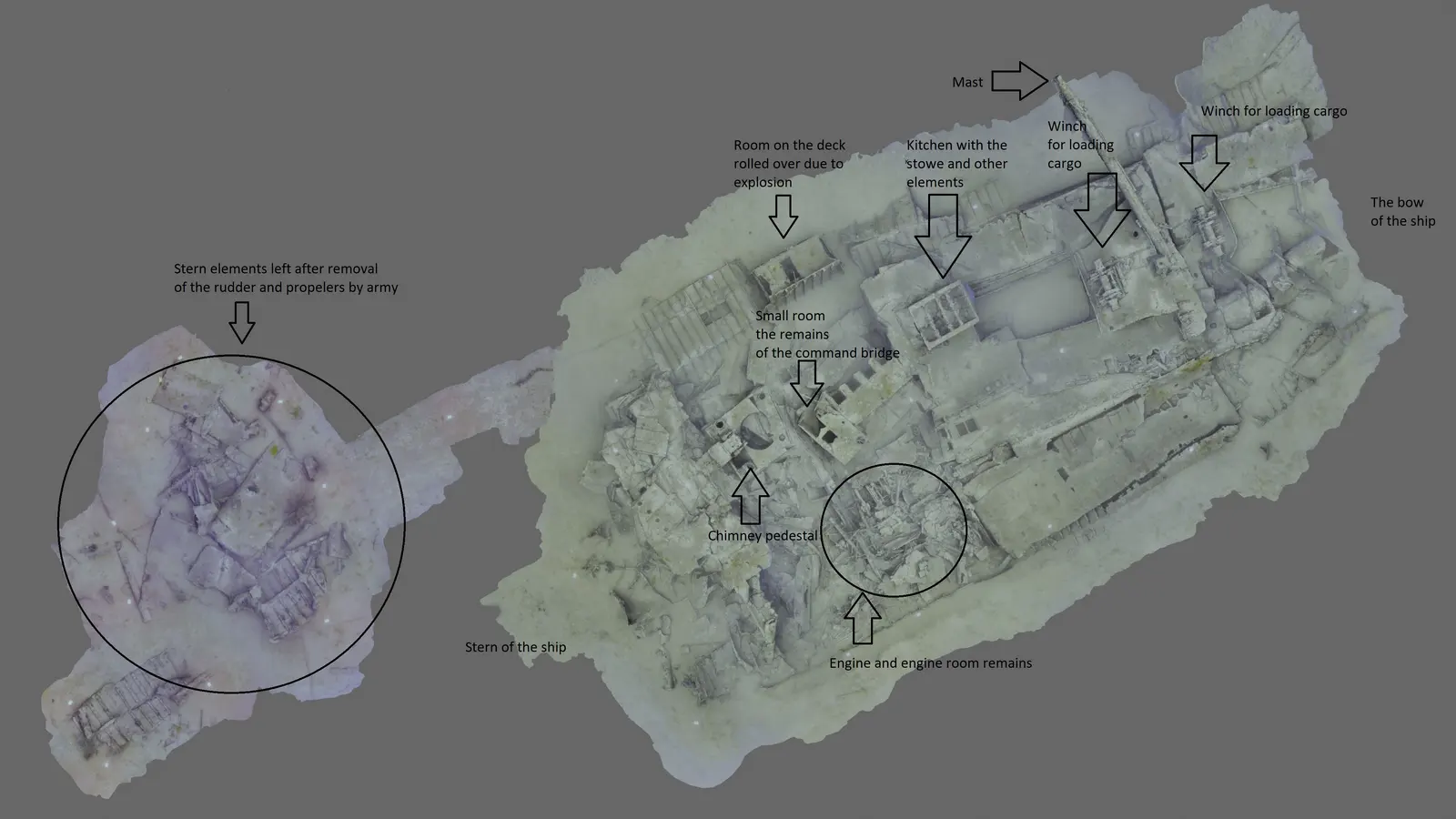
The ship is divided into two principal sections, separated by approximately 20 metres. Between them lies a debris field of twisted hull plating, deck components and machinery created by the explosion and the gradual breakup of the structure.
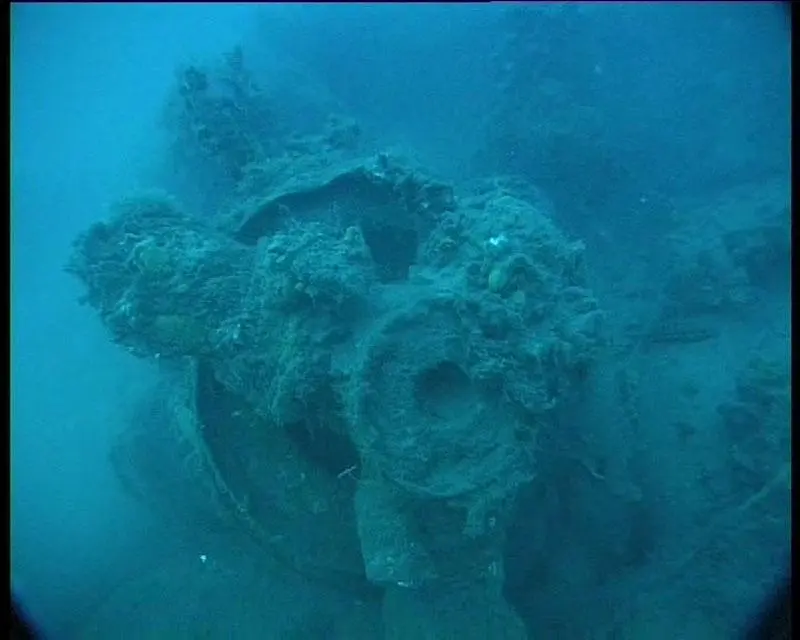
At the stern, divers can identify the propeller shaft and sections of the shaft tunnel. Parts of the steam-propulsion system survive within the wreck, while the rudder and other structural elements remain recognizable despite corrosion and collapse.
The surviving deck areas contain cargo-handling equipment, including a winch, together with remains interpreted as part of the galley. The funnel and mast have fallen across the broken structure, while the original deck has largely collapsed into the hull.
Change over time
Local documentation records that the Yugoslav maritime salvage company Brodospas inspected the wreck in 1955. Records associated with that investigation are especially valuable because they preserve evidence of the ship’s condition relatively soon after the Second World War.
Comparison with the site today indicates that the wreck has deteriorated considerably. Corrosion, storms, sediment movement, fishing activity, anchoring and the removal of objects have all probably contributed to the loss of structural material.
Historical plans, early salvage records and modern photogrammetric documentation could be combined to reconstruct the vessel digitally. Repeated 3D surveys would also allow researchers to identify areas of recent collapse and monitor the wreck’s condition.
A marine habitat
Over more than eight decades, Oreste has developed into a large artificial reef. Its steel plates and machinery provide hard surfaces for marine growth, while cavities in the broken hull offer shelter to fish, conger eels, moray eels, lobsters and other marine organisms.
This combination of industrial archaeology and marine life contributes greatly to the site’s visual appeal. It also means that the wreck should be managed as both a cultural heritage site and an established marine habitat.
Diving Oreste
At approximately 32 metres, Oreste is a deep recreational wreck dive suitable for properly qualified and experienced divers. Local operators generally require at least Advanced Open Water or equivalent certification, while additional deep-diving and wreck-diving training is strongly recommended.
The wreck’s two principal sections allow divers to observe its construction, machinery and explosion damage during a carefully planned visit. In favourable summer conditions, visibility may reach approximately 15–20 metres, but conditions can change with currents, weather and disturbed sediment.
The depth limits bottom time and makes gas management particularly important. Sharp metal, unstable plating, fishing lines, enclosed spaces and easily disturbed sediment create additional hazards. Penetration should be attempted only by divers with specialist wreck-diving training and appropriate redundant equipment.
Nothing should be removed or displaced. Even isolated fragments form part of the archaeological record and can help researchers understand the explosion, the vessel’s breakup and its construction.
Preserving Oreste
The wreck preserves several interconnected histories: British industrial shipbuilding, late nineteenth-century cargo transport, Italian private shipping and the militarization of Adriatic trade during the Second World War.
Its cultural value does not depend on being intact. The separation of the hull, the debris field and the surviving machinery together record the vessel’s destruction and subsequent transformation on the seabed.
Through archaeological research, 3D documentation and responsible diving, Oreste can remain accessible while being protected from further damage. Its story also demonstrates how underwater heritage can connect historical research, public education, marine conservation and sustainable diving tourism.
 Patrol Boat PBR-512Vessel · Žanjice Bay
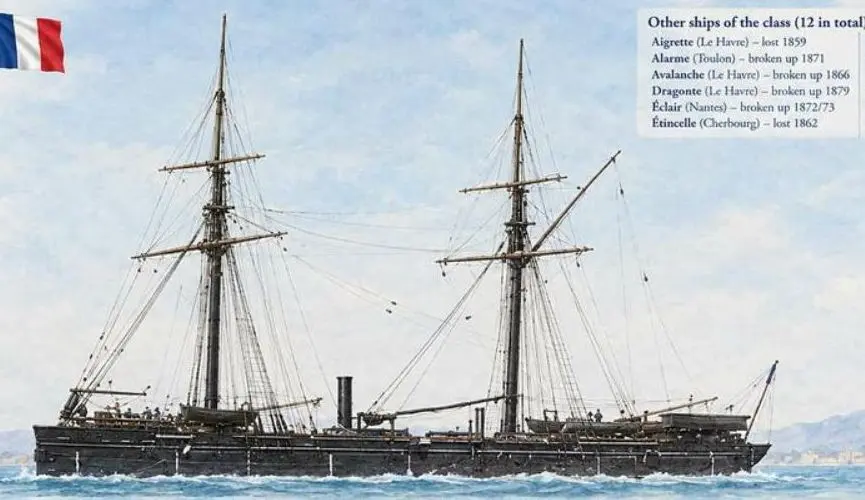 AigretteGunboat · Near Bar
 Junkers Ju 88Aircraft · Off Čanj
 CarlottaCargo vessel · Cape Platamuni