Approximately one nautical mile southwest of Cape Volujica, near Bar, lies the wreck of a nineteenth-century wooden warship long surrounded by uncertainty. Detailed multibeam-sonar recording and research in French archives now indicate, with a high degree of confidence, that the vessel is the French Imperial Navy gunboat Aigrette, lost following a boiler explosion in 1859. A direct archaeological inspection is still required before the identification can…
Gunboat / Near Bar
Aigrette
Approximately one nautical mile southwest of Cape Volujica, near Bar, lies the wreck of a nineteenth-century wooden warship long surrounded by uncertainty.
From the collection
Closer to the evidence.
The research narrative
A deeper reading.
French Gunboat Aigrette
Approximately one nautical mile southwest of Cape Volujica, near Bar, lies the wreck of a nineteenth-century wooden warship long surrounded by uncertainty. Detailed multibeam-sonar recording and research in French archives now indicate, with a high degree of confidence, that the vessel is the French Imperial Navy gunboat Aigrette, lost following a boiler explosion in 1859. A direct archaeological inspection is still required before the identification can be considered conclusive.
Built for the Crimean War
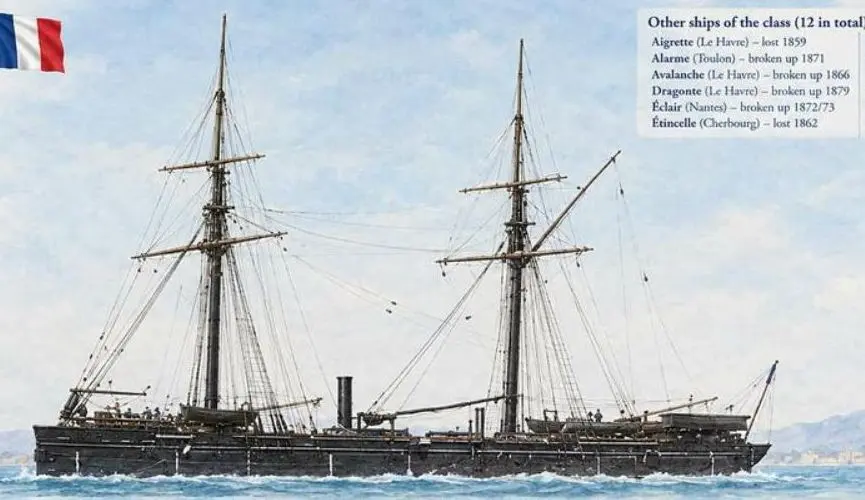
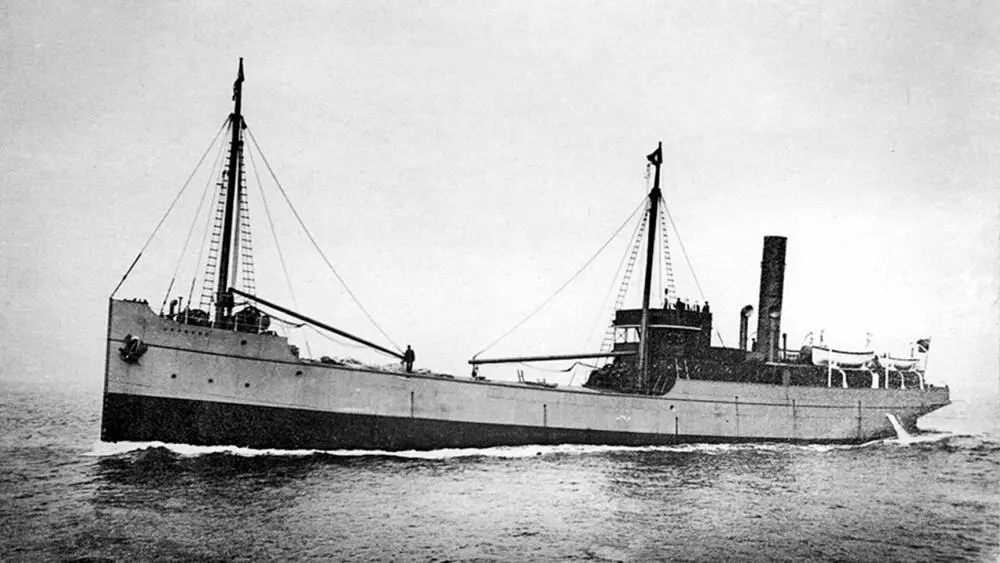
Aigrette was a first-class screw gunboat built at Le Havre in 1855 for the French Imperial Navy during the reign of Napoleon III. It belonged to a group of 12 small wooden gunboats developed for operations during the Crimean War of 1853–1856.
The vessels are commonly classified in French naval references as the Alarme class, although some recent descriptions call them the Étincelle class. Until the original French construction and fleet records are examined in detail, Alarme-class gunboat is the more cautious designation.
France, Britain, the Ottoman Empire and the Kingdom of Sardinia fought the Crimean War against the Russian Empire. Naval operations were central to the conflict, particularly in the Black Sea, where large warships could not safely enter every coastal area or river mouth.
Designed for shallow waters
The gunboats were built to operate in the shallow coastal waters of the northern Black Sea and around the Danube Delta. Their principal duties included bombarding coastal positions and protecting Allied floating batteries against attacks by Russian gunboats and small craft.
Aigrette was approximately 43.9 metres long and 7.8 metres across the beam, with a displacement of about 350 tonnes. Its relatively shallow draught—reported between approximately 3.2 and 3.5 metres—allowed it to approach coastlines and river mouths inaccessible to larger warships.
The vessel had a wooden hull and combined two forms of propulsion. An auxiliary sailing rig allowed it to travel without consuming coal, while a Schneider-Creusot steam engine of approximately 400 horsepower drove a single propeller. Its maximum speed was around eight knots.
Published descriptions disagree over whether the vessel carried two or three masts. The exact arrangement should therefore be confirmed from original construction plans rather than reconstructed from later summaries.
Guns and crew
Aigrette carried a crew of approximately 78 officers and sailors. Its principal armament reportedly included four heavy 50-pounder smoothbore guns intended for attacks against coastal positions and fortifications.
Online sources provide contradictory information about its secondary rifled weapons, including an implausible claim that the small vessel carried 20 additional guns. Until an original French armament return is located, the number and calibre of these smaller weapons should be regarded as uncertain.
The combination of steam propulsion, sails, shallow draught and heavy artillery made vessels such as Aigrette transitional warships. They belonged to an era when wooden sailing fleets were gradually being transformed by steam engines, shell-firing guns and new forms of naval construction.
After the Crimean War
The Allied victory brought the Crimean War to an end in 1856. With their original mission completed, the French Navy reassigned many of its shallow-draught gunboats to coastal patrol, overseas stations and colonial service.
Aigrette was transferred to the Adriatic, where it reportedly remained active for approximately three years. Its modest speed mattered less in patrol work than its economical operation, shallow draught and ability to approach poorly equipped coastal anchorages.
The political geography of the Adriatic was very different at that time. Bar was internationally known as Antivari and remained within the Ottoman Empire; it did not become part of Montenegro until the territorial settlement following the Congress of Berlin in 1878.
The final patrol
On 17 August 1859, Aigrette suffered a catastrophic accident while operating off Antivari. A boiler explosion caused severe internal damage, after which the gunboat foundered and sank.
Historical summaries place the loss approximately two nautical miles southwest of Antivari. The modern wreck candidate lies roughly one and a half nautical mile southwest of Cape Volujica. This apparent difference does not necessarily contradict the identification: nineteenth-century positions were often approximate, and the distance may have been measured from a different coastal reference point.
The explosion was heard aboard the ships at anchor, and boats were launched immediately. The French steam aviso Monge proceeded to the scene, while boats associated with Isly and other vessels attempted to recover survivors. The rescue took place in severe weather. Strong wind made conditions dangerous for the small boats, and Monge subsequently helped tow them and their rescued passengers back to the anchorage.
Sardinian sailors also played an important role. On 18 August, Roze wrote to Alessandro Cordero di Montezemolo, commanding Des Geneys, thanking him and his crew for promptly sending boats and saving French lives.
Montezemolo and fellow Sardinian officer Luigi Figari were subsequently appointed Knights of the Legion of Honour under an imperial decree dated 2 May 1860. The cited notice recognized their services during the 1859 campaign, rather than attributing the awards exclusively to the rescue.
Ottoman Captain Mehemet Bey, commanding the corvette rendered in the supplied document as Esseri Djerid, was also credited with exceptional efforts to locate and save survivors. He was appointed an Officer of the Legion of Honour on 17 October 1863 specifically for his conduct during Aigrette’s sinking.
Nine crew members are reported to have died in the disaster. The remaining complement appears to have survived, although a complete casualty list and detailed account of the evacuation have not yet been published in the accessible sources.
The sinking was an industrial and maritime accident rather than the result of combat. Boiler explosions were a serious danger aboard early steamships, especially before modern systems of pressure control, inspection and standardized engineering practice were fully established.
Forgotten beneath the sea
The wreck lay on the seabed off Bar for more than a century before attracting modern attention. It was encountered at a depth of approximately 50 metres during production of the television series The Underwater World of Montenegro in the mid-1990s.
Because no diagnostic inscription or recognizable machinery had been documented, the vessel’s identity remained unknown. Its wooden construction encouraged speculation that it might be an Ottoman sailing ship lost during the Montenegrin–Ottoman War of 1876–1878.
For around three decades, the site continued to be described simply as an unidentified wooden wreck. Its depth, fragile condition and distance from shore made detailed visual investigation difficult.
Sonar reveals the vessel
The breakthrough came through cooperation between the Centre for Archaeology of the Institute for Interdisciplinary and Multidisciplinary Studies at the University of Montenegro and the Hydrography Department of Montenegro’s Institute of Hydrometeorology and Seismology.
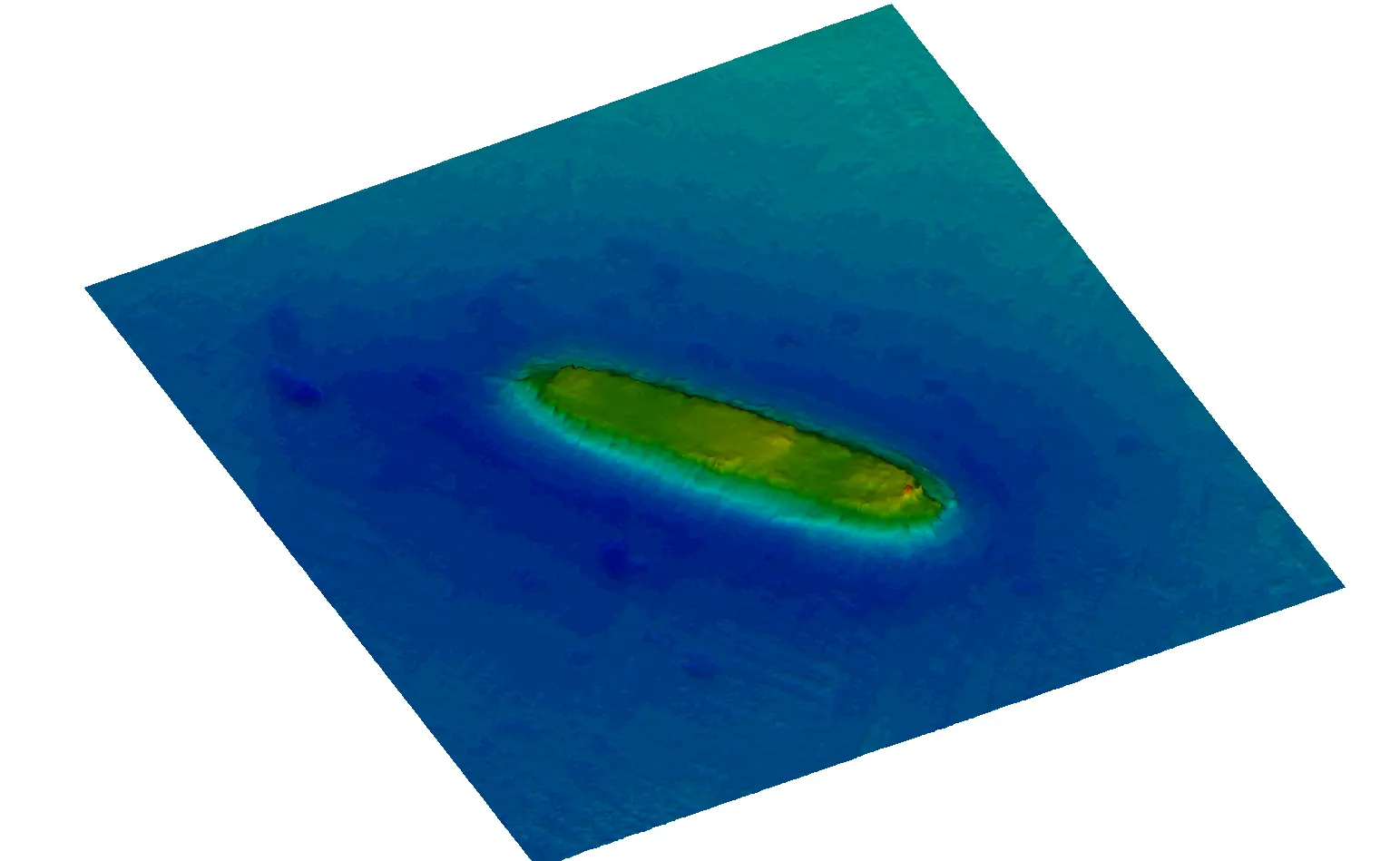
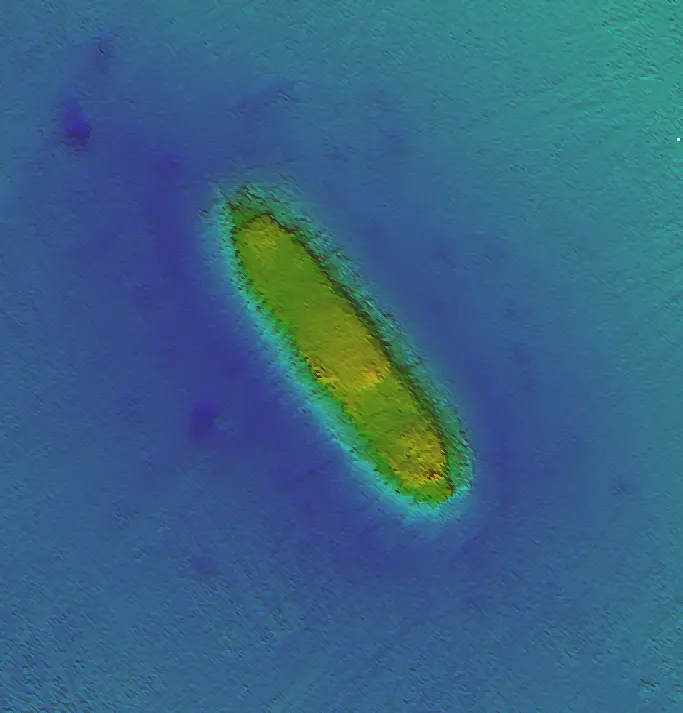
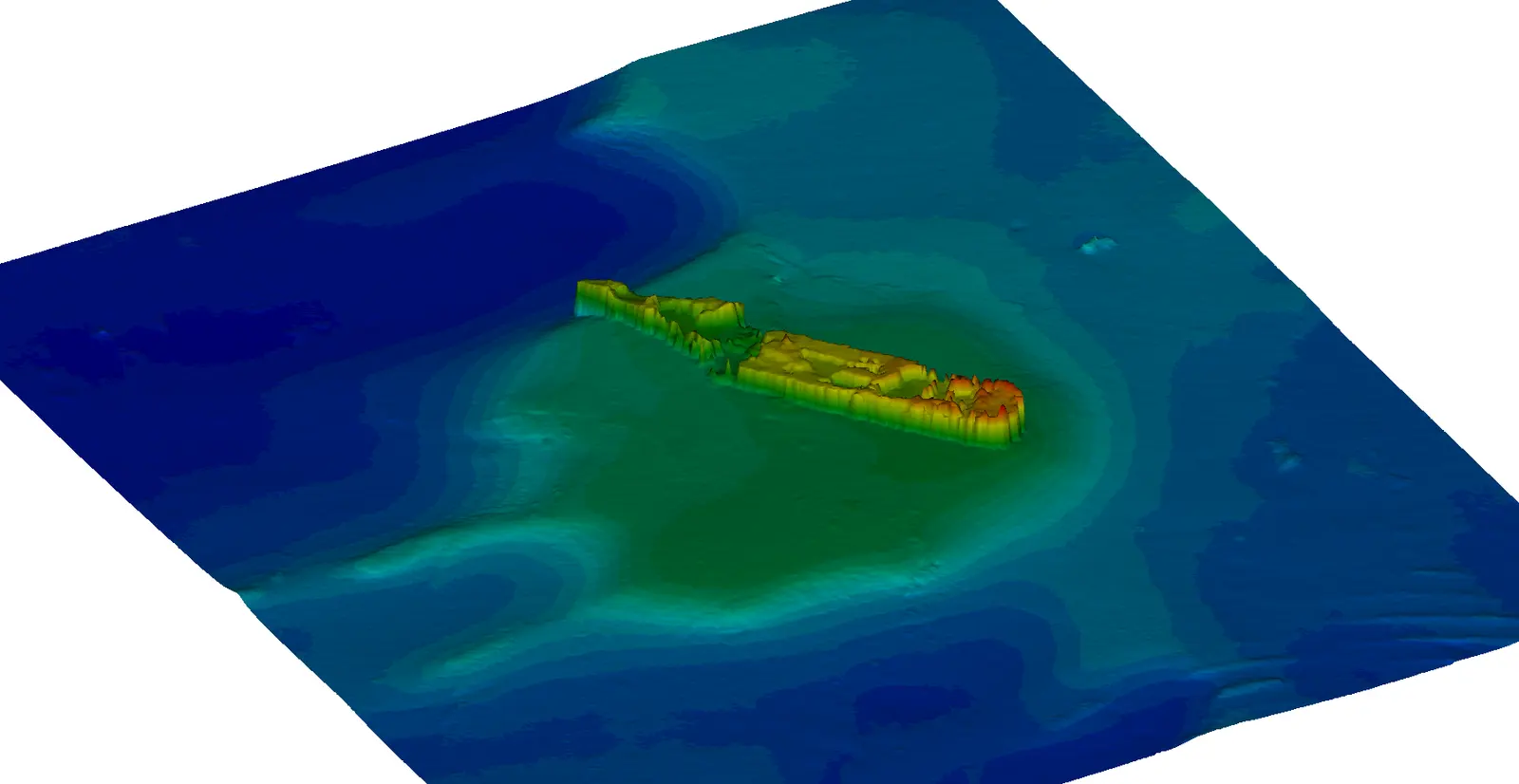
A high-resolution multibeam-sonar survey produced a detailed three-dimensional image of the wreck and allowed researchers to determine its surviving dimensions with much greater precision. These measurements were then compared with construction data and historical evidence preserved in French archives.
The dimensions, location, construction and documented circumstances of loss correspond closely with those of Aigrette. On this basis, the researchers concluded in October 2026 that the wreck is almost certainly the French gunboat lost off Antivari in 1859.
Identification status
The identification is compelling but remains provisional. Multibeam sonar can reveal the dimensions, orientation and principal structural features of a wreck, but it cannot always record the small diagnostic details needed to establish identity beyond doubt.
A future archaeological dive will examine the hull, machinery, surviving weapons and equipment. An inscription, construction mark, gun number, engine component or other diagnostic feature could provide final confirmation that the wreck is Aigrette.
The wreck today
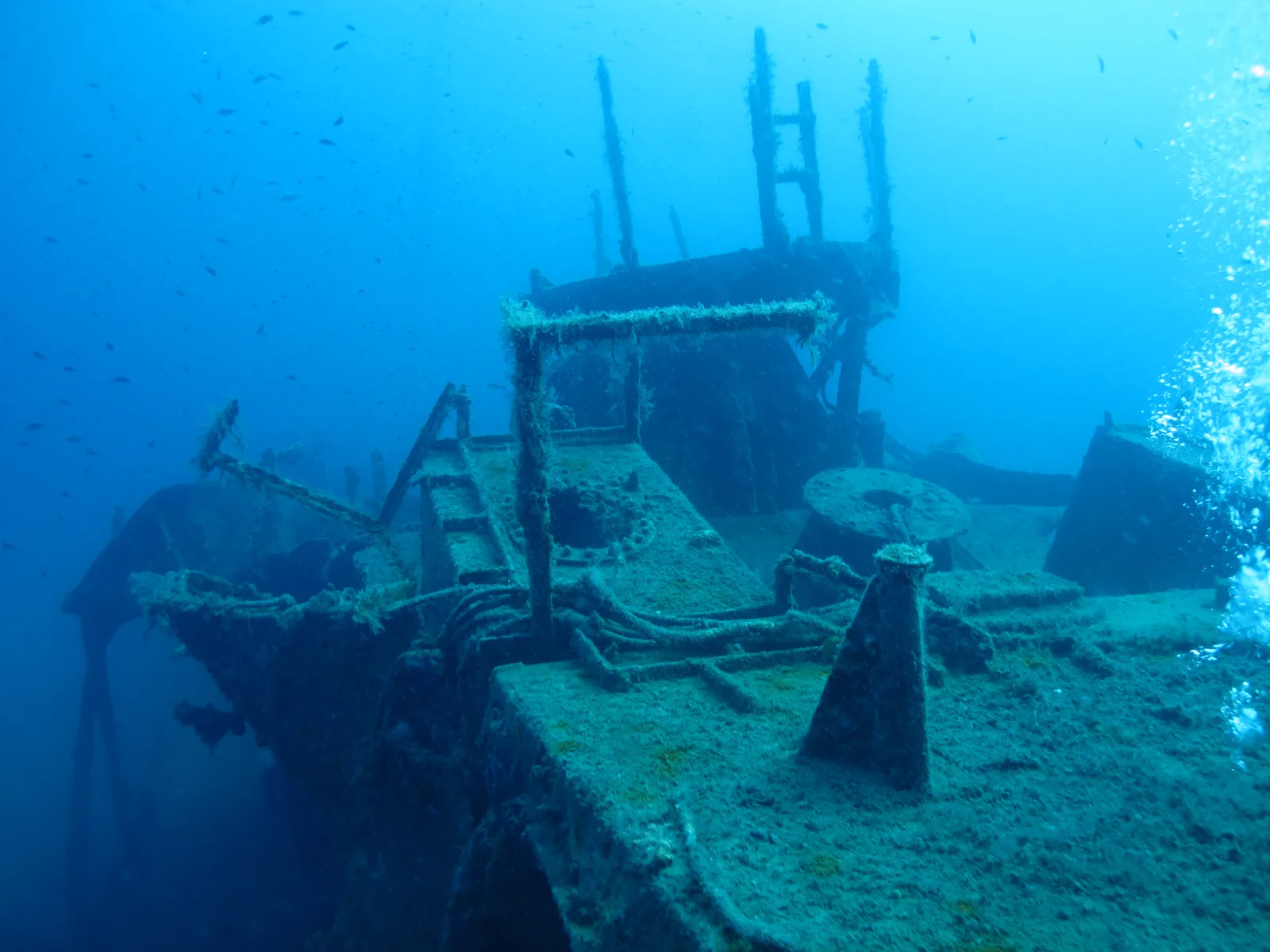
The remains lie at a depth of about 50 metres southwest of Cape Volujica. More than 160 years of biological activity, sediment movement and deterioration have affected the wooden structure, but the surviving archaeological footprint was sufficiently preserved for its dimensions to be recorded by sonar.
Wooden wrecks often survive differently from steel ships. Sections exposed above the seabed can deteriorate rapidly, while material buried in sediment may remain protected because of lower oxygen levels. Heavy components—including guns, machinery, anchors and fittings—may preserve the vessel’s original arrangement even where much of the wooden hull has disappeared.
The site may also contain evidence of the boiler explosion. Mapping the distribution of machinery and hull fragments could help researchers determine where the explosion occurred and how the gunboat broke apart.
Diving Aigrette
At approximately 50 metres, the wreck is beyond the limits of conventional recreational diving. Any direct visit requires technical-diving qualifications, appropriate breathing gases, redundant equipment and carefully planned decompression procedures.
The depth, limited bottom time and fragile wooden remains make the site particularly sensitive. Scientific investigation should be undertaken only by authorized archaeological and technical-diving teams using non-destructive methods.
Nothing should be removed from the wreck. Even isolated fittings or fragments may contain information necessary to confirm the vessel’s identity, reconstruct its construction or understand the explosion that caused its loss.
Protection and research
Because the wreck has remained underwater for more than 100 years, it falls within the chronological definition of underwater cultural heritage established by the 2001 UNESCO Convention. This does not automatically establish its individual legal status under Montenegrin legislation, but it provides an important framework for its research, preservation and responsible presentation.
The first priority should be preservation in situ. Archaeological excavation or object recovery should be considered only when necessary to answer clearly defined research questions or protect material at immediate risk.
Detailed photogrammetry, combined with the existing multibeam survey, could produce a comprehensive three-dimensional model of the wreck. Such a model would support identification, condition monitoring and virtual public access without encouraging uncontrolled diving at the site.
A rare discovery
If the identification is confirmed, Aigrette will represent an exceptionally early steam-powered naval wreck in Montenegrin waters. Most well-known wrecks along the coast date from the two world wars; this vessel belongs to the earlier technological transition from sailing warships to steam-powered naval fleets.
Its story also extends Montenegro’s underwater history beyond the twentieth century. The wreck connects the waters off Bar with the Crimean War, the global reach of the French Imperial Navy, Ottoman Antivari and the emergence of modern steam-powered warfare.
Through continued cooperation between Montenegrin and French researchers, this once-anonymous wreck can become an important archaeological site and a powerful example of how modern survey technology and archival research can restore the identity of a ship lost for more than a century and a half.
Probable vessel: Aigrette
Identification status: High-confidence provisional identification; direct inspection pending
Built: 1855
Draught: approximately 3.2–3.5 metres
Displacement: approximately 350 tonnes
Propulsion: Auxiliary sails and one Schneider-Creusot steam engine driving a single propeller
Complement: approximately 78
Principal armament: Four 50-pounder smoothbore guns; secondary armament requires verification
Original role: Coastal bombardment and protection of floating batteries during the Crimean War
Modern documentation: High-resolution multibeam-sonar survey
Heritage character: Nineteenth-century underwater naval archaeological site and maritime memorial
 Junkers Ju 88Aircraft · Off Čanj
 CarlottaCargo vessel · Cape Platamuni
 RumijaRoyal yacht · Port of Bar
 Patrol Boat PBR-512Vessel · Žanjice Bay