Beneath the waters of Montenegro’s Adriatic coast lies an exceptional archaeological landscape: the remains of merchant ships, cargoes of amphorae and building materials, anchorages, harbour areas, and individual objects lost during ancient voyages. Together, these traces show that the coast of present-day Montenegro was not a remote edge of the ancient world. It formed part of a busy maritime corridor linking the Greek world, Italy, the eastern…
Archaeology / Montenegrin coast
Ancient shipwrecks
Beneath the waters of Montenegro’s Adriatic coast lies an exceptional archaeological landscape: the remains of merchant ships, cargoes of amphorae and building…
From the collection
Closer to the evidence.
The research narrative
A deeper reading.
Ancient Underwater Cultural Heritage of Montenegro
Beneath the waters of Montenegro’s Adriatic coast lies an exceptional archaeological landscape: the remains of merchant ships, cargoes of amphorae and building materials, anchorages, harbour areas, and individual objects lost during ancient voyages. Together, these traces show that the coast of present-day Montenegro was not a remote edge of the ancient world. It formed part of a busy maritime corridor linking the Greek world, Italy, the eastern Adriatic, the Aegean, and North Africa.
This underwater heritage spans a long period, from the Hellenistic age and the Roman Republic through the Roman Imperial period and Late Antiquity. Each shipwreck and artefact adds to our understanding of how people travelled, traded, and maintained contact across the Adriatic and wider Mediterranean.
Archaeology Beneath the Sea
The sea preserves evidence that written sources often leave unrecorded: the material remains of ships, cargoes, and the people who moved goods between distant regions. A shipwreck can be understood as a moment frozen in time. When a vessel sank, its hull, cargo, equipment, and sometimes personal belongings came to rest together on the seabed.
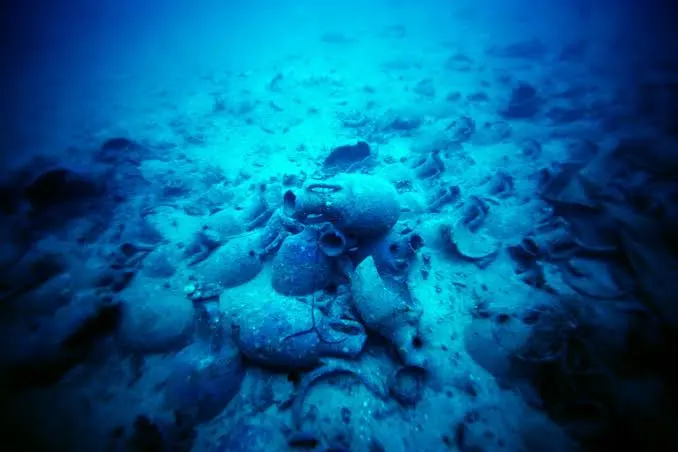
Amphorae are among the most important finds from ancient shipwrecks. These ceramic transport containers were used to carry products such as wine, olive oil, fish products, fruit, and other commodities. Their shapes, fabrics, and places of manufacture allow archaeologists to identify approximate dates, trace commercial connections, and reconstruct ancient routes of exchange.
The importance of an underwater site does not lie only in the objects visible on the seabed. The position of each amphora, the way a cargo was stacked, and its relationship to the remains of the ship may reveal how the vessel was loaded, where it may have come from, and how its final voyage unfolded.
Exploring the Seabed
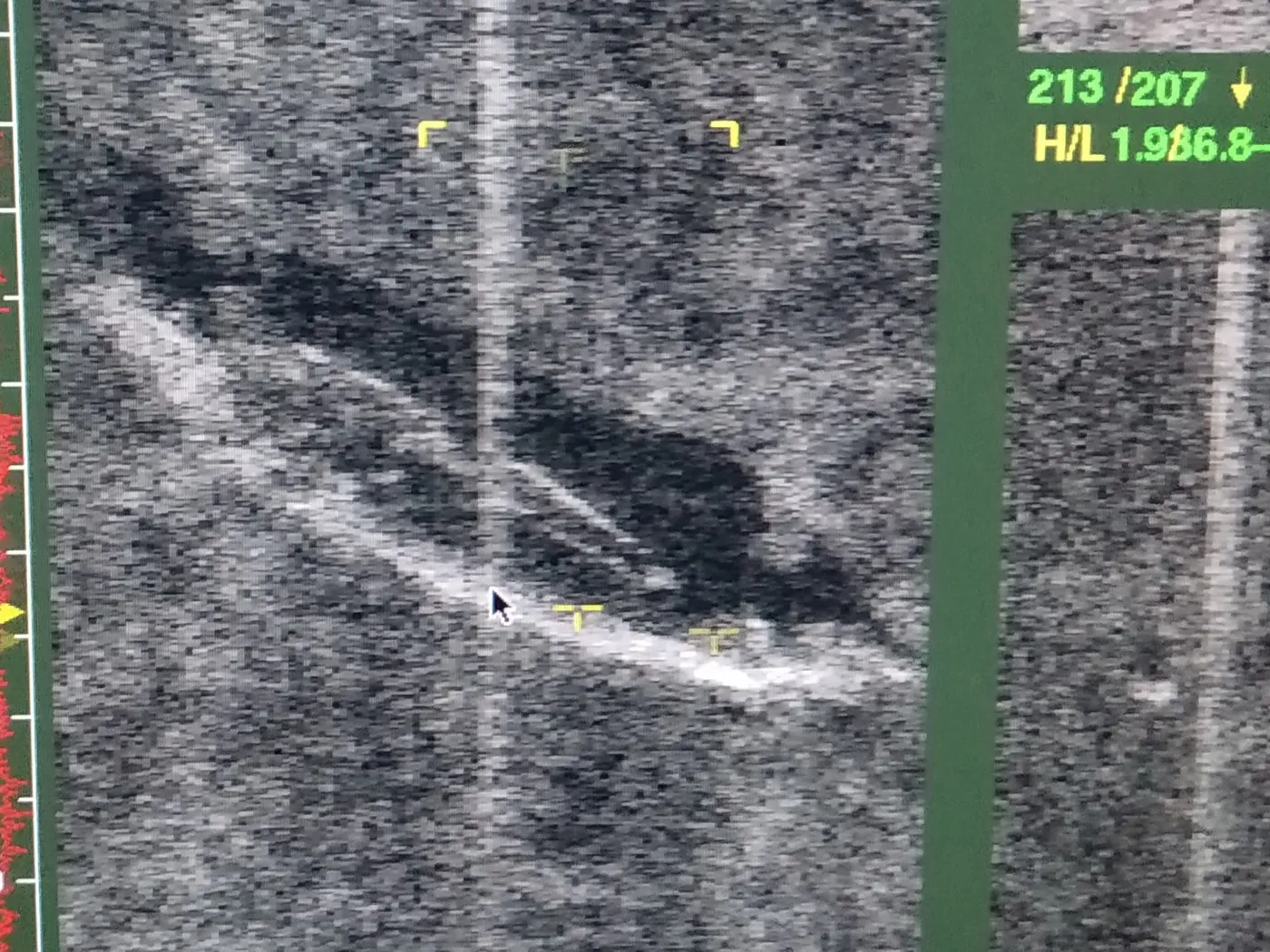
Multibeam sonar was used to create detailed three-dimensional maps of the seafloor. Potential archaeological features identified in these maps were then examined by remotely operated vehicles equipped with cameras and navigation systems. This approach allows archaeologists to investigate large areas without disturbing fragile sites.
Only selected artefacts may be recovered for study, and only when appropriate conservation facilities are available. Objects that have remained underwater for centuries require careful and long-term treatment after recovery. For this reason, archaeological research increasingly focuses on documenting and preserving sites in their original underwater environment whenever possible.
Trade in the Hellenistic Age
Some of the earliest known underwater sites along the Montenegrin coast date to the Hellenistic period and the centuries before Roman rule. Shipwrecks carrying Corinthian and Greco-Italic amphorae demonstrate close commercial contacts between the eastern Adriatic, the Greek world, Sicily, and southern Italy.
These vessels carried products packed in standardised transport containers. Their cargoes show that maritime trade was not occasional or accidental. Instead, it depended on regular sea routes, experienced crews, protected anchorages, and a network of coastal settlements that supported movement between larger centres.
The finds also help to explain the importance of ancient Rhizon, present-day Risan. Archaeological material from the Bay of Risan includes amphora fragments, ceramic vessels, and other evidence of maritime activity from the late centuries BCE into the Roman period. These discoveries confirm that the bay formed part of a wider Adriatic network of exchange.
Roman Merchant Ships
During the Roman period, the Adriatic became increasingly integrated into a Mediterranean system of production, distribution, and consumption. Several ancient wrecksites along the Montenegrin coast contain large cargoes of Lamboglia 2 amphorae, a type closely associated with late Republican commerce in the Adriatic.
At some sites, amphorae remain arranged in rows or layers, preserving traces of how they were originally stacked in the ship’s hold. Elsewhere, the cargo has been disturbed by natural processes or modern activities, but enough survives to reveal the scale of the original shipment.
These wrecks demonstrate the movement of standardised goods between production zones, ports, and regional markets. They also illustrate the importance of Montenegro’s coast as part of the eastern Adriatic route, where vessels could follow the shoreline, seek shelter in protected bays, and connect local communities with wider Mediterranean trade.
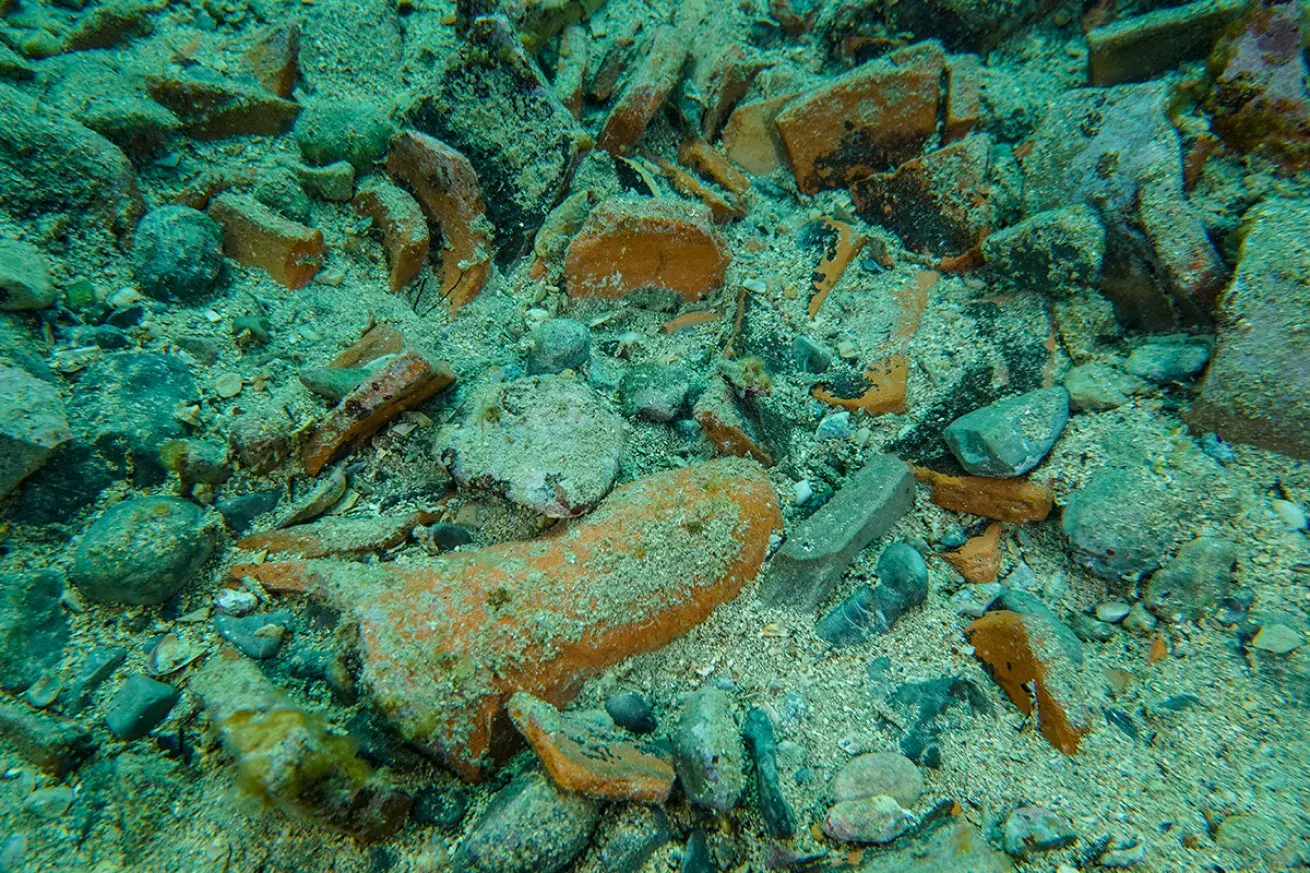
Not all merchant ships carried food or drink. One Roman-period wrecksite contained a cargo of roof tiles, including flat tegulae and curved imbrices. This important discovery shows that ancient ships also transported building materials needed for the construction and development of coastal settlements.
Connections with the Aegean
The Traste wreck provides particularly valuable evidence for connections between the Montenegrin coast and the Aegean world during the Roman Imperial period. The vessel carried Rhodian amphorae, recognisable by their long necks and distinctive handles. Several variants of the same amphora type were identified within the cargo.
Rhodian amphorae are often associated with wine, one of the island’s best-known exports. However, differences in container size and form suggest that a cargo may have included more than one commodity. Smaller or wider-mouthed containers may have been used for higher-value goods or products such as dried fruit.
The value of such a wreck lies not simply in the individual amphorae. Containers found together in a shipwreck provide direct evidence that they circulated at the same time and were transported as part of a single commercial operation. This helps archaeologists refine ceramic chronologies and understand how trade was organised across the Mediterranean.
Late Antique Networks
The Krekavica wreck reveals another important dimension of Montenegro’s ancient maritime connections. Its cargo consisted mainly of African 3 amphorae, produced in the region of modern Tunisia and dating to Late Antiquity.
These containers may have carried wine, fish products, olives, or other foodstuffs. Although the exact contents of an amphora cannot always be determined from its form alone, the origin of the pottery clearly indicates that Montenegro’s coast was connected to long-distance trade routes reaching North Africa.
The site demonstrates that maritime commerce continued even as the political and economic structures of the Roman world changed. Trade routes were reorganised, products and suppliers shifted, and new regional networks developed, but the eastern Adriatic remained an active maritime corridor.
Harbours and Anchorages
Underwater cultural heritage is not limited to shipwrecks. Sheltered bays and coves may preserve evidence of anchorages, small harbours, landing places, and areas where goods were loaded, unloaded, repaired, or temporarily stored.
The Bay of Risan and the area of Bigovica are especially important for understanding these wider maritime landscapes. Finds from such locations include amphorae from different Mediterranean production regions, ceramic vessels, elements of coastal infrastructure, and evidence of repeated use over long periods.
These sites reveal the everyday realities of ancient navigation. Ships needed safe places to shelter from storms, obtain water and supplies, repair damage, wait for favourable winds, and exchange goods. Ancient maritime routes were therefore not simply lines between major ports; they depended on a dense network of smaller coastal stopping points and local communities.
A Fragile Heritage
Underwater sites may appear safe because they lie beneath the sea or are partly covered by sediment. In reality, they are highly vulnerable. Fishing gear, anchoring, coastal construction, unregulated diving, and the illegal removal of artefacts can damage or destroy archaeological evidence.
When an amphora or another object is taken from a site without proper archaeological recording, much more than a single artefact is lost. Its position, relationship to other finds, and contribution to the interpretation of the site disappear. An object may survive in a private collection, but the historical story it could have told is often lost forever.
For this reason, the protection of underwater cultural heritage depends on careful documentation, professional conservation, responsible diving practices, and public awareness. Modern technologies such as sonar mapping, photogrammetry, three-dimensional models, virtual exhibitions, and carefully managed underwater trails can make this heritage accessible without unnecessarily exposing fragile sites to risk.
The precise locations of sensitive archaeological sites are therefore not made public. Protecting location data is not a restriction on public knowledge; it is an essential measure for safeguarding sites until appropriate systems of documentation, monitoring, conservation, and access are in place.
A Shared Adriatic Story
The ancient underwater heritage of Montenegro is an archive of travel, trade, technology, and cultural contact. Every shipwreck, anchorage, amphora, and fragment of ceramic contributes to a larger story of the Adriatic as a sea that connected communities rather than divided them.
Through archaeological research, these submerged remains help us understand how goods, ideas, and people moved across the ancient Mediterranean. Through their protection, they can continue to inform and inspire future generations.
 Unconfirmed wrecksShipwreck · Montenegrin coast
 Unidentified sitesUnidentified · Montenegrin coast
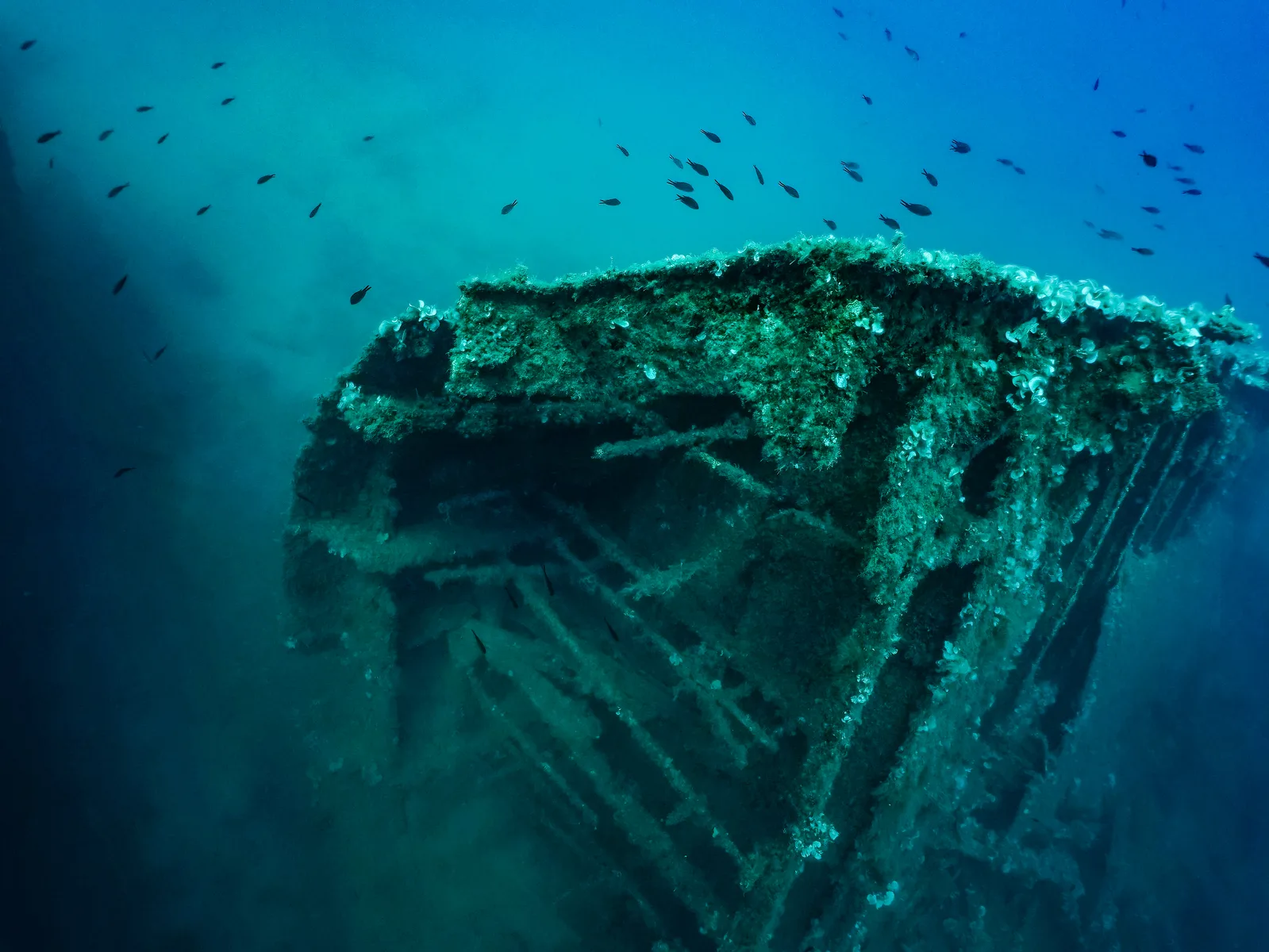 DagueShipwreck · Bar, Montenegro
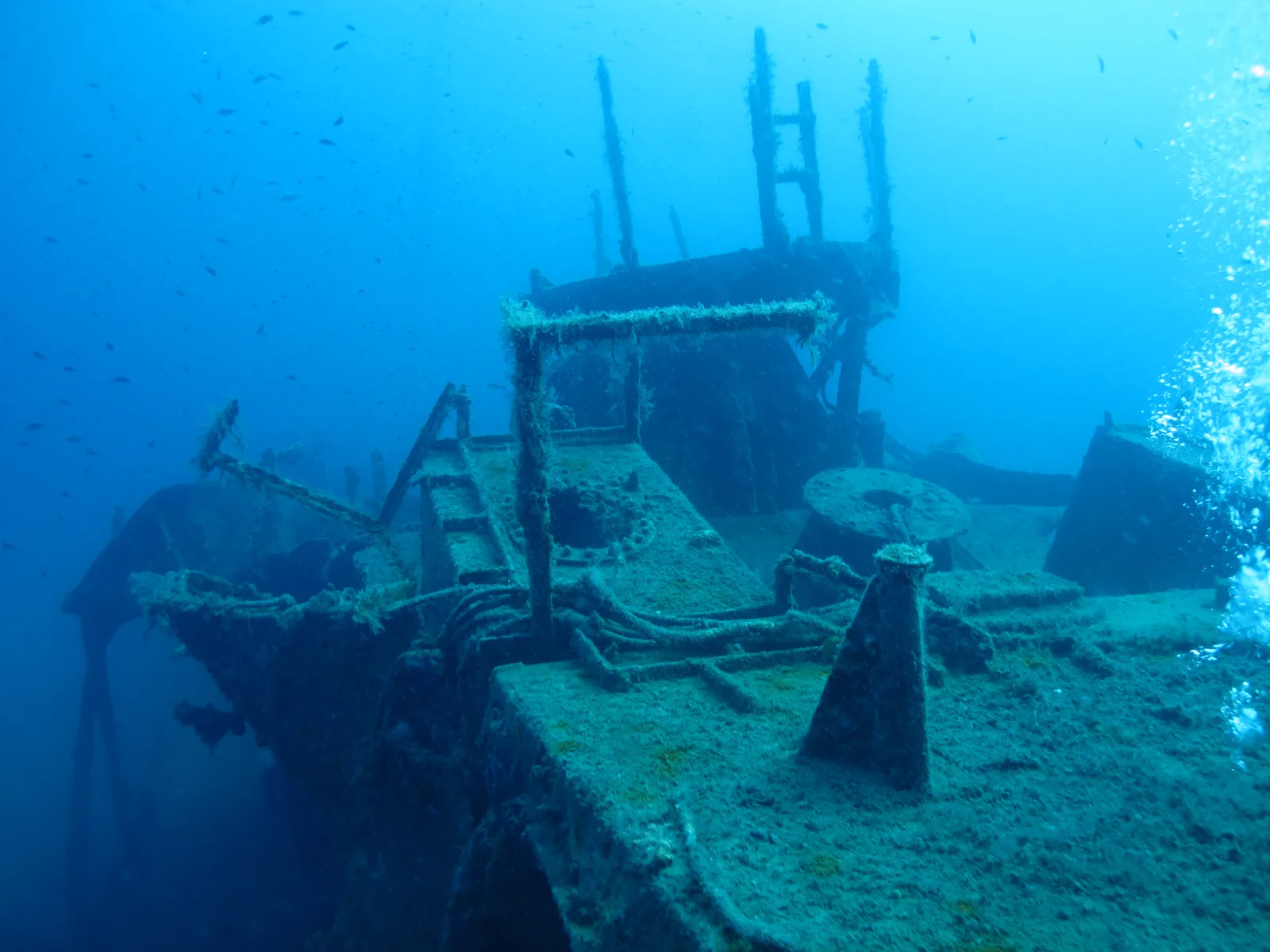 Patrol Boat PBR-512Vessel · Žanjice Bay