At a depth of approximately 41 metres in the centre of Tivat Bay lie the remains of the passenger steamship Cetinje. Destroyed by a German magnetic mine on 10 December 1944, only weeks after the liberation of the Bay of Kotor, the vessel became the site of one of the greatest maritime tragedies in Montenegro’s history. The exact number of victims remains unresolved: contemporary authorities recorded 87 deaths, while later research and testimony suggest…
Steamship / Tivat Bay
Cetinje
At a depth of approximately 41 metres in the centre of Tivat Bay lie the remains of the passenger steamship Cetinje.
From the collection
Closer to the evidence.
The research narrative
A deeper reading.
Steamship Cetinje
At a depth of approximately 41 metres in the centre of Tivat Bay lie the remains of the passenger steamship Cetinje. Destroyed by a German magnetic mine on 10 December 1944, only weeks after the liberation of the Bay of Kotor, the vessel became the site of one of the greatest maritime tragedies in Montenegro’s history. The exact number of victims remains unresolved: contemporary authorities recorded 87 deaths, while later research and testimony suggest that approximately 193–200 people—and possibly more—may have perished.
Built as Nettuno
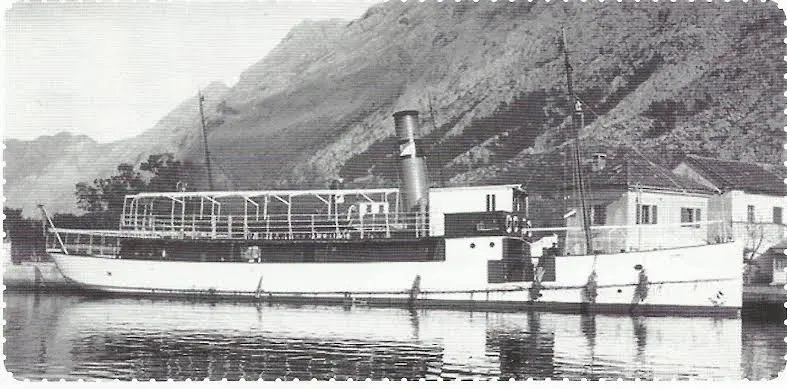
The vessel was built in Great Britain in 1903 and entered service under the name Nettuno. It was a small steel passenger steamship approximately 30.8 metres long and 5.3 metres across the beam, with a registered tonnage of around 100 gross tons.
Two reciprocating steam engines, with a reported combined output of approximately 280 horsepower, drove the vessel at a speed of up to ten knots. Although modest in size, it was reportedly licensed to carry as many as 250 passengers on short inland and coastal routes.
The precise shipyard and place of construction require further confirmation from original British registry records. Published local accounts refer to “Lajtam” or “Lytham,” but this identification should not be treated as definitive without archival verification.
Life on Lake Skadar
Under the ownership of the Bar Shipping Company, Nettuno operated on Lake Skadar during the early twentieth century. It carried passengers, mail and goods between lakeside settlements, connecting them with Virpazar and the overland route to Pristan, present-day Bar.
Its shallow draught and compact dimensions made it suitable for the lake, the Bojana River and the difficult waterways around Shkodër. Vessels such as Nettuno provided vital links in a region where roads were limited and overland travel could be slow and unreliable.
The Balkan Wars
During the First Balkan War of 1912–1913, Nettuno was adapted for military transport. It towed barges carrying supplies and war material for the Montenegrin army during operations around Shkodër.
The ship also became associated with an important political event. On 22 April 1913, Montenegrin Crown Prince Danilo Petrović and Ottoman commander Essad Pasha Toptani reportedly signed aboard it the agreement that preceded the surrender of Shkodër to Montenegro. The city was formally evacuated by Ottoman forces shortly afterwards.
International pressure soon forced Montenegro to withdraw from Shkodër, but the event secured Nettuno a distinctive place in the political and military history of the Balkans.
Sunk and raised
The vessel’s first sinking occurred during the First World War. In early 1916, Austro-Hungarian artillery struck and sank Nettuno near Shkodër or along the Bojana waterway. Local accounts report that 16 people died in the attack, although the casualty figure requires confirmation from contemporary military records.
Austro-Hungarian forces subsequently raised and repaired the vessel, renamed it Pionier and employed it for military transport. It survived the war and was later left partly damaged at Bar.
Published accounts differ over the precise sequence of its ownership during the 1920s. What is clear is that the vessel eventually entered the fleet of the Kotor-based Boka shipping company, later associated with Zetska plovidba, and was renamed Cetinje.
Passenger service in Boka
After reconstruction for passenger use, Cetinje operated on scheduled services inside the Bay of Kotor. Small steamships were essential to everyday life in Boka, linking coastal settlements more efficiently than the limited road network of the period.
The vessel carried residents, workers, merchants, students and visitors between Kotor, Prčanj, Stoliv, Perast, Risan, Kamenari, Tivat, Đenovići and Herceg Novi. For many communities, the arrival of a local steamer was part of the daily rhythm of life around the bay.
During the Second World War, the vessel passed through several occupations and changes of authority. By November 1944, when German forces withdrew from Boka, Cetinje was damaged and lying inactive at Dobrota.
Returning to service
The liberation of Kotor on 21 November 1944 left the region with damaged infrastructure and few functioning means of transport. Restoring passenger navigation became an urgent priority for the new authorities.
A twelve-member crew led by Captain Božo Paparela of Dubrovnik repaired Cetinje and returned it to service. The vessel entered Kotor on 5 December, an event reportedly welcomed by the city band and local residents as a sign that ordinary life was beginning again.
On 9 December, Cetinje completed its first journey on the restored Kotor–Herceg Novi route. It was then the principal public transport connection between many settlements around the bay.
The final voyage
Early on 10 December 1944, Cetinje departed Kotor and followed its scheduled route through the bay. The morning was cloudy and rainy, with a strong southerly wind producing rough conditions on the water.
The vessel was already crowded when it reached Tivat. Its passengers included local civilians, women and children, Yugoslav Partisans, wounded or travelling soldiers, Italian anti-fascist fighters associated with the Garibaldi Division and German prisoners of war.
No complete passenger manifest was prepared. Estimates of the number aboard consequently vary considerably, but testimony indicates that the vessel was carrying more than 200 people and may have been close to or beyond its normal passenger capacity.
At approximately 08:30, Cetinje left Tivat for Đenovići. It entered the centre of Tivat Bay, roughly equidistant from the coasts of Tivat, Krašići and Bijela.
A hidden minefield
German forces had withdrawn from the Bay of Kotor only weeks earlier. Before leaving, they placed defensive mines intended to obstruct Allied and Yugoslav navigation.
On 2 and 3 December, improvised minesweeping teams had cleared several passages between Tivat and Đenovići. Their equipment was primarily intended to remove conventional moored mines suspended beneath the surface.
The new authorities apparently did not know that German forces had also laid bottom mines equipped with magnetic fuzes. Local historical accounts state that 82 such mines had been deposited in the bay shortly before the German withdrawal, although this figure should be checked against German naval minelaying records.
A magnetic mine could detonate when the steel hull of a vessel passed above it. Unlike a moored contact mine, it could remain concealed on the seabed and escape conventional sweeping methods.
The explosion
At approximately 08:50, while Cetinje was crossing the middle of Tivat Bay, a tremendous explosion erupted beneath its forward section. A column of water rose from the position of the bow as the blast destroyed much of the ship.
The explosion tore apart the bow, bridge, funnel, mast and a large part of the superstructure. Witnesses reported that the still-running engines carried the shattered vessel forward and turned it through approximately 90 degrees before it disappeared.
Cetinje sank in less than five minutes; some accounts state that it vanished in only two or three. The speed of the sinking gave those trapped inside almost no chance of escape.
Rescue from the water
Military and civilian boats immediately set out from Tivat, Bijela and nearby settlements. Their crews found survivors and wreckage scattered across water covered with coal dust, oil and fragments of wood and metal.
Captain Paparela had been standing on the bridge when the mine exploded. The blast threw him into the sea with part of the bridge structure and broke his right leg. Unable to swim effectively or assist those around him, he held onto what he believed was a door from the wheelhouse until rescuers pulled him into a boat.
Only eleven people are consistently reported to have survived: Captain Paparela, three other crew members and seven passengers. The identities and exact total should still be checked against hospital, burial and post-war administrative records.
An uncertain death toll
The number of victims remains one of the most difficult questions surrounding the disaster. Partisan authorities reportedly recorded 87 deaths, but the absence of a passenger manifest and the presence of soldiers, prisoners and people travelling without tickets make that figure incomplete or uncertain.
Later historical accounts commonly estimate at least 193 victims, while eyewitness testimony and family traditions place the death toll at around 200. Some publications give figures as high as 240.
For a public-facing historical presentation, approximately 200 victims is the most responsible formulation. The figure of 240 should not be presented as established fact unless supported by a reconstructed list of passengers and crew.
The dead included inhabitants of Boka, Yugoslav Partisans from different regions, Italian anti-fascist fighters and German prisoners of war. The tragedy was therefore multinational in both its human composition and its legacy.
A personal story
Among the passengers was 43-year-old Gospava Lučić of Kotor. She was travelling to the naval hospital at Meljine to visit her son Ilija, a Partisan fighter who had been wounded during the liberation of Boka.
Gospava reached the Kotor waterfront just as Cetinje was leaving. Captain Paparela reportedly stopped the departure manoeuvre and brought the vessel back alongside so that she could board.
Her relief at catching the ship turned into tragedy less than three hours later. Gospava did not survive, and her story has become one of the most moving personal memories associated with the disaster.
Recovery and burial
Bodies recovered from the bay were buried in a collective grave at the cemetery in Donja Lastva. The memorial remains the central place of remembrance for the passengers and crew who died aboard Cetinje.
Because not everyone aboard could be identified or recovered, the seabed itself must also be regarded as part of the burial site. The wreck is not simply the remains of a steamship; it is a maritime grave containing material evidence and potentially human remains.
Each year, relatives, local organizations, representatives of the Montenegrin Navy and diplomatic representatives connected with the victims commemorate the tragedy. Wreaths are laid both at the collective grave and on the surface of Tivat Bay.
The salvage attempt
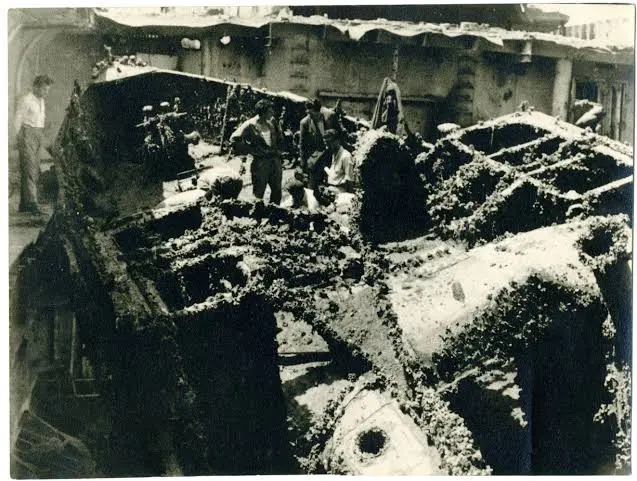
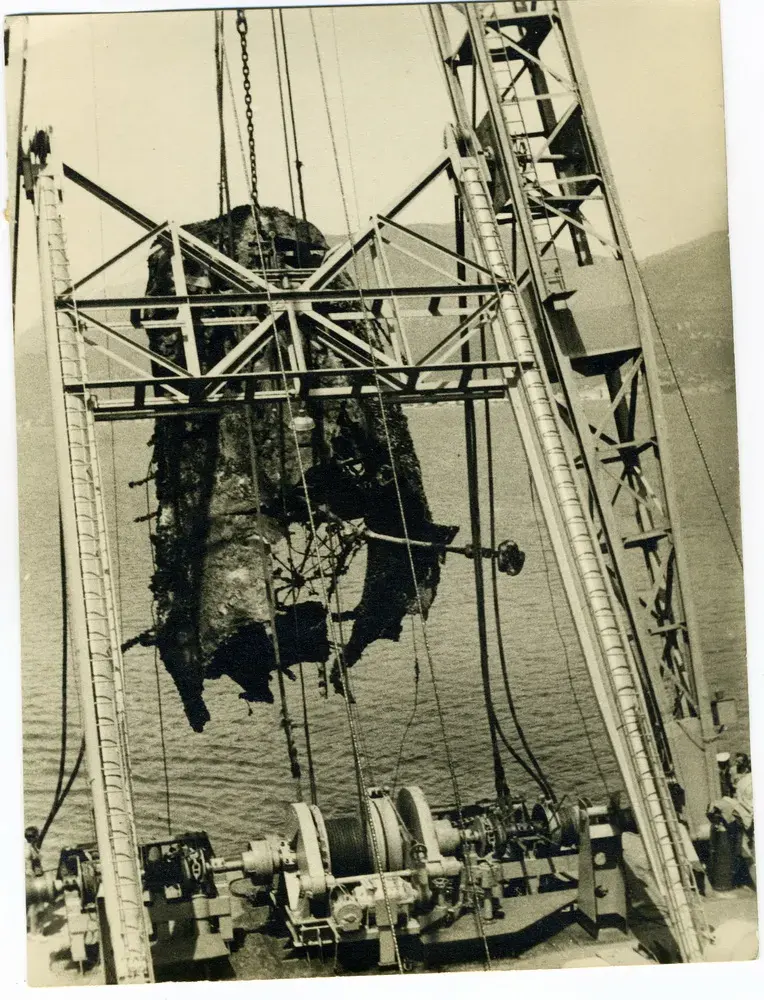
During the late 1960s, the Split-based salvage company Brodospas attempted to raise the remains, reportedly so that the metal could be recycled. The operation revealed the extraordinary violence of the explosion.
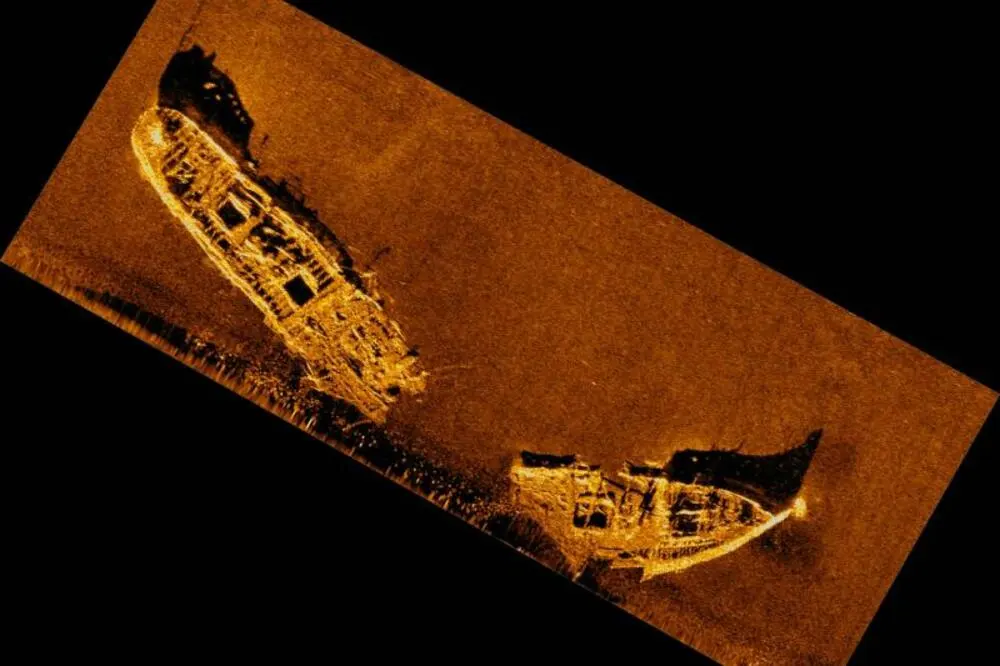
During lifting, the already weakened wreck broke into two main sections. One part was raised onto a barge, while the other fell back to the seabed. Steel cables that came loose during the operation reportedly injured several workers aboard the floating crane.
Witnesses described human remains, footwear, bags and personal belongings mixed with the broken structure. Some recovered remains were subsequently interred, but an unknown quantity remained on the seabed.
The wreck today
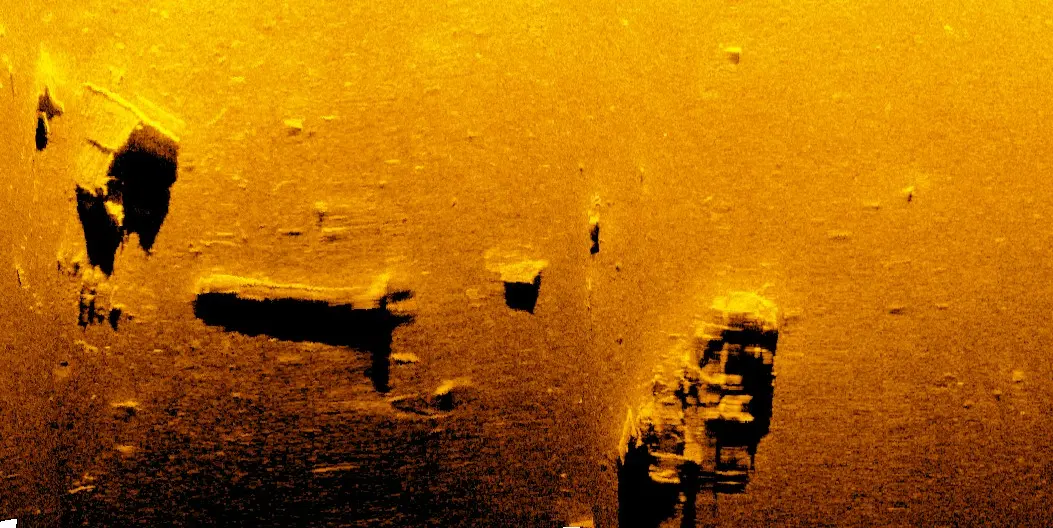
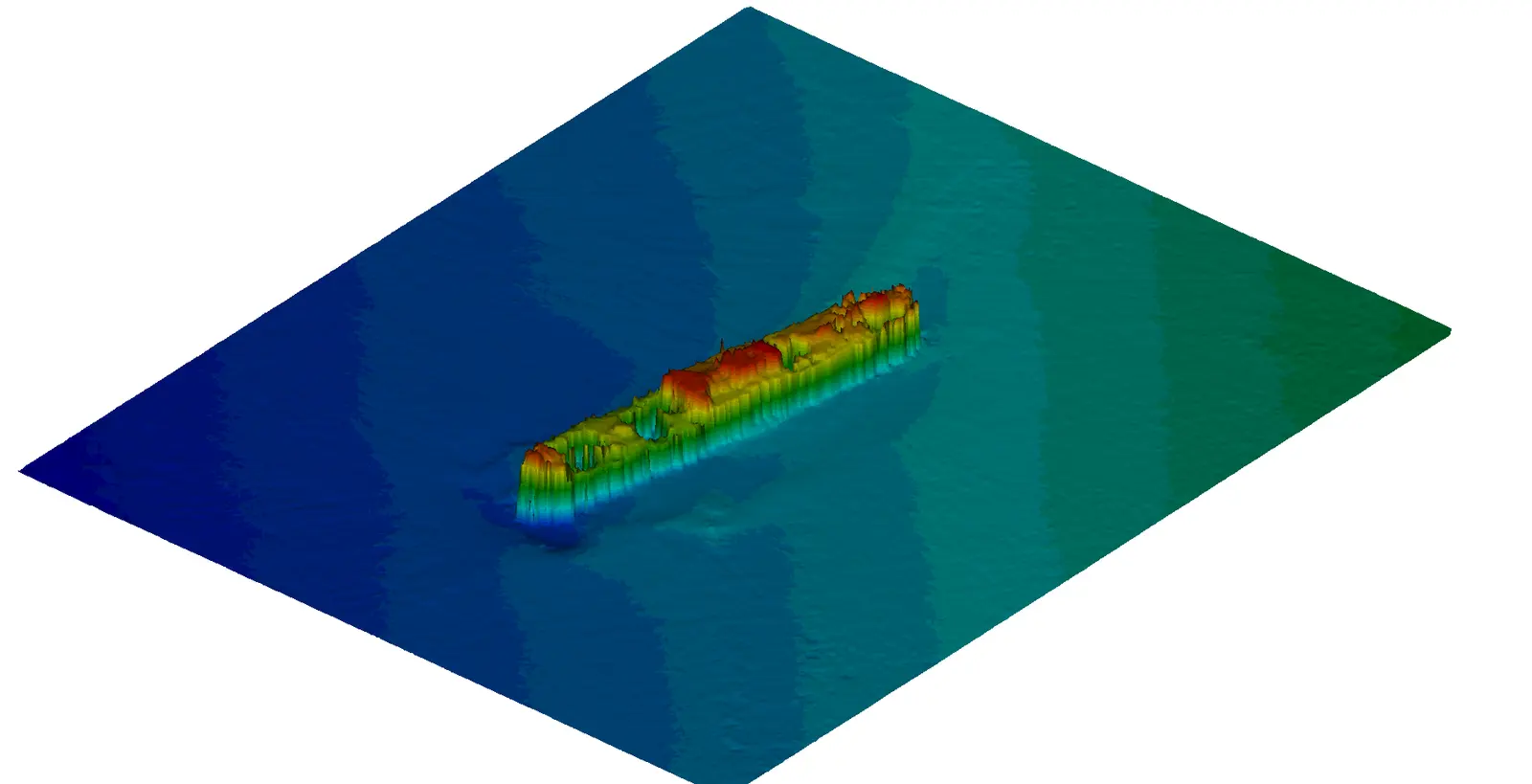
A substantial stern section, the ship’s funnel and numerous smaller fragments now rest on a muddy seabed at a depth of approximately 41 metres. The unsuccessful salvage operation displaced the remains, so the original form of the hull is no longer clearly recognizable.
The largest section is partly embedded in fine sediment. The funnel and its base are among the easiest components to identify, while smaller pieces of hull, machinery and fittings lie irregularly around the site.
Visibility in the centre of Tivat Bay is often poor. Fine mud can be disturbed easily, reducing visibility to almost nothing and making archaeological recording, photography and orientation especially difficult.
The wreck has also become a habitat for marine life. Lobsters and other species shelter among its fragmented structure, while abandoned anchors and fishing equipment have accumulated around the remains.
Diving Cetinje
At approximately 41 metres, the site lies at or beyond the normal limit of recreational scuba diving. Its depth, poor visibility, heavy sediment, entanglement hazards and fragmented structure make it suitable only for appropriately trained and equipped technical divers.
Because the wreck is a maritime grave, it should not be promoted as an ordinary diving attraction. Any visit should be authorized, non-intrusive and conducted with particular respect for the victims.
Human remains, personal belongings and structural components must never be touched, moved or removed. Anchoring directly on the site should also be prohibited.
Research and remembrance
The priority for Cetinje should be documentation and commemoration rather than tourism. A non-destructive survey using multibeam sonar, magnetometry and carefully controlled photogrammetry could map the remaining wreckage without disturbing the seabed.
Archival research is equally important. Passenger lists may never have existed, but wartime reports, hospital records, prisoner lists, burial documentation and family archives could help establish a more reliable minimum number of victims.
A digital reconstruction could present the vessel’s complete history—from Nettuno on Lake Skadar to Cetinje in Tivat Bay—without encouraging uncontrolled physical access. It could also record the names of confirmed victims and survivors, placing individual lives at the centre of the story.
Cetinje embodies both hope and catastrophe. Its return to service represented the restoration of everyday life after years of occupation; its destruction one day later demonstrated how the dangers of war could continue even after the fighting had ended.
Fatalities
Fatalities: At least 87 officially recorded; later estimates generally suggest approximately 193–200, with some claims reaching 240
Present condition: Fragmented and partly buried following an unsuccessful salvage operation
Heritage character: Underwater archaeological site, maritime grave and memorial to a multinational tragedy
 GoritiaSteamship · Near Ulcinj
 Maria PompeiSteamship · Cape Platamuni
 QuintoSteamship · Bay of Bigovica
 Patrol Boat PBR-512Vessel · Žanjice Bay