Resting in the shallow waters near Ulcinj, the wreck of the steamship Goritia is one of the largest and most impressive historic shipwrecks along the Montenegrin coast. Its remains preserve the story of merchant shipping, wartime transport and naval conflict in the southern Adriatic during the final months of the First World War.
Steamship / Near Ulcinj
Goritia
Resting in the shallow waters near Ulcinj, the wreck of the steamship Goritia is one of the largest and most impressive historic shipwrecks along the Montenegrin coast.
From the collection
Closer to the evidence.
The research narrative
A deeper reading.
Steamship Goritia
Resting in the shallow waters near Ulcinj, the wreck of the steamship Goritia is one of the largest and most impressive historic shipwrecks along the Montenegrin coast. Its remains preserve the story of merchant shipping, wartime transport and naval conflict in the southern Adriatic during the final months of the First World War.
From merchant ship to transport
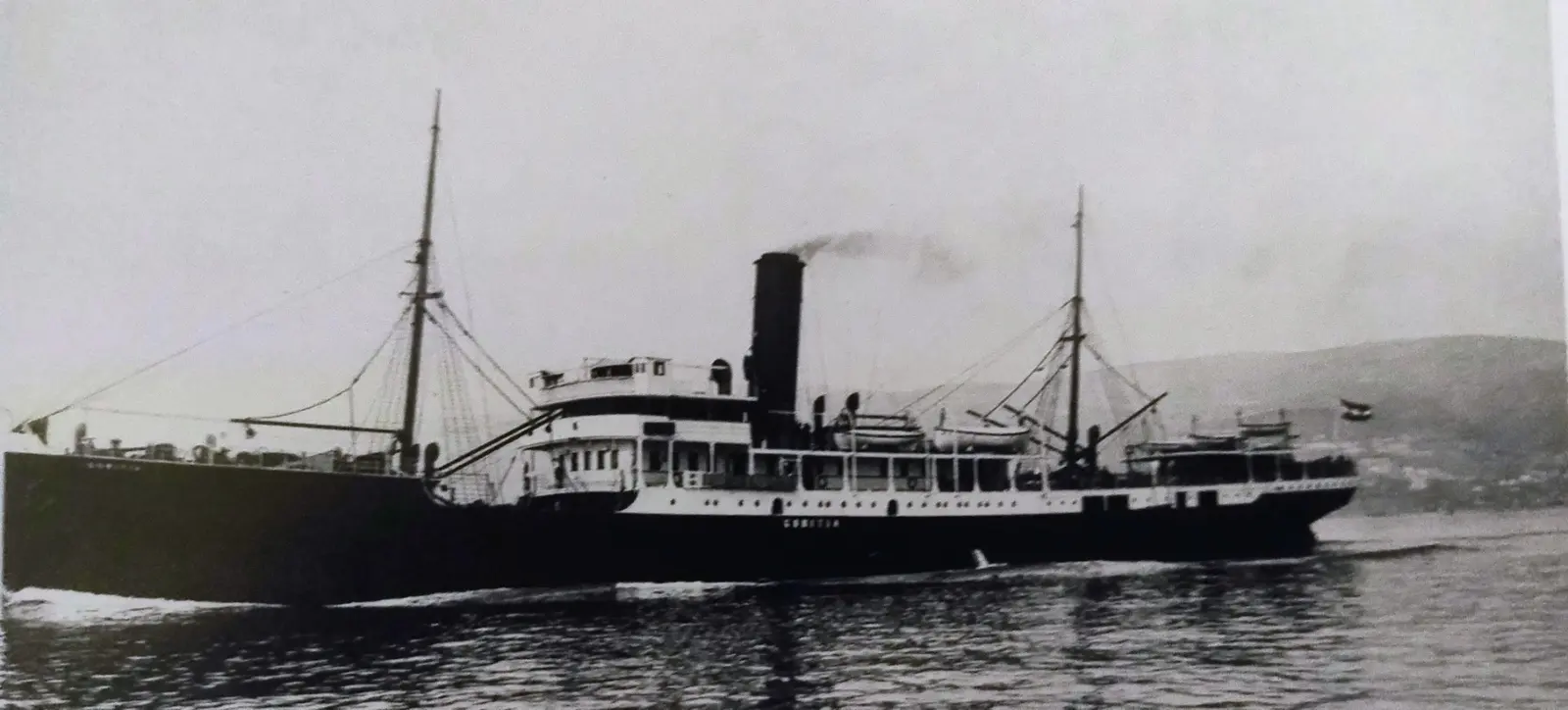
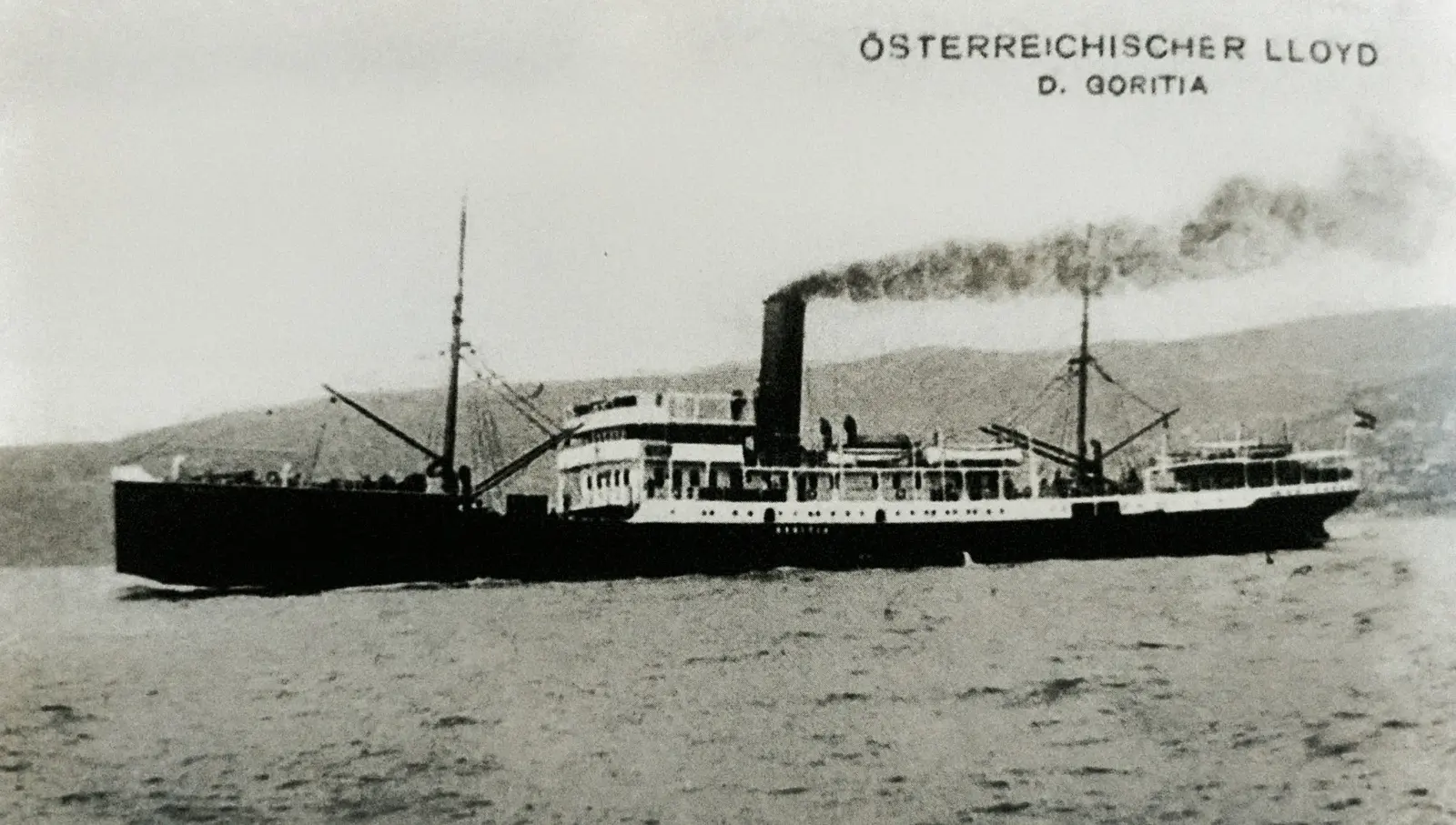
Goritia was built in Trieste in 1903 for Austrian Lloyd, one of the leading shipping companies of the Austro-Hungarian Empire. The steamship measured more than 100 metres in length and had a registered tonnage of approximately 3,104 gross register tons. Before the First World War, it operated as a merchant vessel on Austrian Lloyd’s extensive maritime routes.
Following the outbreak of war in 1914, Goritia was requisitioned and designated Dampfer III. It initially served as an ammunition depot ship. In March 1916, it was transferred to the Austro-Hungarian Army and employed on transport routes serving Albania.
These routes were of considerable strategic importance. Austria-Hungary controlled Durrës—then widely known as Durazzo—and depended on maritime transport to supply its forces in Albania. The southern Adriatic was heavily contested, however, and its shipping lanes were threatened by submarines, naval mines and Allied attacks.
The final voyage
On 19 August 1918, Goritia was returning from Durrës as part of a convoy when a powerful explosion tore through the ship near the Đeran rocks and the mouth of the Bojana River. The damaged vessel broke apart and sank in the waters southeast of Ulcinj.
Some accounts leave open the possibility that the ship was torpedoed or that ammunition on board exploded. Austro-Hungarian naval records, however, identify a naval mine as the cause of the sinking, making this the most strongly supported explanation currently available.
The rapid intervention of the convoy’s escort vessels, particularly the torpedo boats Tb 82 and Tb 90, helped rescue most of those on board. Historical records report three fatalities.
The wreck today
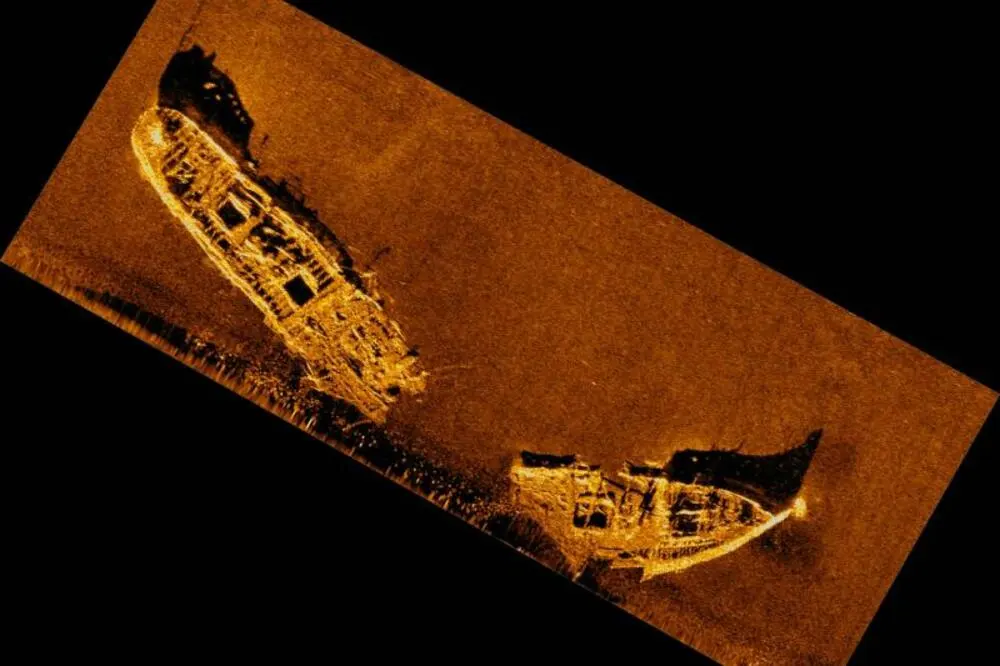
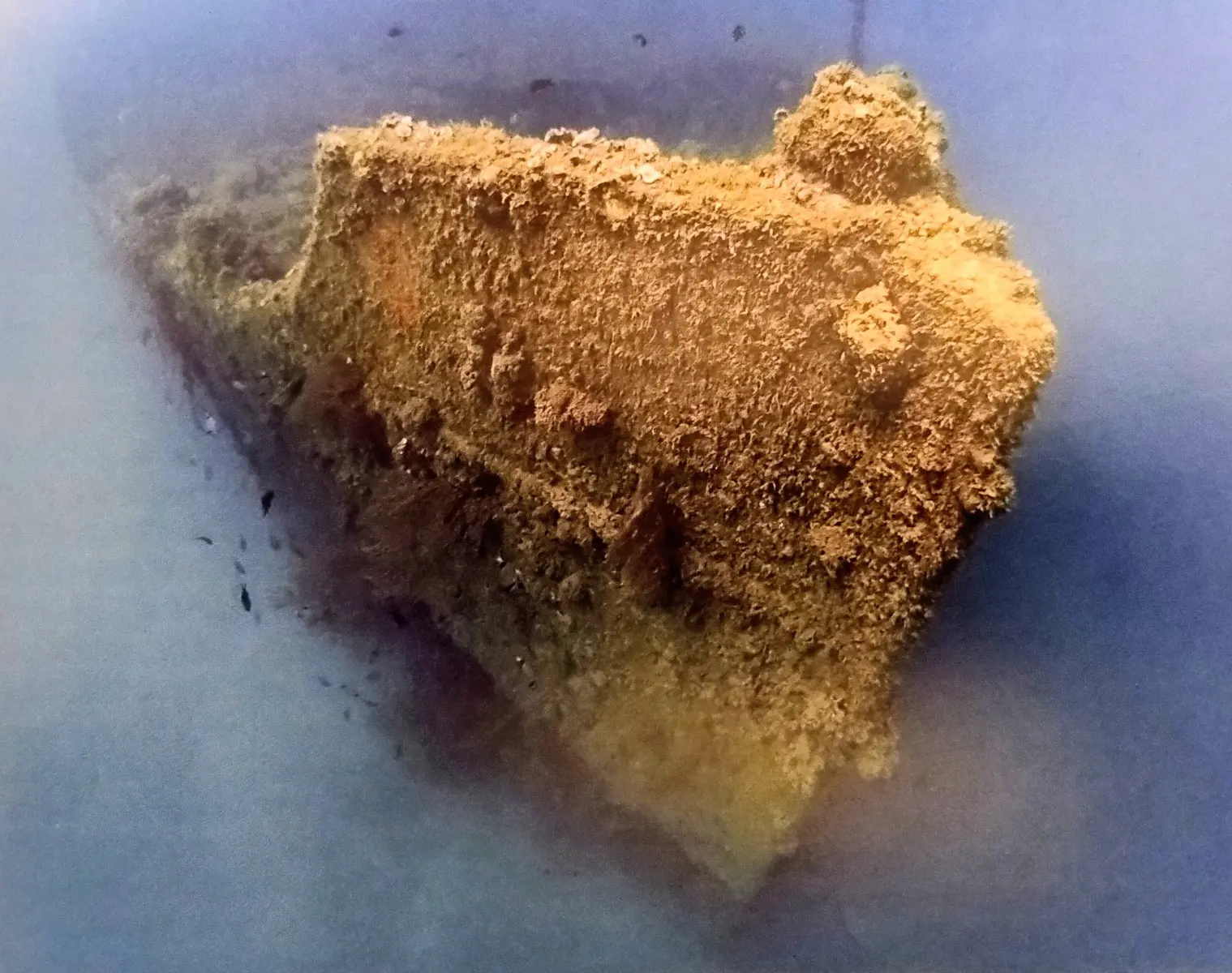
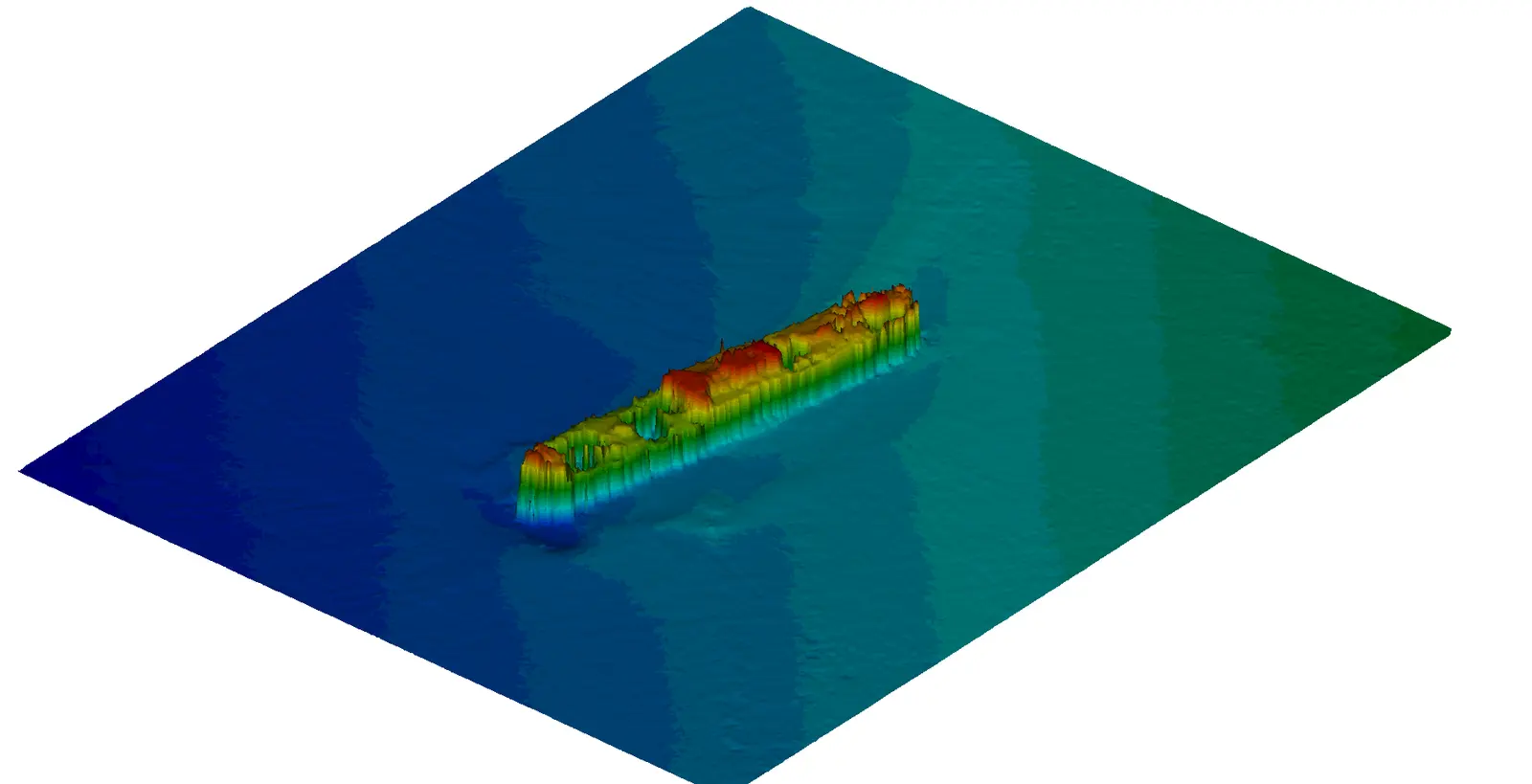
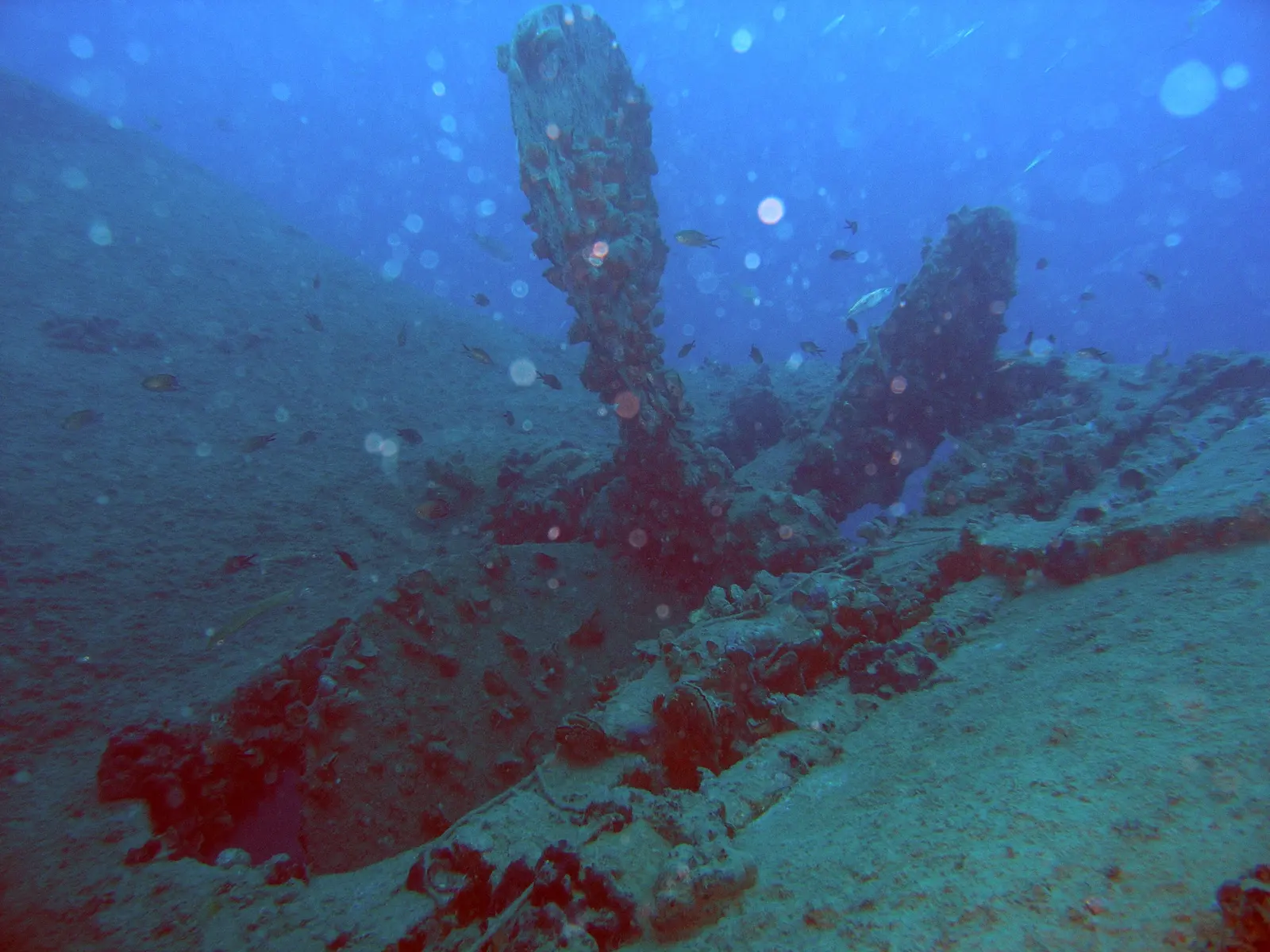
The remains of Goritia lie upright on a sandy seabed, approximately parallel to the coast, at depths generally reported between 14 and 17 metres. The vessel was torn into two major sections by the explosion, with extensive portions of the hull still recognizable.
Published descriptions differ on the distance between the two sections. Earlier diving accounts place them approximately 30 metres apart, while more recent reports based on archaeological and sonar observations give a distance of about 80 metres. This variation may reflect different survey reference points, but the precise separation should be confirmed through a comprehensive archaeological survey.
Side-scan sonar recording has provided a clearer picture of the wreck’s present condition. Despite the violence of the sinking and more than a century beneath the sea, substantial structural elements survive, including recognizable sections of the hull and details such as parts of the original deck railings.
Diving Goritia
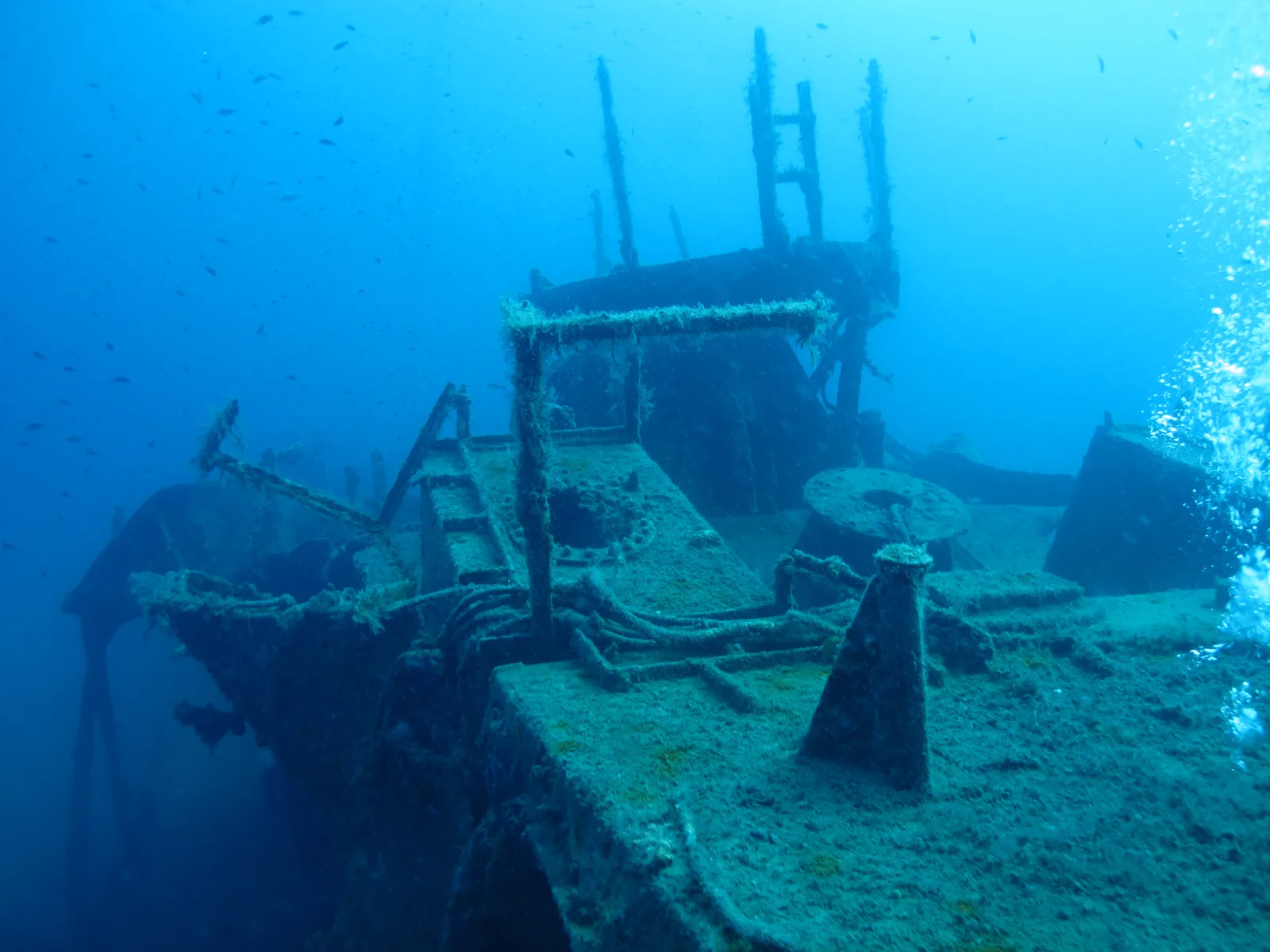
Because of its great length and relatively shallow position, Goritia offers an exceptional opportunity to explore a large First World War shipwreck. Its scale becomes gradually visible underwater: the upright hull emerges from the sandy seabed, while the separated section reveals the destructive force of the explosion that ended the vessel’s final voyage.
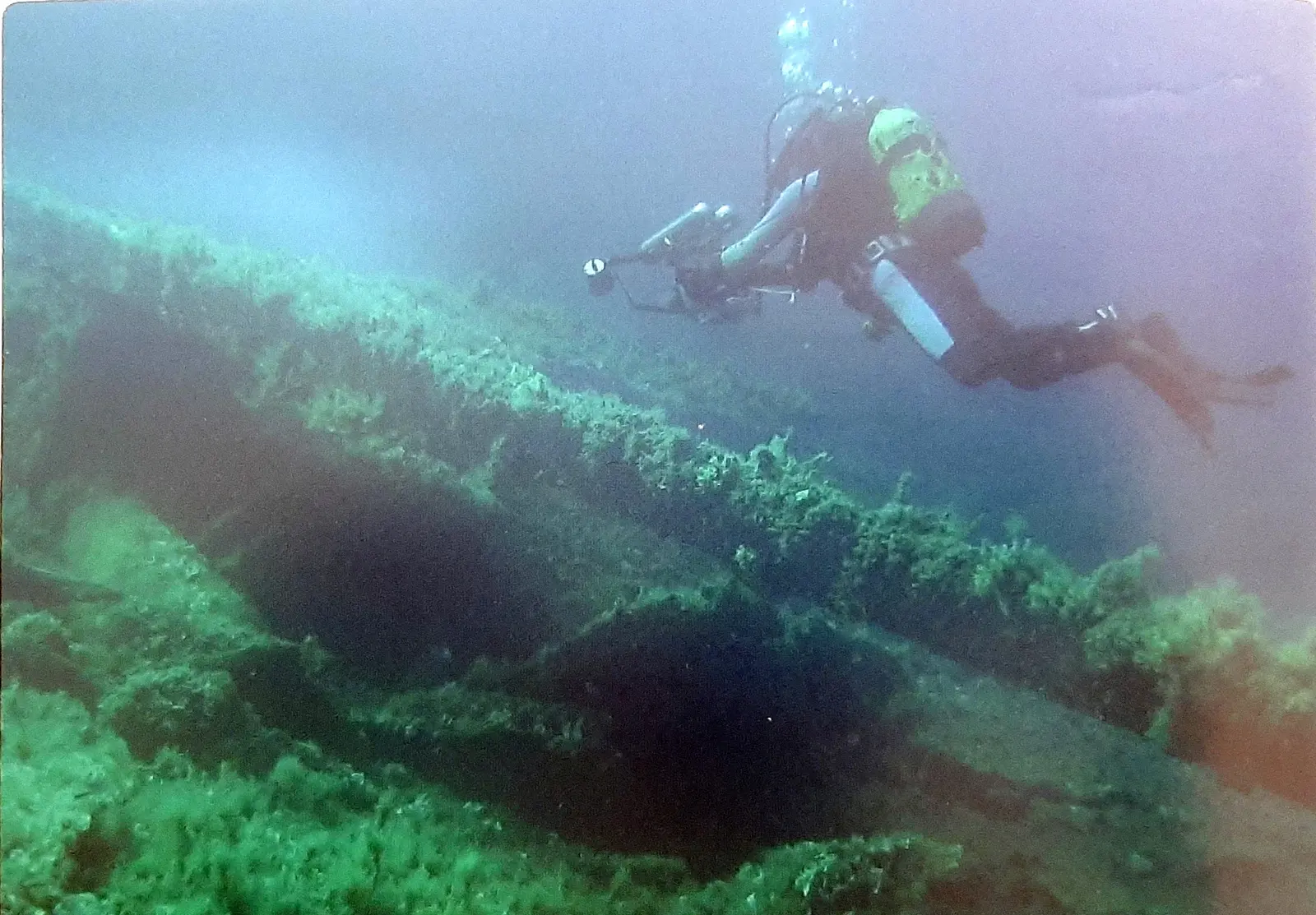
The shallow depth makes the site more accessible than many historic wrecks, but conditions can vary. Sediment carried into the sea by the nearby Bojana River may reduce visibility, while fishing lines, unstable structures and enclosed spaces can present hazards. Divers should visit the wreck only with a qualified local guide, remain within the limits of their certification and avoid entering the vessel unless appropriately trained and equipped.
Goritia is not only a diving attraction. It is an underwater archaeological site and a material record of the people, maritime networks and conflicts that shaped the Adriatic during the First World War. Divers should observe without touching, removing or disturbing any part of the wreck.
 Maria PompeiSteamship · Cape Platamuni
 QuintoSteamship · Bay of Bigovica
 SrebrenoSteamship · Kalafat Reef
 Patrol Boat PBR-512Vessel · Žanjice Bay