Resting near the Bay of Bigovica, off the coast of Bar, the Italian steamship Quinto preserves the story of a little-known naval encounter during the Greco-Italian War. On the final morning of 1940, the small vessel was attacked and sunk by the Greek submarine Katsonis, with the loss of everyone aboard.
Steamship / Bay of Bigovica
Quinto
Resting near the Bay of Bigovica, off the coast of Bar, the Italian steamship Quinto preserves the story of a little-known naval encounter during the Greco-Italian War.
From the collection
Closer to the evidence.
The research narrative
A deeper reading.
Italian Steamship Quinto
Resting near the Bay of Bigovica, off the coast of Bar, the Italian steamship Quinto preserves the story of a little-known naval encounter during the Greco-Italian War. On the final morning of 1940, the small vessel was attacked and sunk by the Greek submarine Katsonis, with the loss of everyone aboard.
Built as Fleiß
The vessel was built in 1922 under the German name Fleiß, meaning “diligence.” Available ship-registry data describe it as a small, shallow-draught steam vessel built for harbour or coastal service and subsequently enlarged and converted for commercial navigation.
By 1940, it had passed into Italian ownership and had been renamed Quinto. Published records identify the vessel as a small tanker or fuel carrier of approximately 531 gross register tons and about 57.3 metres in length.
The frequently repeated claim that Quinto became an Italian naval warship should be treated cautiously. The available loss records continue to classify it as an Italian merchant vessel or tanker, although it was transporting supplies connected with Italy’s military campaign. No reliable evidence has been found that it was formally commissioned into the Italian Royal Navy.
War in the Adriatic
Italy invaded Greece from Italian-controlled Albania on 28 October 1940. The invasion began the Greco-Italian War and transformed the southern Adriatic into an important supply corridor for Italian forces operating in Albania and northwestern Greece.
The Kingdom of Yugoslavia declared its neutrality in the conflict on 1 November 1940. Its government refused to allow Italian troops to cross Yugoslav territory, although civilian supplies and humanitarian shipments were permitted under negotiated conditions. Yugoslavia also quietly provided Greece with military and material assistance.
Italian shipping continued to use routes running close to the Yugoslav coast. These voyages shortened the distance between northern Adriatic ports and Italian-controlled Albania but brought merchant vessels into waters patrolled by Greek submarines.
The final voyage
In late December 1940, Quinto was sailing from Trieste toward San Giovanni di Medua—present-day Shëngjin in Albania. Its documented cargo included approximately 100 barrels of petrol, intended for delivery along the Italian military supply network.
Local tradition records that the vessel temporarily sheltered near the islets of Katič and Sveta Neđelja, opposite Petrovac, before continuing south. This detail has not yet been independently confirmed in the available naval or merchant-shipping records, but it is consistent with a coastal vessel waiting for safer conditions before proceeding.
The ship’s destination was strategically important. Shëngjin served as one of the principal ports supplying Italian forces fighting on the Albanian–Greek front.
The Greek submarine
The Greek submarine Katsonis, naval designation Y-1, was commanded by Lieutenant Commander Athanasios Spanidis. It was one of only six operational submarines available to the Royal Hellenic Navy when the war began.
Katsonis departed on its second wartime patrol on 22 December 1940 and operated in the southern Adriatic until 4 January 1941. Its mission was to attack maritime transport supplying the Italian army in Albania.
During this patrol, Katsonis made at least two unsuccessful attacks on unidentified merchant vessels before encountering Quinto on 31 December. The submarine’s attack on the small tanker became its only confirmed success during this phase of the Greco-Italian War.
The attack
On the morning of 31 December 1940, Katsonis intercepted Quinto off the coast of Bar. The submarine first fired two torpedoes, but both missed their target. It then surfaced and attacked with its 100-millimetre deck gun.
Greek naval research records that Katsonis fired 21 rounds before Quinto sank. Descriptions stating that the vessels collided are incorrect: the merchant ship was sunk by gunfire after the unsuccessful torpedo attack.
The entire complement of ten men aboard Quinto was lost. The surviving sources do not provide a complete and independently verified list of their names.
A disputed incident
The wreck lies very close to the Montenegrin coast—approximately 600 metres offshore according to one detailed account. As Yugoslavia was still neutral, the attack raised questions about whether the Greek submarine had operated within Yugoslav territorial waters.
Italian authorities also considered accusing the submarine’s crew of firing upon Quinto’s lifeboat. Yugoslav authorities reportedly recovered a damaged boat, but the crew of Katsonis denied deliberately targeting survivors. With no surviving eyewitness testimony from Quinto and limited documentary evidence, the exact circumstances cannot be established conclusively.
The incident should therefore be presented carefully. The sinking itself, the unsuccessful torpedo attack, the subsequent gunfire and the deaths of all ten people aboard are well documented; allegations concerning the lifeboat remain disputed.
The wreck today
The wreck lies near Bigovica Bay and the cliffs of Šogavica, a short distance off the coast south of Bar. Published diving descriptions generally place it at a depth of approximately 32–34 metres on a sandy seabed.
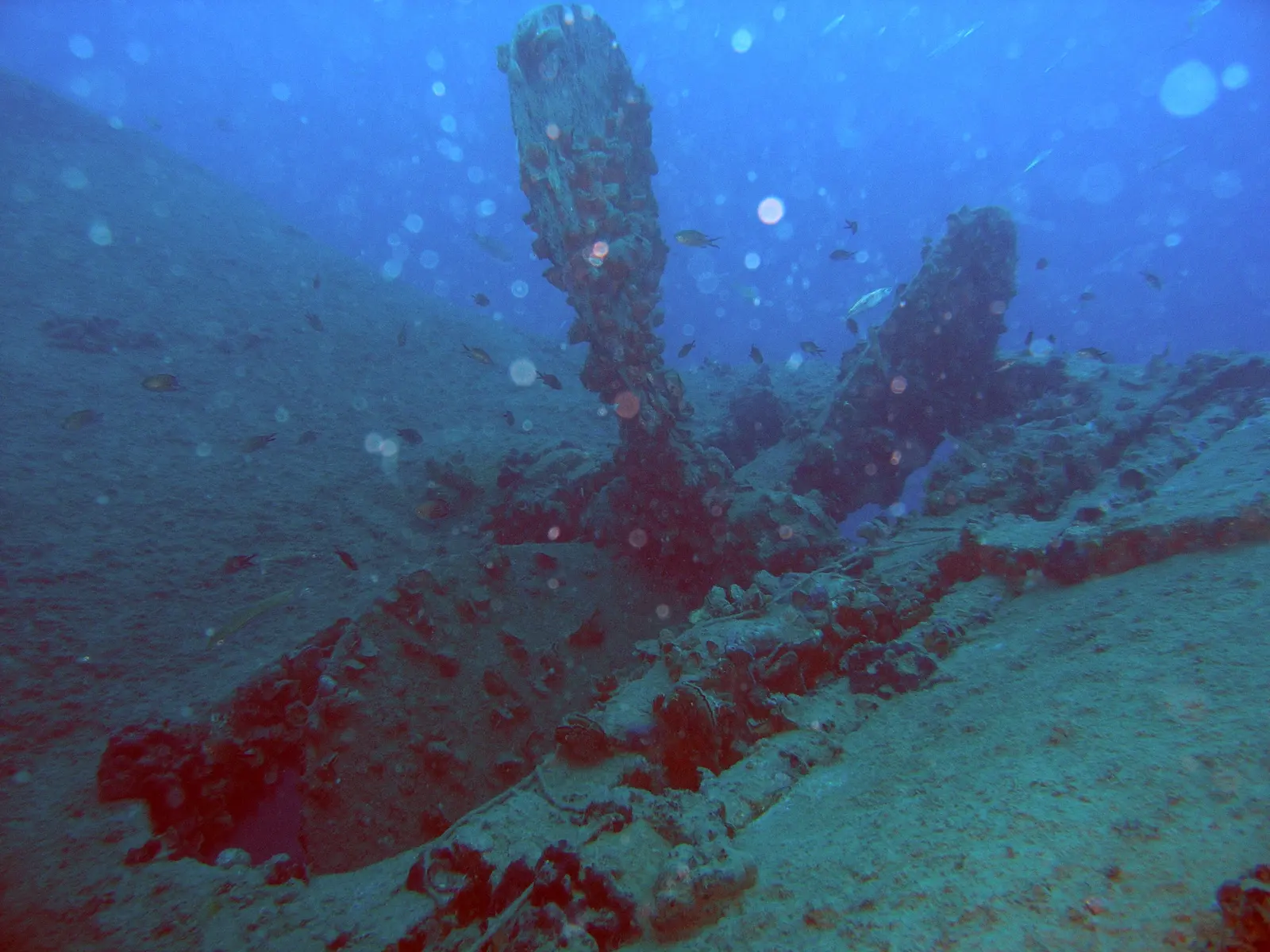
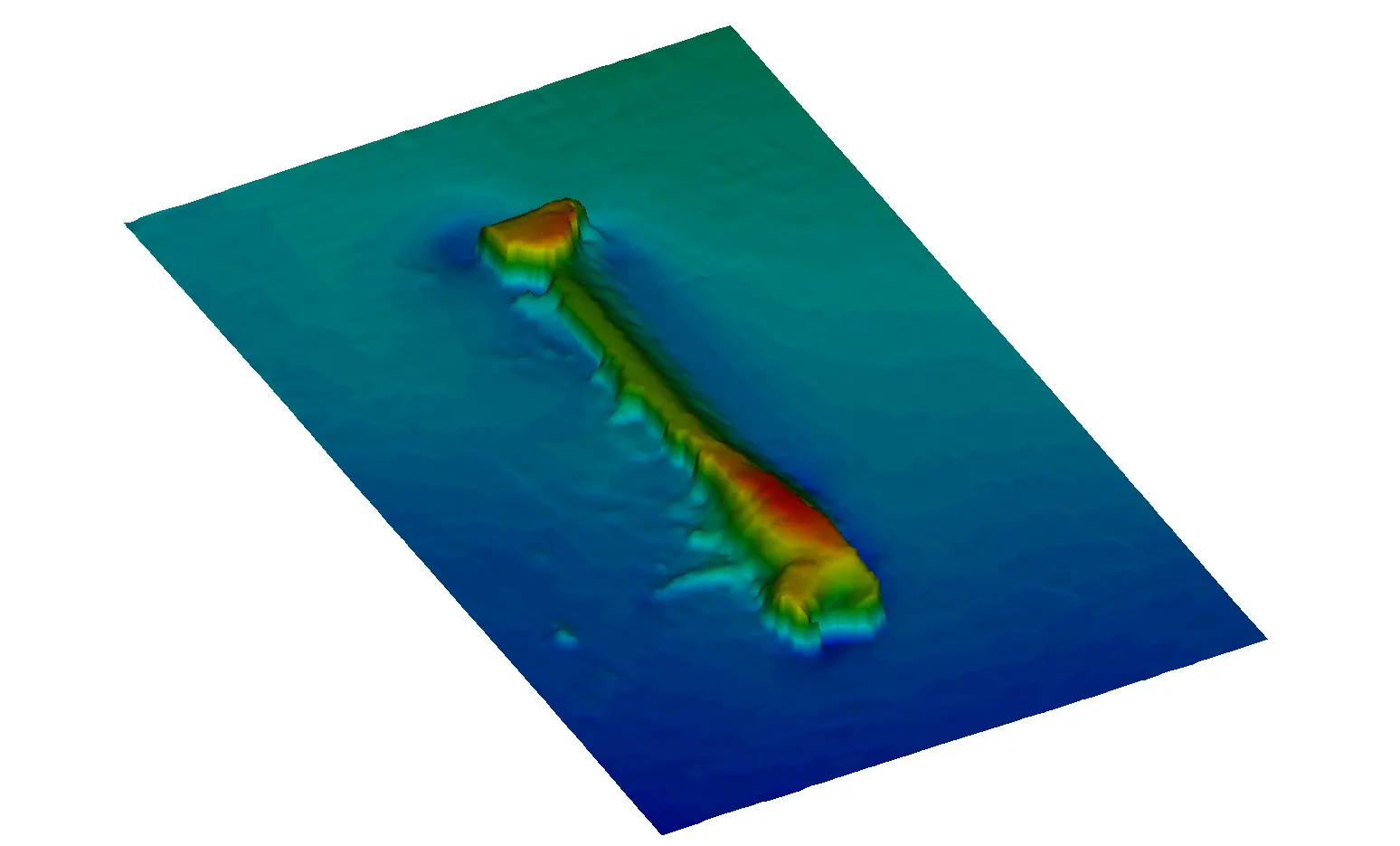
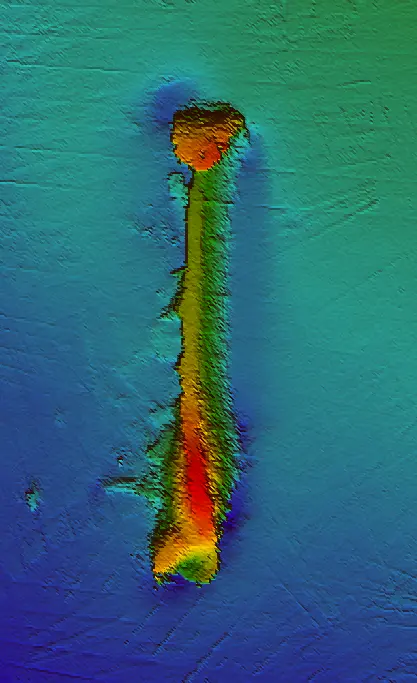
Quinto rests heavily inclined on its port side, although some descriptions characterize its position as partly overturned. The hull has sustained major damage, but recognizable structural elements and sections of the vessel’s interior remain visible.
Parts of the original cargo have also been reported around the wreck, including metal barrels associated with the ship’s fuel shipment. These objects form part of the archaeological context of the sinking and should never be moved or removed.
A marine habitat
After more than eight decades underwater, the remains have become an artificial reef. Openings in the damaged hull provide shelter for fish and other marine organisms, while the steel structure supports marine growth.
Fine sediment surrounding the site can reduce visibility, particularly after rough weather. Movement of sand across the seabed may also expose or conceal smaller objects and structural details over time.
Diving Quinto
At approximately 32–34 metres, Quinto is a deep recreational dive and should be visited only by appropriately certified and experienced divers. The depth reduces available bottom time and increases the importance of careful gas management, controlled ascent and adherence to decompression limits.
The site contains sharp metal, unstable structures, fishing lines and areas where sediment can be easily disturbed. Penetration of the wreck should be attempted only by divers with appropriate wreck-diving training and equipment.
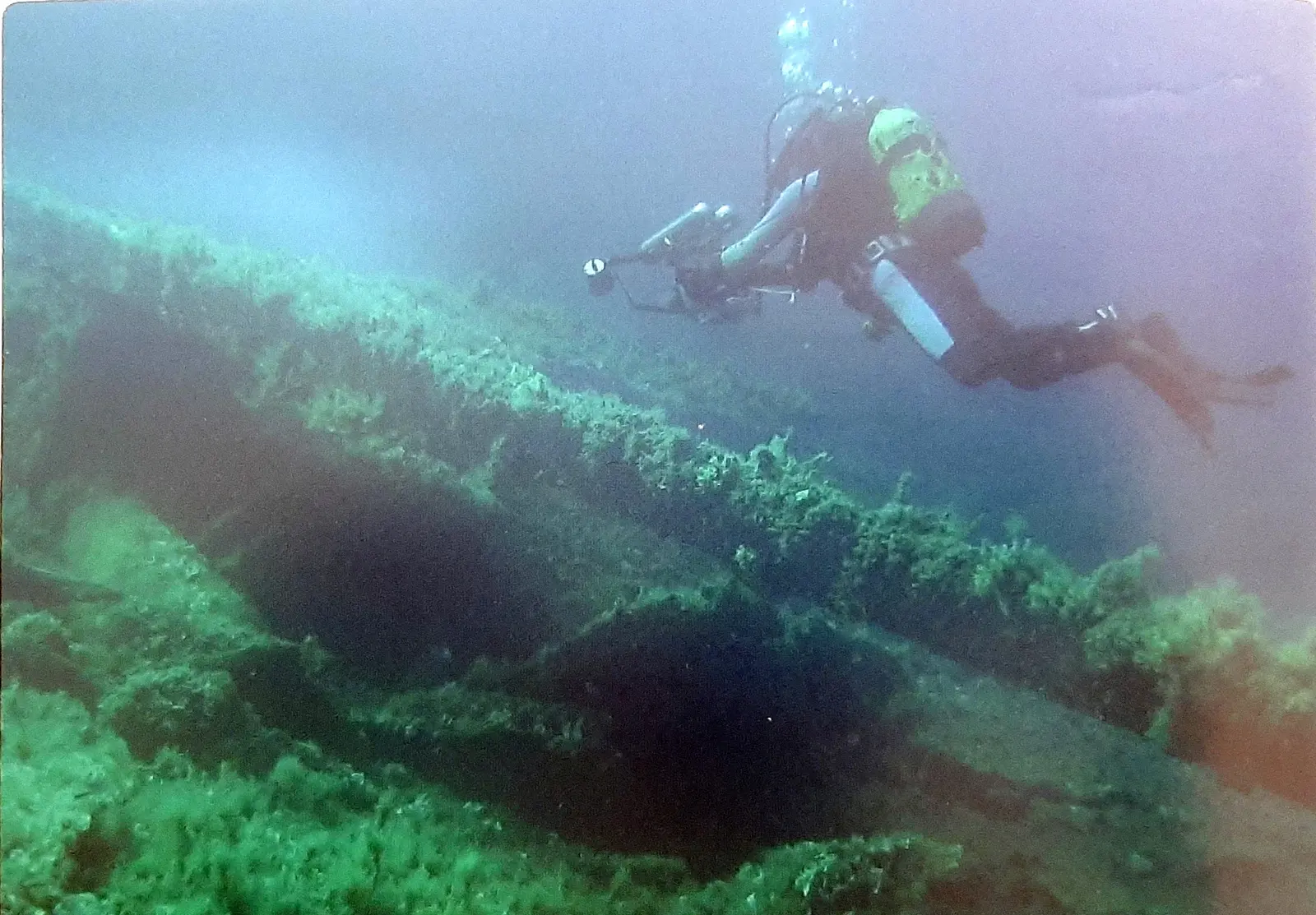
The wreck is also the site of ten wartime deaths. It should be treated as an underwater memorial as well as an archaeological site. Divers should observe and photograph without touching the structure, disturbing the cargo or removing objects.
Preserving the story
Quinto offers material evidence of a period when neutral Yugoslavia stood between warring Italy and Greece and when the Montenegrin coast became an unwilling part of a wider Mediterranean conflict.
Archaeological documentation could help resolve unanswered questions about the vessel’s construction, conversion and cargo. A detailed 3D survey would also clarify the wreck’s orientation, document surviving structures and provide a baseline for monitoring future deterioration.
Through responsible research and interpretation, Quinto can reveal the human consequences of maritime warfare while enriching public understanding of Montenegro’s underwater cultural landscape.
 SrebrenoSteamship · Kalafat Reef
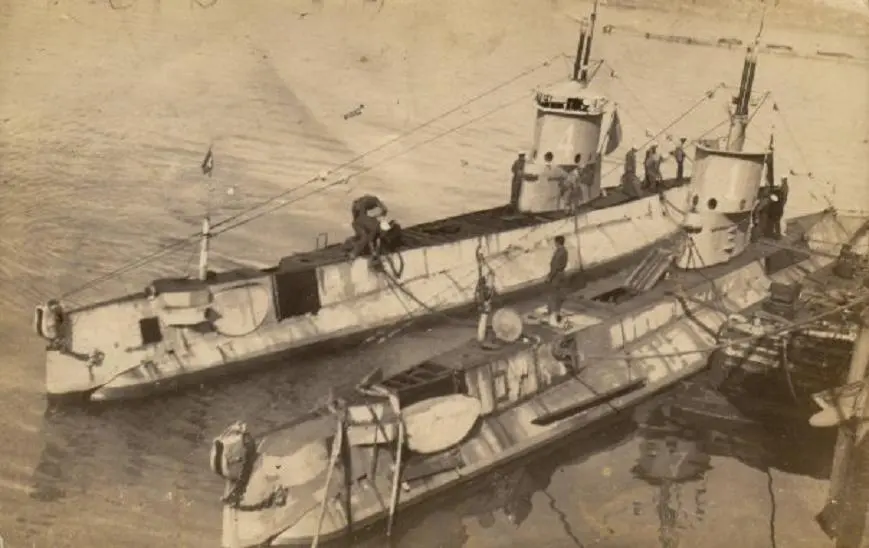 HMS H3Submarine · Near Mamula
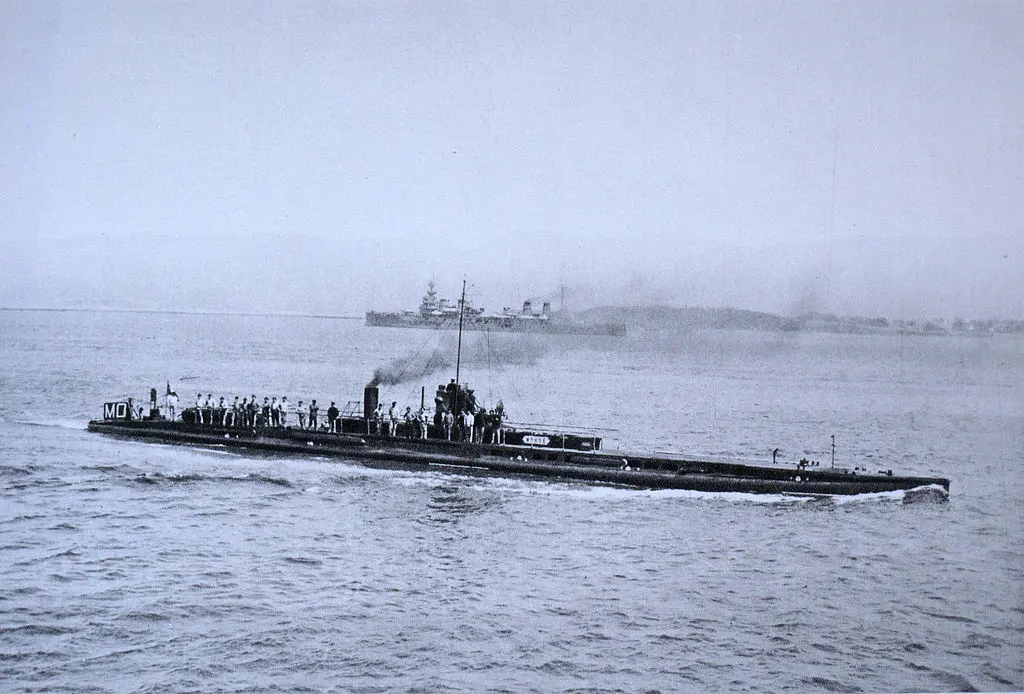 MongeSubmarine · Montenegrin coast
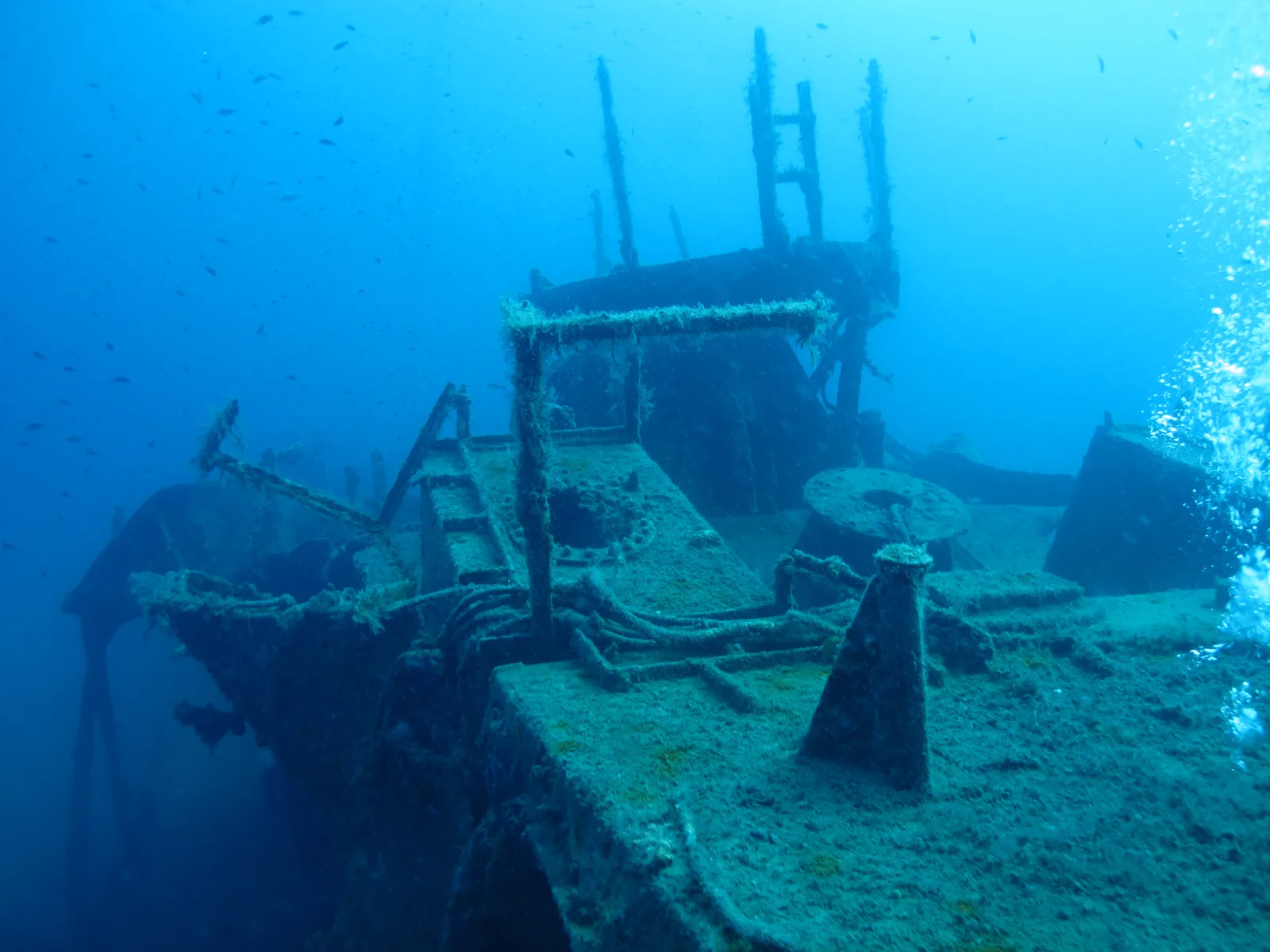 Patrol Boat PBR-512Vessel · Žanjice Bay