Two small warship wrecks in the Bay of Kotor are locally associated with the Higgins 78-foot motor torpedo boat—a fast, wooden-hulled design developed in the United States during the Second World War and later used by the Yugoslav Navy. One lies near Špiljice and Rose, while the other sank closer to Bijela; together they recall Yugoslavia’s post-war naval modernization and the geopolitical realignment that followed its break with the Soviet Union.
Torpedo boat / Bay of Kotor
Higgins 78
Two small warship wrecks in the Bay of Kotor are locally associated with the Higgins 78-foot motor torpedo boat—a fast, wooden-hulled design developed in the United…
From the collection
Closer to the evidence.
The research narrative
A deeper reading.
Higgins 78-foot Motor Torpedo Boats
Two small warship wrecks in the Bay of Kotor are locally associated with the Higgins 78-foot motor torpedo boat—a fast, wooden-hulled design developed in the United States during the Second World War and later used by the Yugoslav Navy. One lies near Špiljice and Rose, while the other sank closer to Bijela; together they recall Yugoslavia’s post-war naval modernization and the geopolitical realignment that followed its break with the Soviet Union.
Built for speed
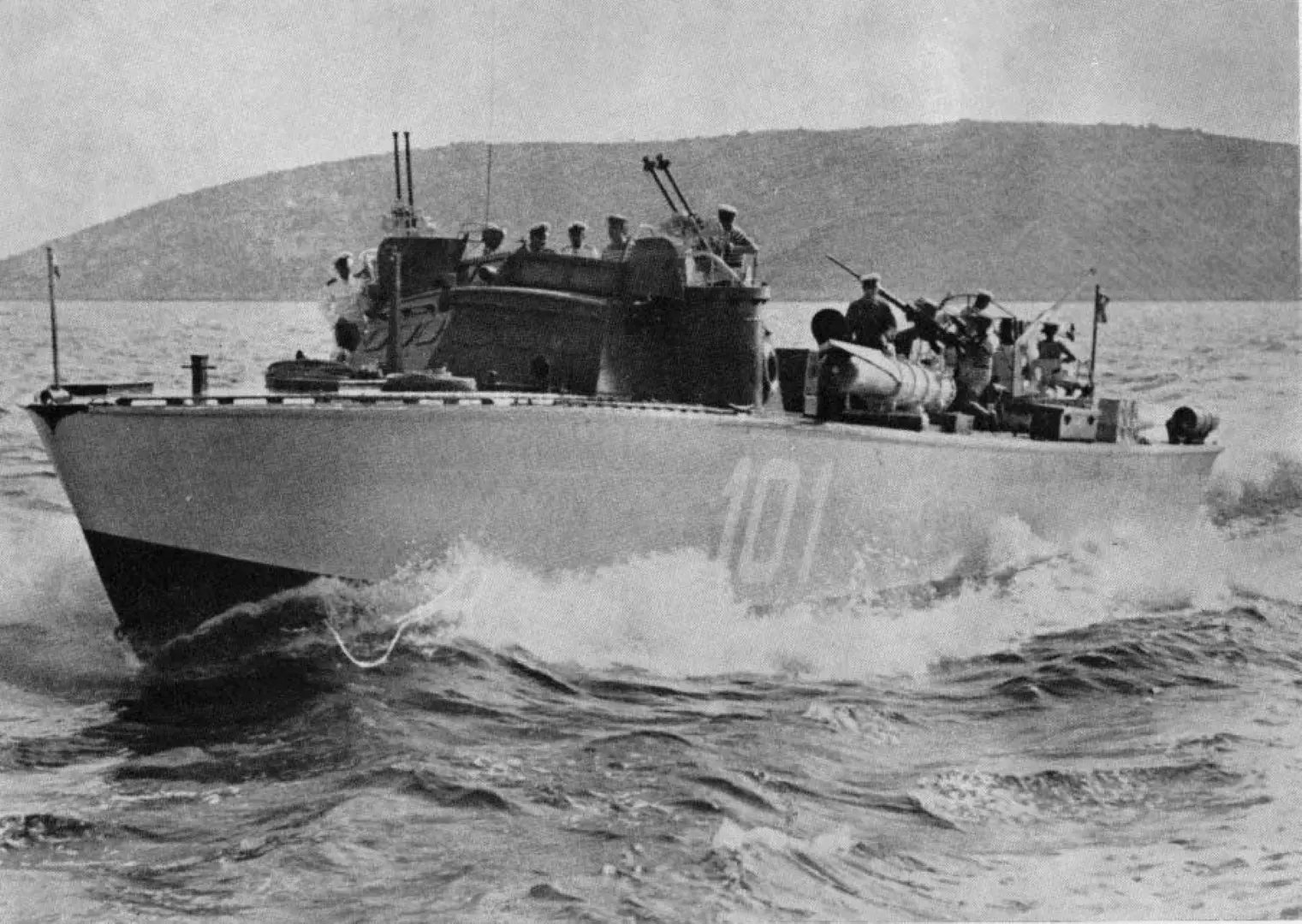
Higgins Industries of New Orleans was among the principal American manufacturers of small military craft during the Second World War. Alongside the landing craft for which the company became famous, its shipyards produced high-speed patrol torpedo boats for operations in coastal waters.
The 78-foot Higgins design was approximately 24 metres long and constructed largely from wood to reduce weight. Three powerful Packard petrol engines drove three propeller shafts, giving the boats the speed and manoeuvrability required for torpedo attacks, coastal patrols and reconnaissance.
Local diving information describes the Montenegrin wreck as approximately 23 metres long and six metres wide, consistent with the general dimensions of this class. Yugoslav accounts report that Higgins-type boats serving in the Bay of Kotor were powered by three Packard engines and carried two 450-millimetre torpedoes, together with light automatic weapons.
From war to surplus
During the Second World War, American PT boats operated close to enemy-controlled coasts, often at night and at high speed. Their principal role was to attack larger vessels with torpedoes, but they were also used for patrol, reconnaissance, escort, rescue and attacks against small coastal targets.
After 1945, the United States possessed large numbers of small wartime vessels that were no longer required. Many were scrapped, placed in reserve or transferred to allied and friendly countries. Yugoslavia received eight American torpedo boats during the late 1940s, although published summaries do not consistently identify the precise transfer date or the individual histories of all eight vessels.
The claim that Yugoslavia purchased these boats in 1948 specifically as an immediate consequence of its break with Stalin should therefore be treated cautiously. The Tito–Stalin split occurred in 1948, but the formal programme of American military assistance to Yugoslavia was established by an agreement signed in Belgrade on 14 November 1951, with major deliveries beginning around that time.
Yugoslavia between blocs
After the Second World War, Yugoslavia initially appeared to be one of the Soviet Union’s closest allies in Europe. Relations deteriorated rapidly, however, because Josip Broz Tito resisted Soviet political and strategic control. In June 1948, Yugoslavia was expelled from the Cominform, commonly known in Yugoslavia as the Informbiro.
The resulting confrontation left the country vulnerable to political pressure and possible military intervention from the Soviet bloc. Yugoslavia consequently developed closer relations with the United States and Western Europe while maintaining its socialist system and political independence.
Western military assistance helped modernize Yugoslavia’s armed forces from the early 1950s onward. Between 1951 and 1958, the United States supplied equipment, spare parts and training under a formal military-aid programme.
The Higgins torpedo boats therefore belong to a broader history of Yugoslavia’s movement away from direct Soviet influence. Whether individual boats arrived shortly before or after the formal aid programme began, their service illustrates the country’s unusual position between the opposing blocs of the Cold War.
The Yugoslav fleet
The Yugoslav Navy employed its Higgins-type boats for coastal defence, patrol and training. Some were based in Kotor, at the mouth of the Škurda River, before later being transferred to the naval arsenal at Tivat.
A surviving account from former naval engineer Petar Đuran describes service aboard torpedo boat TČ-158, a Higgins-type vessel attached to the 9th Torpedo Boat Detachment. On 26 June 1957, a fire broke out aboard the wooden boat while it was moored in Kotor. The vessel carried three Packard engines, approximately seven tonnes of high-octane petrol, ammunition and two 450-millimetre torpedoes, demonstrating both the power and the risks associated with these small craft.
High speed came at a price. Their petrol engines consumed large quantities of fuel, while wooden hulls required continual maintenance. As naval technology advanced and guided missiles began to transform maritime warfare, boats designed during the Second World War quickly became outdated.
Built in Yugoslavia
Yugoslavia did not rely entirely on imported boats. During the 1950s, domestic shipyards began constructing wooden torpedo boats based on the Higgins concept, adapting the design to the requirements of the Yugoslav Navy.
The Ivan Cetinić shipyard on Korčula became an important centre of this programme. Historical summaries credit Korčula’s shipbuilders with producing approximately 120 torpedo boats for the Yugoslav Navy between 1950 and 1960, although not every vessel necessarily followed an identical design or technical configuration.
Domestic production helped Yugoslavia develop shipbuilding skills, maintain a large fleet of fast coastal craft and reduce its dependence on foreign suppliers. These boats became characteristic vessels of the early post-war Yugoslav Navy.
The exact identities of the two boats now lying in Montenegrin waters have not yet been established from publicly available naval records. It is therefore more accurate to describe them as Higgins-type motor torpedo boats until construction numbers, naval designations or diagnostic components provide a definitive identification.
The final tow
According to oral testimony attributed to Jovo Koluvija, a former captain of a harbour tug at the Veljko Vlahović shipyard in Bijela, two decommissioned Higgins-type boats were ordered to be towed out and sunk during the early 1970s.
The first boat reportedly began taking on water while it was being towed toward the open sea. Men aboard the torpedo boat attempted to pump or bail out the incoming water, but its condition continued to deteriorate. Concerned that it might sink suddenly and endanger the personnel, Captain Koluvija brought the men aboard his tug and released the damaged craft.
The abandoned boat sank near Špiljice, in the direction of Rose. Its loss was therefore not the result of battle but of uncontrolled flooding during an operation intended to dispose of an obsolete vessel.
The second torpedo boat was reportedly in even worse condition. It also began filling with water during the tow, forcing Koluvija to return toward Bijela. For the safety of the tug and its crew, the towline was released near the former Mladost children’s home, where the vessel sank.
A date to verify
The oral account places the sinkings in 1972. A published local diving guide, however, describes a Higgins wreck as having sunk in 1974, without identifying the circumstances. The same guide places it at a depth of approximately 30–35 metres.
Until naval disposal records, shipyard documentation or harbour logs are located, the exact year should therefore be presented as uncertain. The most responsible formulation is that the two vessels sank during the early 1970s, with existing accounts giving either 1972 or 1974.
Archival research is also needed to determine whether both boats were original American-built Higgins vessels or Yugoslav-built derivatives. Hull construction, engine mounts, identification plates and surviving naval equipment may eventually provide the answer.
The wrecks today
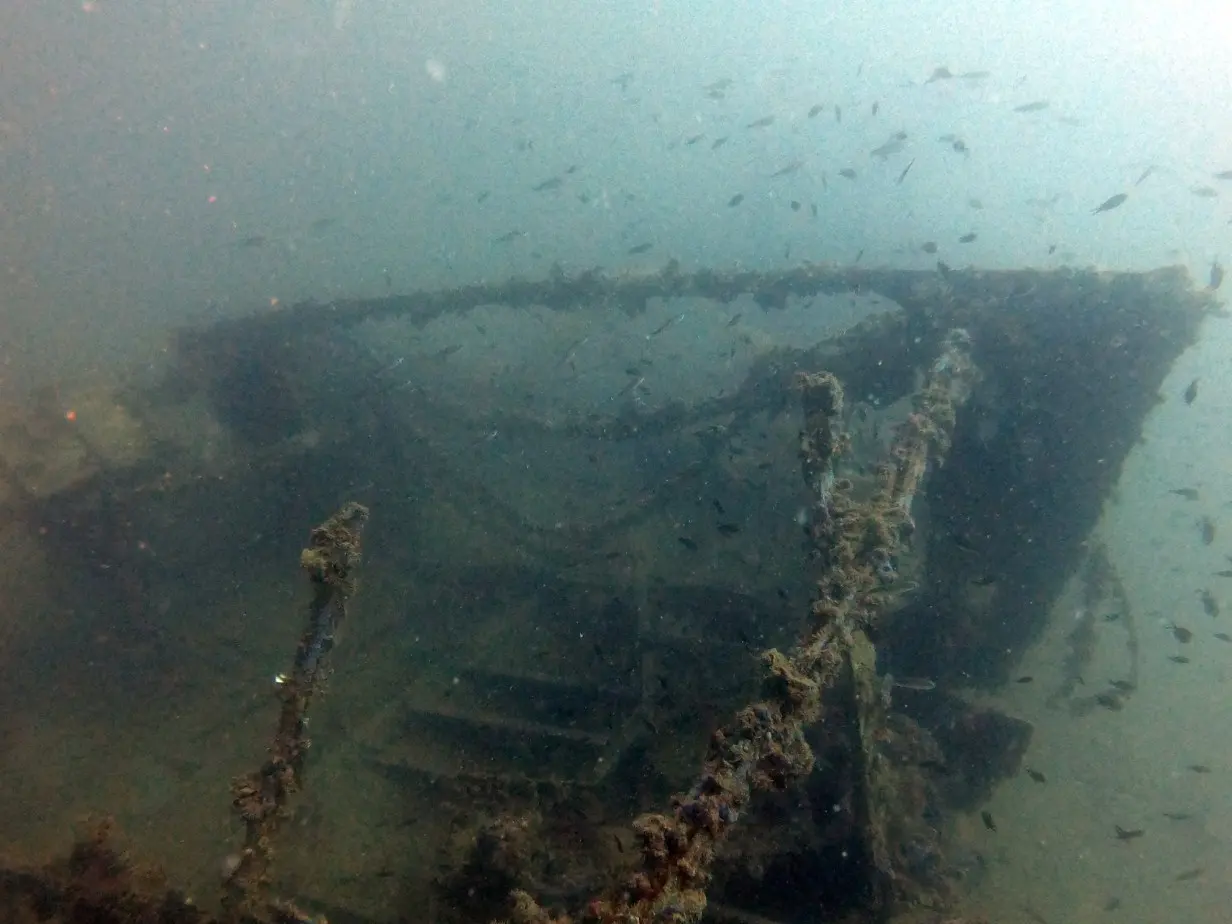
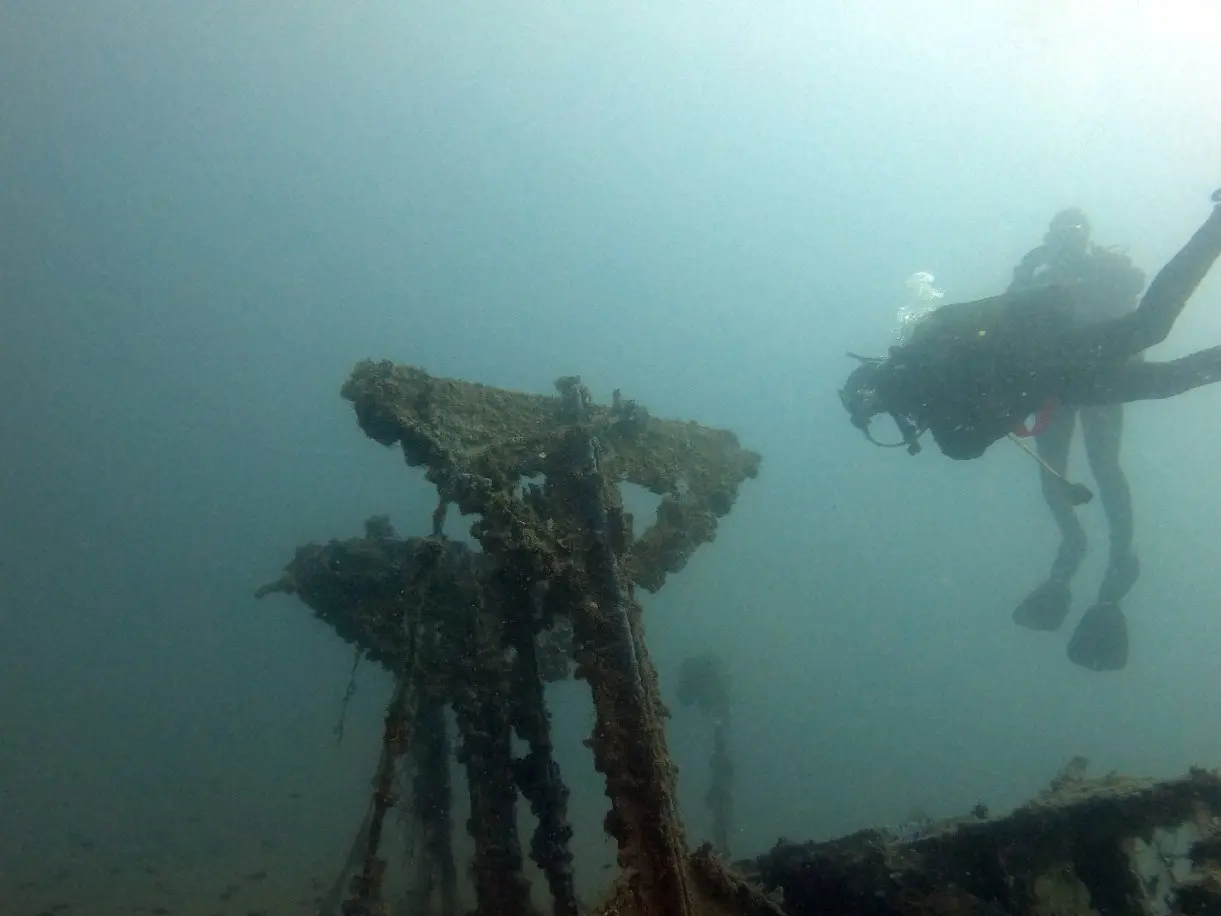
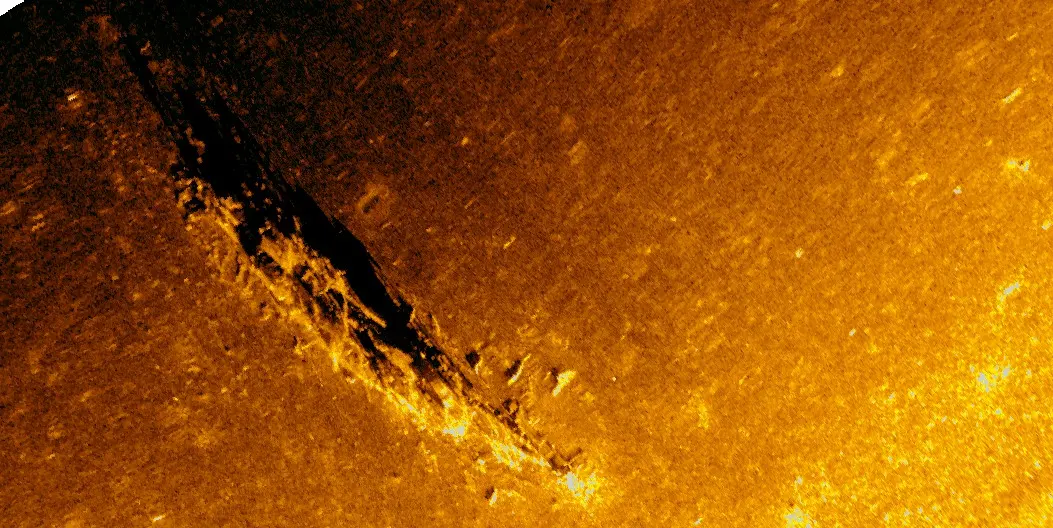
The better-known wreck associated with the Higgins type lies near Špiljice and Rose at an approximate depth of 30–35 metres. Published diving information gives its surviving dimensions as about 23 metres in length and six metres in width.
Because these boats were constructed primarily from wood, their preservation differs greatly from that of steel warships. Much of the wooden hull may have deteriorated, leaving heavier machinery, propeller shafts, metal fittings, weapons mounts and other structural elements exposed on the seabed.
The condition and exact location of the second wreck near Bijela require further archaeological verification. If the oral account is correct, the two sites should be studied together because they resulted from the same disposal operation and represent the same chapter of Yugoslav naval history.
An overlooked heritage
These wrecks do not commemorate a dramatic naval battle or a wartime tragedy. Their importance comes instead from the history of the vessels themselves: designed in the United States during the Second World War, adopted and reproduced by socialist Yugoslavia, and eventually abandoned when technological change made them obsolete.
They also preserve evidence of Montenegro’s role within the Yugoslav naval system. Kotor, Tivat and Bijela provided operational bases, repair facilities and shipyard infrastructure that supported the fleet for decades. Higgins-type boats were based in both Kotor and the Tivat Arsenal during their service.
The wrecks therefore connect international design, Cold War politics, Yugoslav industrial development and the maritime history of the Bay of Kotor.
Diving the Higgins wreck
At approximately 30–35 metres, the wreck near Rose is a deep recreational dive intended for suitably qualified and experienced divers. Its low profile and the deterioration of its wooden hull can make the site difficult to recognize, particularly when visibility is limited.
Divers should expect fragmented structural remains rather than a complete boat. Engines and other heavy components may be more visible than the hull itself, while smaller objects can be concealed by sand, marine growth or collapsed material.
Careful buoyancy is essential. Contact with the seabed can disturb sediment and reduce visibility, while fishing lines, corroded metal and unstable remains present additional hazards. Nothing should be moved or removed, since even a small fitting may help identify the individual vessel.
Research and protection
A systematic archaeological survey should document both reported wrecks and establish whether they belong to the same Higgins-derived series. Photogrammetry could record the distribution of surviving components and produce detailed 3D models without disturbing the sites.
Research should compare the wreckage with American Higgins construction plans, Yugoslav-built variants and naval records relating to the boats stationed in Kotor and Tivat. Particular attention should be given to engine foundations, shaft arrangements, weapons fittings and surviving serial numbers.
As the boats sank only in the 1970s, they have not yet remained underwater for the 100-year period used in the 2001 UNESCO Convention’s definition of underwater cultural heritage. Their younger age, however, does not diminish their historical value or prevent their recognition and protection under national heritage measures.
 SMS HuszárDestroyer · Kalafat Reef
 Cape Kabala wreckShipwreck · Cape Kabala
 Ancient shipwrecksArchaeology · Montenegrin coast
 Patrol Boat PBR-512Vessel · Žanjice Bay