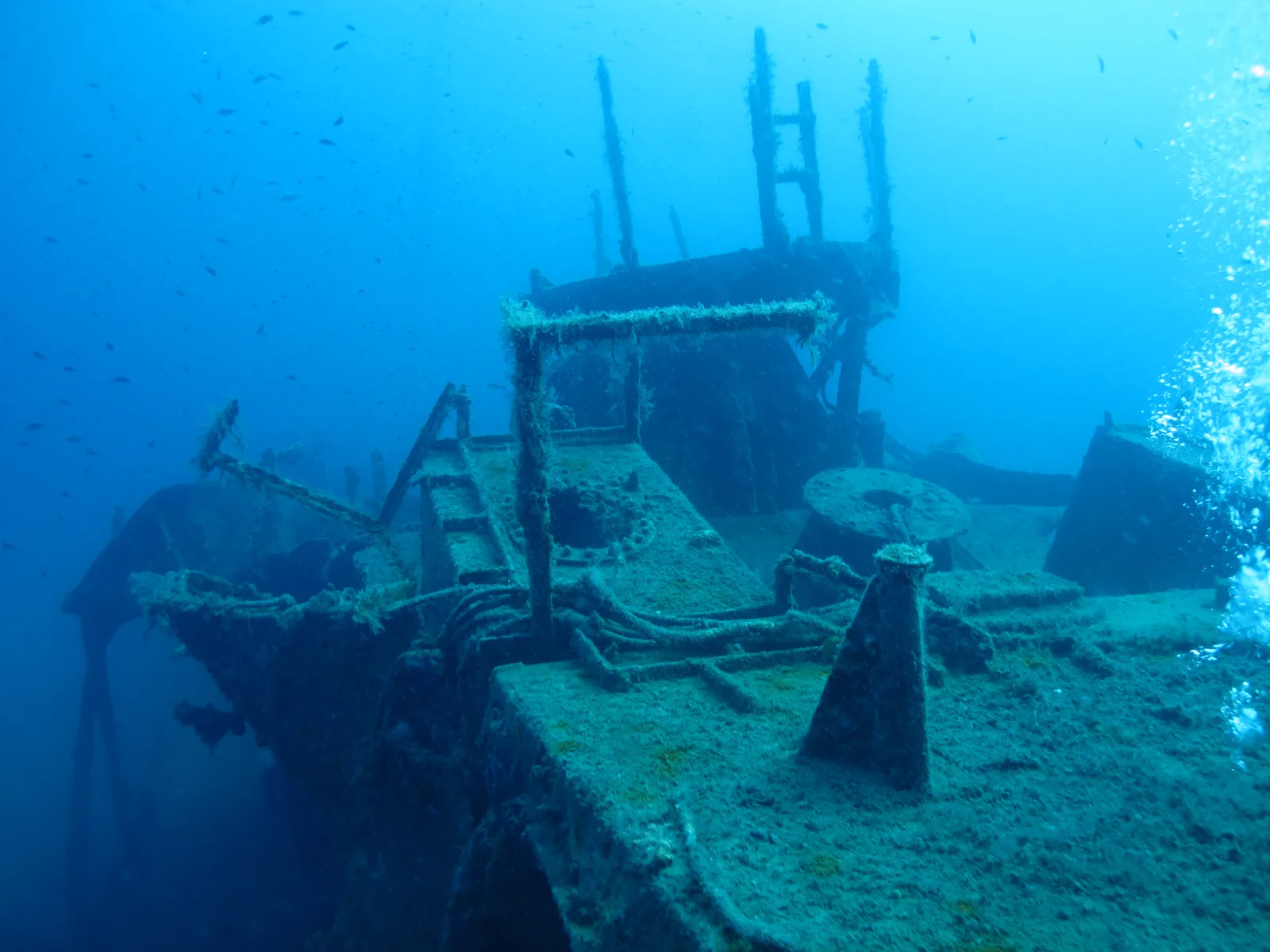
Scattered around the Kalafat Reef—locally known as Albaneze—are the surviving remains of SMS Huszár, the prototype of Austria-Hungary’s first domestically reproduced class of modern destroyers. Lost in a peacetime navigation accident in December 1908, the vessel shares this complex underwater site with the later wreck of the cargo steamship Srebreno.
Destroyer / Kalafat Reef
SMS Huszár
Scattered around the Kalafat Reef—locally known as Albaneze—are the surviving remains of SMS Huszár, the prototype of Austria-Hungary’s first domestically reproduced…
From the collection
Closer to the evidence.
The research narrative
A deeper reading.
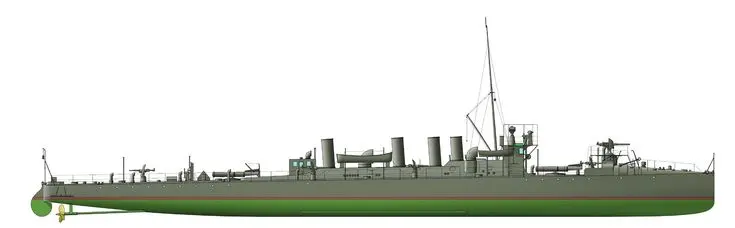
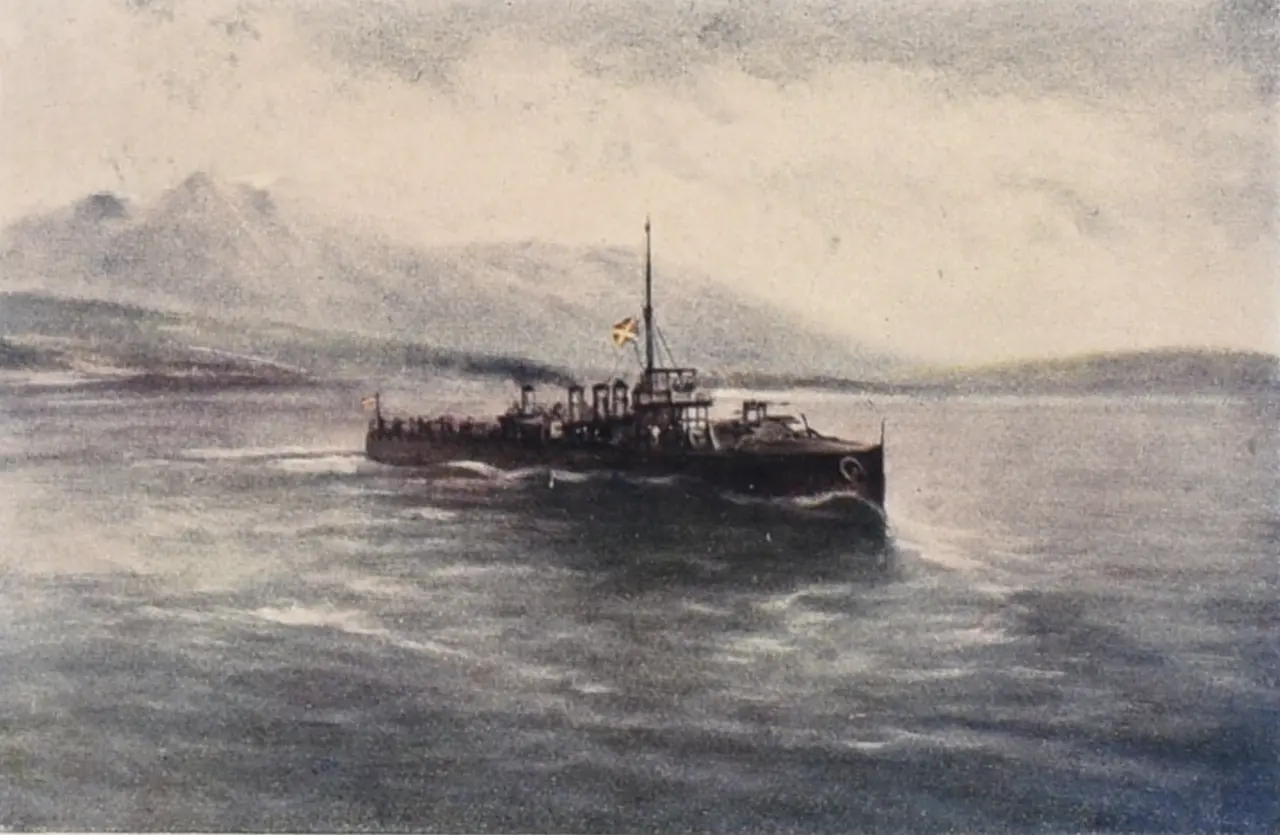
Austro-Hungarian Destroyer SMS Huszár
Scattered around the Kalafat Reef—locally known as Albaneze—are the surviving remains of SMS Huszár, the prototype of Austria-Hungary’s first domestically reproduced class of modern destroyers. Lost in a peacetime navigation accident in December 1908, the vessel shares this complex underwater site with the later wreck of the cargo steamship Srebreno.
A new naval age
At the end of the nineteenth century, the development of self-propelled torpedoes transformed naval warfare. Navies initially built small, fast torpedo boats to threaten battleships, then introduced larger “torpedo-boat destroyers” capable of intercepting them and protecting the battle fleet.
British shipyards led many of these developments. Yarrow & Company of Poplar, London, was an internationally important builder of torpedo craft and had produced some of the Royal Navy’s earliest destroyers.
Seeking to modernize its fleet and respond to the growing strength of the Italian Navy, Austria-Hungary ordered a prototype destroyer from Yarrow in 1904. The resulting vessel became SMS Huszár, named after the hussars—the light-cavalry troops closely associated with Hungarian military tradition.
Prototype of a class
Huszár was built at Yarrow’s shipyard in London. Its keel was laid in September 1904, it was launched on 31 March 1905 and it entered Austro-Hungarian naval service on 19 September of that year.
Contrary to some accounts, the prototype was not built by Ganz-Danubius in Rijeka. Once the British design had demonstrated its potential, Austria-Hungary commissioned a series of related vessels from domestic shipyards, including Stabilimento Tecnico Triestino and Ganz-Danubius at Fiume, present-day Rijeka.
Including the replacement vessel constructed after the loss of the original Huszár, the class eventually comprised 14 destroyers. Their construction demonstrated Austria-Hungary’s determination to reduce dependence on foreign shipbuilders while expanding its naval-industrial capacity.
Design and armament
The destroyer measured approximately 68.4 metres overall and about 67 metres at the waterline. Its narrow hull, powerful steam machinery and light construction were designed to combine speed with the ability to operate throughout the Adriatic.
Four Yarrow water-tube boilers supplied steam to two triple-expansion engines driving two propeller shafts. The design speed is generally given as approximately 28.5 knots, although some contemporary and later accounts report that the prototype approached 30 knots during trials.
The original armament combined a principal 66-millimetre gun with several smaller quick-firing guns and two 450-millimetre torpedo tubes. This allowed Huszár to defend larger vessels against torpedo boats while also launching its own torpedo attacks.
A routine voyage
On the morning of 3 December 1908, Huszár departed the Bay of Kotor for a routine voyage along the Montenegrin coast. The destroyer was commanded by Lieutenant Wilhelm Renner.
After passing Cape Trašte, the vessel turned northwest toward Budva. Navigation was subsequently entrusted to Lieutenant Becker, who reportedly made a small alteration to the ship’s course without adequately informing the commander.
Although the weather was relatively calm, light haze and the low profile of the offshore reef made precise navigation difficult. Travelling at high speed, Huszár approached the submerged Kalafat Reef shortly before 08:00.
Grounded on Kalafat
The destroyer struck the reef at speed and was driven firmly onto the rock. The impact damaged approximately 20 metres of hull plating and opened the vessel beneath or near the forward boiler room, allowing seawater to flood the bow.
The accident occurred off Donji Grbalj, northwest of Cape Žukovac—not off Albania, as some international wreck lists have incorrectly reported. Kalafat is also locally known as Albaneze or Seka Albaneze, which may have contributed to confusion over the location.
The crew survived the initial grounding, and the ship appeared stable enough to make salvage possible. Assistance was immediately requested from the Bay of Kotor.
The rescue attempt
The salvage vessel Gigant, three torpedo boats and a tug were among the first craft sent to the reef. Additional vessels and personnel joined the operation over the following days.
To reduce the destroyer’s weight, the crew removed ammunition, weapons, fuel, stores and other equipment. Steel cables were then attached between Huszár and the armoured cruiser SMS Sankt Georg, which attempted to pull the stranded vessel into deeper water.
The cables failed under the strain, while deteriorating weather made further towing increasingly dangerous. As waves drove the hull against the rock, the damaged structure weakened and the stern began settling into the sea.
Loss of the ship
On 12 December 1908, nine days after the grounding, Huszár slipped from the reef and disappeared beneath the waves. The dates of the accident and final sinking are confirmed by surviving summaries of the vessel’s service history.
Once the storm subsided, naval divers examined the wreck at a depth of approximately 15 metres. The destroyer had broken into three principal sections, making recovery of the complete hull impossible.
The loss of Huszár was therefore caused by a navigational error and grounding, followed by structural failure during severe weather—not by enemy action. It occurred almost six years before the beginning of the First World War.
Salvaging the wreck
The Austro-Hungarian Navy organized an extensive salvage operation that continued for months. Divers recovered boilers, machinery, fuel tanks, propellers, guns and sections of the stern, while some deck equipment was washed ashore.
The extent of this work explains why relatively little of the original destroyer remains in recognizable form today. Historical accounts confirm that machinery, armament and other reusable components were removed from the wreck.
Salvage was motivated by more than the material value of the equipment. Austria-Hungary intended to use important recovered components in the construction of a replacement vessel.
Responsibility for the accident
The grounding prompted an official naval investigation. Commander Renner and Lieutenant Becker were removed from duty and held while their responsibility for the accident was examined.
Later accounts state that Renner was sentenced to four months’ imprisonment for failing to observe navigational regulations, while Becker received six months for altering the course that led the ship onto the reef. Both were reportedly dismissed from naval service.
These precise judicial details should be verified against Austro-Hungarian court-martial records before being presented as definitive archival facts. What is clear is that the Navy attributed the loss to failures of navigation and command rather than to an unknown reef or unavoidable weather conditions.
The second Huszár
Rather than removing the name from the fleet, the Austro-Hungarian Navy ordered a replacement. The second SMS Huszár was built at the naval arsenal in Pola, present-day Pula, using machinery, weapons and other equipment recovered from the original wreck.
Construction began in 1909, the replacement was launched in December 1910 and it entered service in 1911. Although sometimes called Huszár II to distinguish it from the lost prototype, its official name remained SMS Huszár.
The second vessel served during the First World War. The recovered components of the original ship therefore continued their operational life long after its hull had been broken apart at Kalafat.
The site today
The surviving remains lie in shallow water around the Kalafat Reef at a depth of approximately 15 metres. They do not form a complete, immediately recognizable wreck because the destroyer was broken by storms and extensively dismantled during the Austro-Hungarian salvage operation.
Identification is further complicated by the remains of Srebreno, a much larger Yugoslav cargo steamship that grounded on the same reef on 17 December 1940. Srebreno subsequently broke apart during the night of 2–3 January 1941, scattering additional steelwork around the site.
The reef consequently preserves an overlapping archaeological landscape created by two shipwrecks from different periods. Individual fragments cannot always be attributed securely to Huszár or Srebreno without detailed recording and comparison with construction plans.
Diving Kalafat
Kalafat should be understood as an underwater archaeological landscape rather than a conventional intact wreck-diving site. Divers may encounter hull plating, machinery and other metal components, but the relationship between individual objects and the two ships is not always visually obvious.
Although the depth is moderate, the exposed reef can be affected by waves, surge, currents and rapidly changing visibility. Sharp metal, unstable wreckage and fishing lines create additional hazards, particularly in rough weather.
Divers should not move objects in an attempt to identify them. The position of every fragment can provide evidence about the destruction, salvage and gradual dispersal of both wrecks.
Research and protection
A systematic archaeological survey could distinguish surviving elements of the destroyer from those of the later steamship. Differences in plate thickness, riveting, machinery, hull curvature and construction methods may help specialists assign individual components to the correct vessel.
Photogrammetric recording would allow researchers to create a precise 3D map of the entire reef and document how the remains are distributed. Historical photographs, ship plans and Austro-Hungarian salvage reports could then be compared with the underwater evidence.
Because Huszár has remained underwater for more than a century, its remains fall within the chronological definition of underwater cultural heritage established by the 2001 UNESCO Convention. Responsible access, documentation and preservation in situ should therefore guide any future research or tourism development.
Commissioned: 19 September 1905
Waterline length: approximately 67.1 metres
Propulsion: Four Yarrow boilers, two triple-expansion steam engines and two propeller shafts
Maximum speed: approximately 28.5 knots; some accounts report nearly 30 knots during trials
Original armament: One 66-millimetre gun, smaller quick-firing guns and two 450-millimetre torpedo tubes
 Cape Kabala wreckShipwreck · Cape Kabala
 Ancient shipwrecksArchaeology · Montenegrin coast
 Unconfirmed wrecksShipwreck · Montenegrin coast
 Patrol Boat PBR-512Vessel · Žanjice Bay