East of Sveti Nikola Island, near Budva, lie the fragmented remains of Litorio, an Italian motor sailing vessel lost during the Second World War. It struck a naval mine on 4 February 1943, killing two of its five crew members; the other three survived through the intervention of a local family.
Motor sailer / Near Budva
Litorio
East of Sveti Nikola Island, near Budva, lie the fragmented remains of Litorio, an Italian motor sailing vessel lost during the Second World War.
From the collection
Closer to the evidence.
The research narrative
A deeper reading.
Motor Sailing Vessel Litorio
East of Sveti Nikola Island, near Budva, lie the fragmented remains of Litorio, an Italian motor sailing vessel lost during the Second World War. According to the supplied historical account, it struck a naval mine on 4 February 1943, killing two of its five crew members; the other three survived through the intervention of a local family.
Built for Adriatic trade
Litorio was reportedly built in 1937 and registered at Trieste under number 95. Its owner was Domenico Ravalico of Piran, a port that belonged to Italy at the time and is now part of Slovenia.
The vessel was a trabaccolo, known locally as a trabakul: a traditional Adriatic cargo vessel with a wooden hull and sailing rig. Its engine supplemented the sails, allowing it to maintain progress when winds were unfavourable and manoeuvre more effectively in coastal waters.
The supplied account gives its size as 94 tonnes, but does not establish whether this represents displacement or registered tonnage. The figure should therefore remain provisional until checked against an original registry entry.
Wartime service
Small coastal vessels played an important supporting role during the Second World War. Their ability to serve modest harbours and carry goods along established coastal routes made them useful to military transport networks.
According to the supplied record, the Italian Royal Navy requisitioned Litorio as an auxiliary vessel from 20 November 1940 to 27 January 1941. During that period, it carried the designation V174.
This temporary service should not be confused with permanent commissioning as a warship. The record provided does not establish that Litorio remained a naval auxiliary when it sank more than two years later.
The final voyage
On 4 February 1943, Litorio was sailing from Venice toward Durrës, then commonly known by its Italian name, Durazzo. This route connected the northern Adriatic with Albania, which had been occupied by Italy since 1939.
Local testimony describes a strong bora blowing along the Budva coast that morning. The vessel was travelling close to shore, towing a small boat, with a lookout stationed at the bow because the surrounding waters were known to contain mines.
At approximately 09:00, near Sveti Nikola Island, an explosion destroyed the vessel. The account attributes the loss to a naval mine between the island and Sveti Stefan.
Explosion and rescue
The mine explosion broke Litorio into several sections. Of the five people reportedly aboard, one disappeared with the vessel and another was found dead on the surface.
The three survivors were rescued by Ivo Mitrović and his sons Stanko and Blažo. According to local testimony, the family was travelling by boat to property on Sveti Nikola Island, where they kept livestock and regularly visited a shepherd.
Their presence placed them close enough to respond to the disaster. A motorboat from Budva subsequently arrived and took the survivors ashore.
A lingering reminder
Witnesses reportedly recalled that one mast remained partly visible after the sinking. Detached from the hull but still connected by rigging, it moved with the waves above the submerged wreck.
This detail belongs to the local memory of the disaster rather than to a verified archaeological reconstruction. It nevertheless preserves a striking image of the aftermath: a fragment of the vessel marking the place where two lives had been lost.
The wreck today
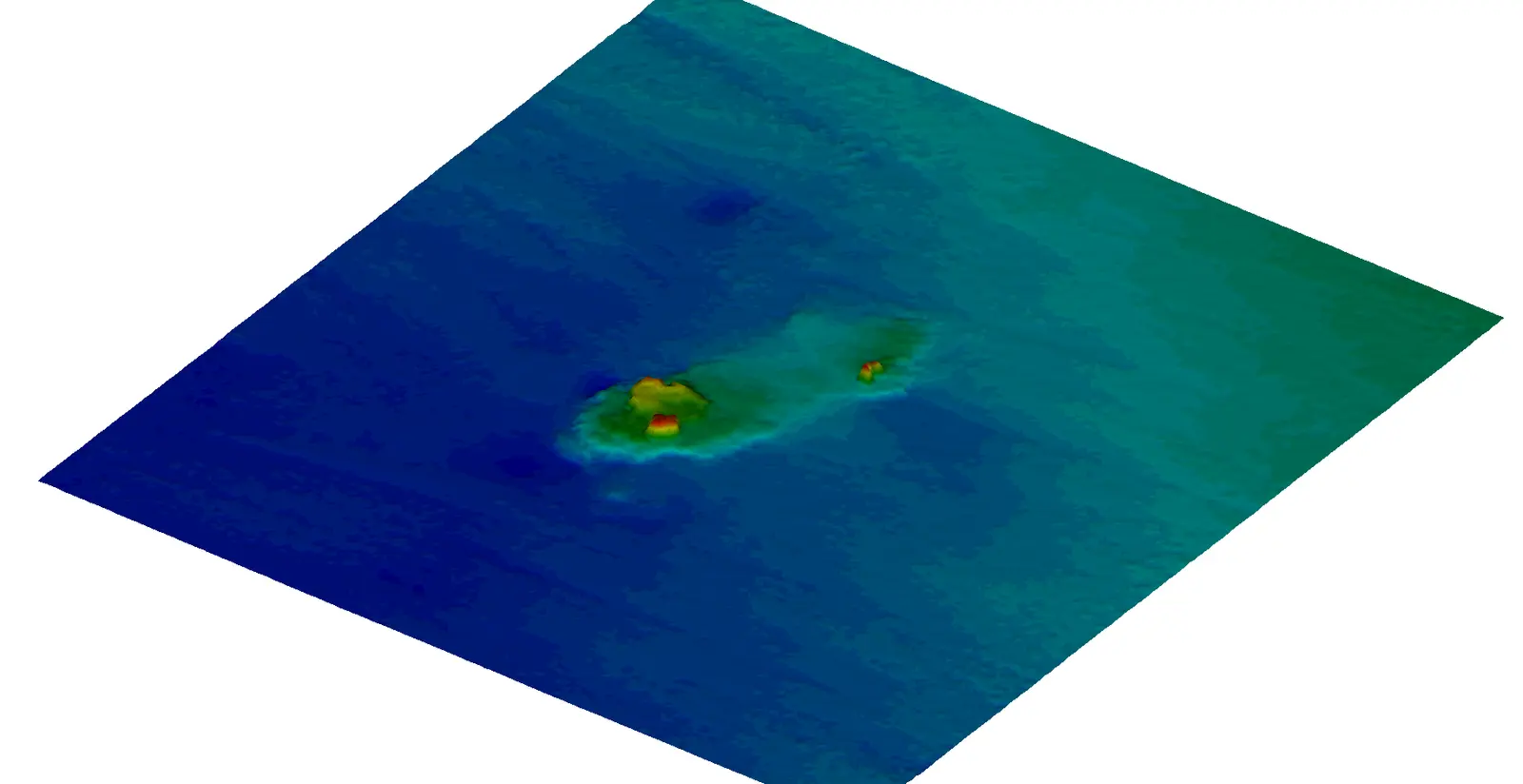
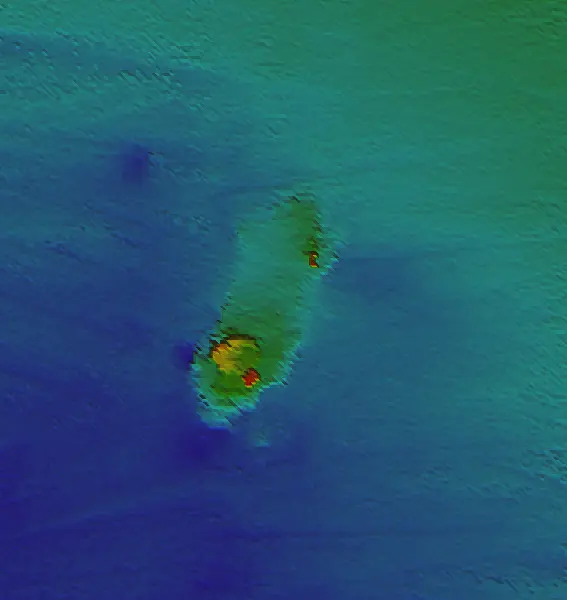
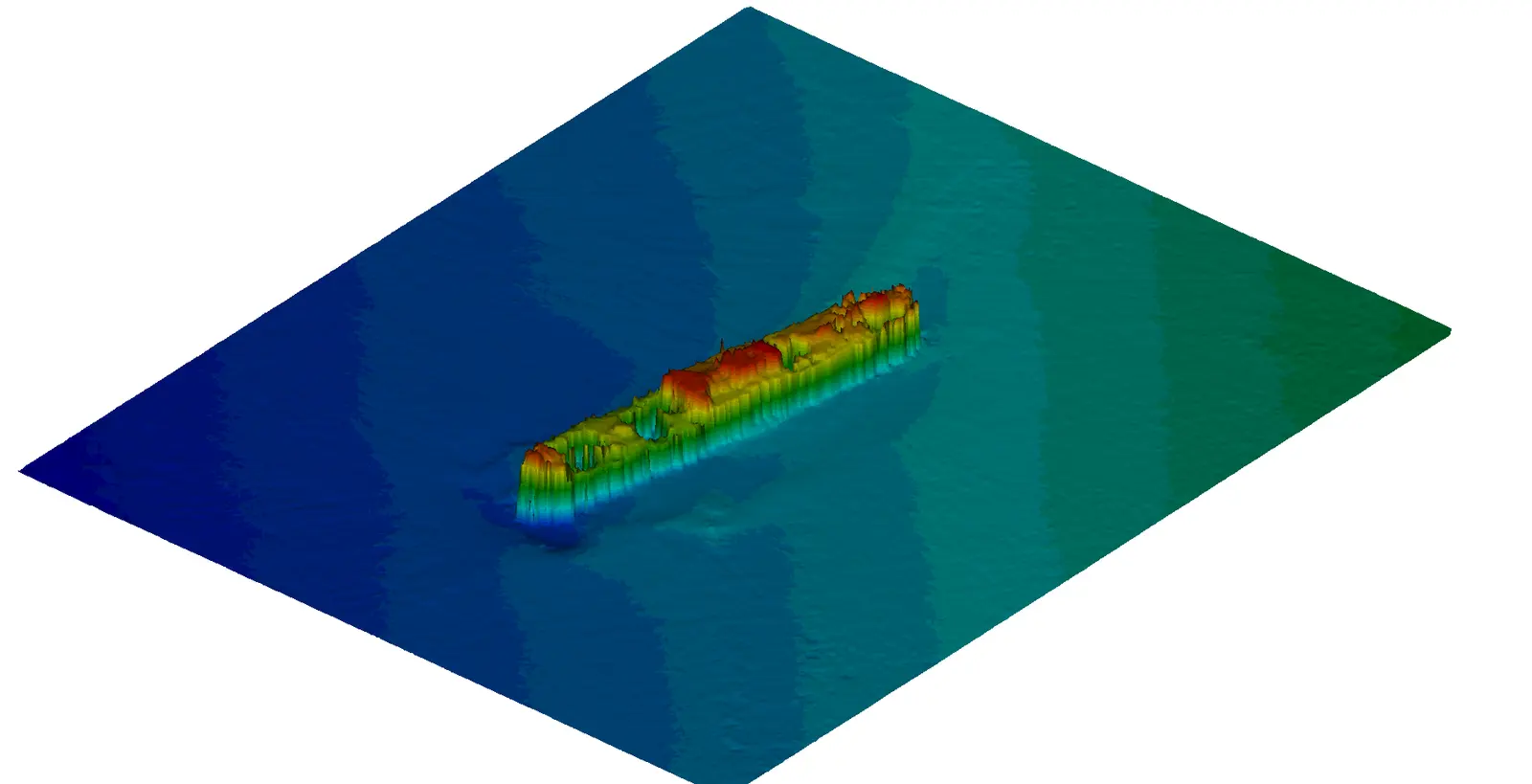
The supplied diving description places the wreck east of the lighthouse on Sveti Nikola Island, on a sandy and muddy seabed at approximately 38 metres.
The explosion fragmented the vessel, and the wooden structure subsequently deteriorated. Rather than an intact hull, the site preserves a dispersed collection of machinery, fittings and structural remains.
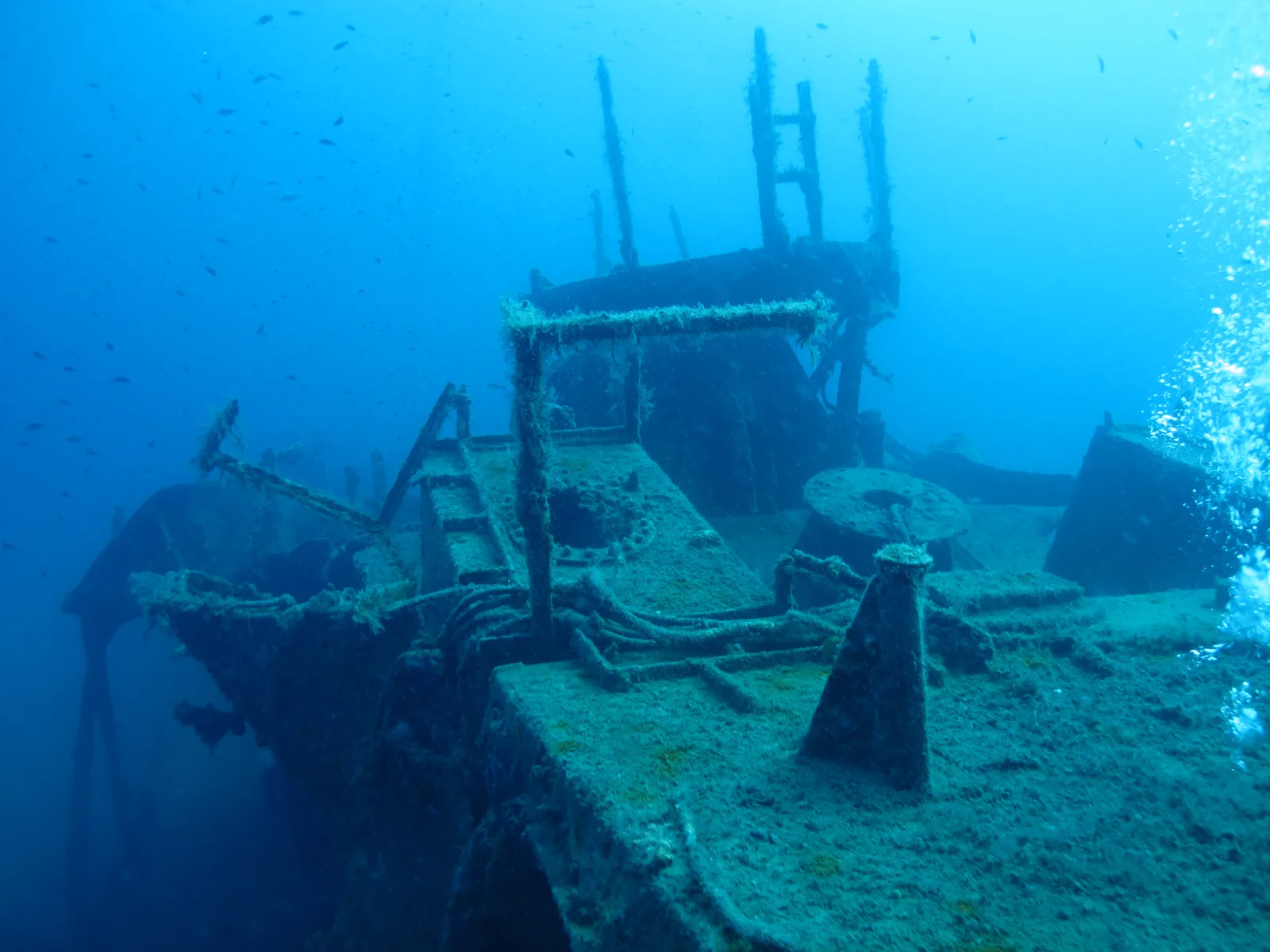
Reported features include mast fragments, rigging cables, cargo-handling equipment, an anchor chain and a nearby windlass. The anchor itself is described as partly buried in sediment.
Machinery and equipment
The engine and its large flywheel are among the most recognizable components. Remains of the rudder and steering mechanism also survive, helping visitors understand how the vessel was powered and controlled.
Several deformed metal barrels have been reported among the wreckage, although their original contents and the reasons for their deformation are not established. A separate cylinder fitted with a valve has been interpreted as a possible compressed-air reservoir for starting the engine; this remains a technical interpretation rather than a confirmed identification.
Smaller metal fittings preserve evidence of the vessel’s wooden construction and sailing equipment. Their positions are important: even a modest fastening or fragment of rigging can help reconstruct the layout and breakup of the vessel.
Diving Litorio
At a reported depth of 38 metres, the site requires divers with appropriate deep-diving qualifications and experience. Visits should be planned with qualified local operators, taking account of breathing-gas reserves, visibility, weather and current conditions.
The scattered remains can make orientation difficult, while fine sediment, cables and corroded metal create potential hazards. The supplied account also highlights heavy recreational boat and personal-watercraft traffic, making surface support and clearly marked diving operations particularly important.
Divers should observe without touching, moving or collecting objects. Controlled buoyancy protects both visibility and the archaeological context.
Research and remembrance
Litorio preserves the history of a working Adriatic vessel drawn into the transport demands and dangers of wartime. Its story also recalls the civilian response to disaster: a father and his two sons happened to be nearby and rescued three shipwrecked sailors.
Future research should combine Italian shipping records, naval requisition lists and local testimony with a systematic underwater survey. This could establish the vessel’s precise identity, clarify its cargo and document the surviving structure.
The site should be approached as an archaeological resource and a place of remembrance. Photography, photogrammetry and digital interpretation offer ways to share its history without disturbing the remains.
 CetinjeSteamship · Tivat Bay
 GoritiaSteamship · Near Ulcinj
 Maria PompeiSteamship · Cape Platamuni
 Patrol Boat PBR-512Vessel · Žanjice Bay