The French submarine Monge disappeared off the Montenegrin coast during one of the most dramatic naval operations in the Adriatic campaign of the First World War. Its final moments became inseparable from the story of its commander, Lieutenant Roland Morillot, who saved his crew before going down with his vessel.
Submarine / Montenegrin coast
Monge
The French submarine Monge disappeared off the Montenegrin coast during one of the most dramatic naval operations in the Adriatic campaign of the First World War.
From the collection
Closer to the evidence.
The research narrative
A deeper reading.
French Submarine Monge
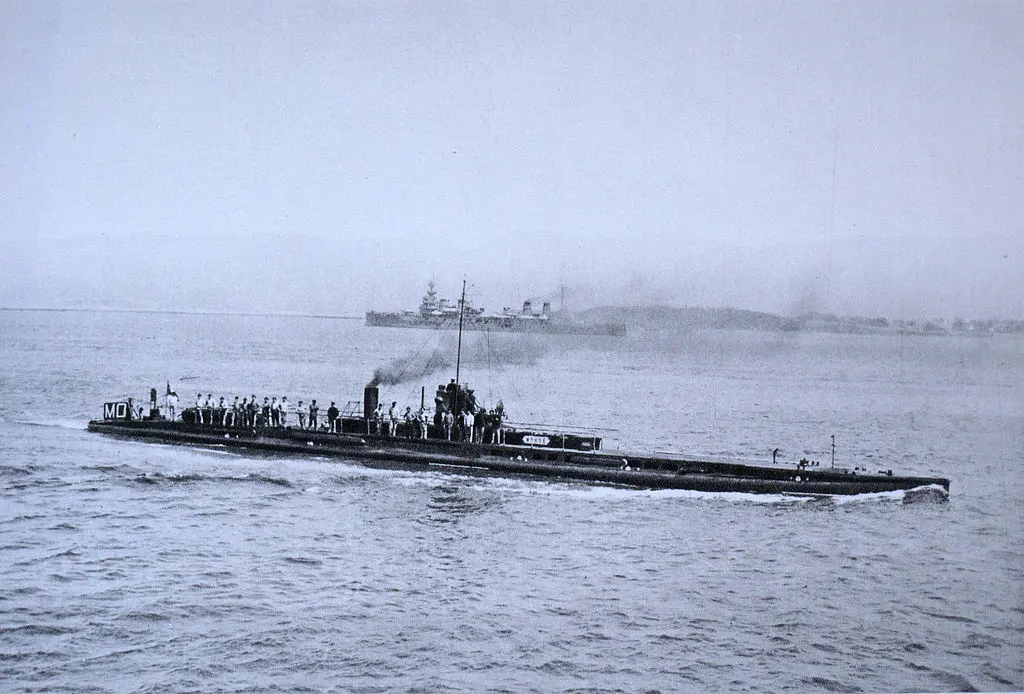
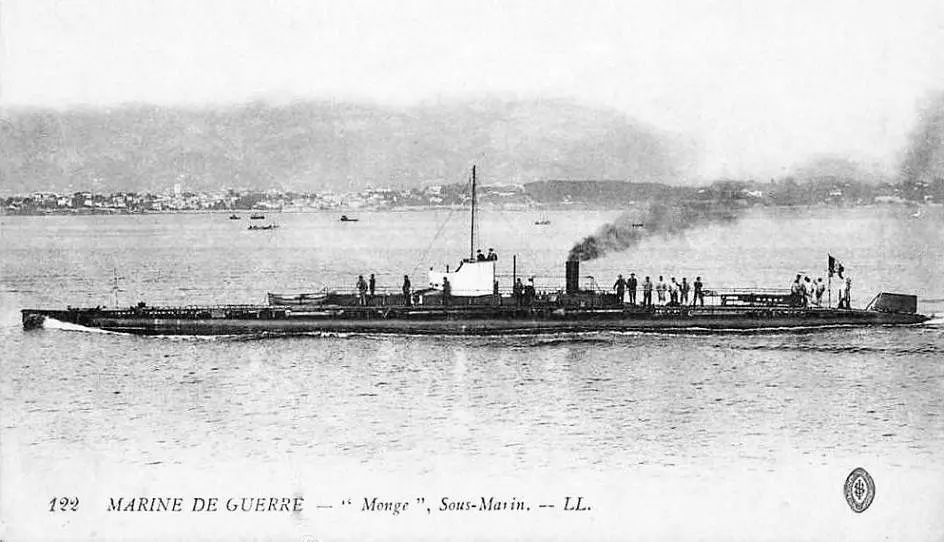
The French submarine Monge disappeared off the Montenegrin coast during one of the most dramatic naval operations in the Adriatic campaign of the First World War. Its final moments became inseparable from the story of its commander, Lieutenant Roland Morillot, who saved his crew before going down with his vessel.
A pioneering submarine
Monge, naval designation Q67, belonged to the French Navy’s Pluviôse class—a group of 18 submarines developed under the 1905 naval programme. Designed by engineer Maxime Laubeuf, these double-hulled vessels represented an important stage in the development of the modern ocean-going submarine.
The submarine was built at the Toulon Naval Arsenal, launched on 31 December 1908 and commissioned on 2 August 1910. It was therefore launched, rather than placed in active service, in December 1908.
At approximately 51 metres long, Monge displaced about 404 tonnes on the surface and 553 tonnes when submerged. Its steam engines provided propulsion on the surface, while electric motors powered it underwater—an arrangement soon superseded by the safer and more practical combination of diesel and electric propulsion.
Named after Gaspard Monge
The submarine was named after Gaspard Monge, the influential French mathematician associated with the development of descriptive and differential geometry. During the French Revolution, Monge briefly served as Minister of the Navy and Colonies, from August 1792 until April 1793, and later helped establish the institution that became the École Polytechnique.
The name therefore connected the vessel with both French scientific achievement and naval history—a fitting association for a technologically innovative submarine.
The Adriatic campaign
At the outbreak of the First World War, Monge served with the French Mediterranean Fleet. It was later based at Brindisi in southern Italy and assigned to patrol the Adriatic, where Allied naval forces attempted to blockade the principal Austro-Hungarian bases at Cattaro—present-day Kotor—and Šibenik.
The Austro-Hungarian fleet rarely risked its major warships in open battle. Allied submarines therefore operated near the entrances to its naval bases, observing ship movements and waiting for opportunities to attack vessels as they entered or left port.
Monge’s sister submarine Fresnel served in the same theatre. On 5 December 1915, Fresnel ran aground near the mouth of the Bojana River while pursued by Austro-Hungarian naval vessels and an aircraft; its crew survived and was taken prisoner.
The Durazzo operation
Late on 28 December 1915, the Austro-Hungarian cruiser SMS Helgoland and the destroyers Balaton, Csepel, Tátra, Lika and Triglav departed Cattaro to raid Durazzo, now Durrës in Albania. The operation sought to disrupt Allied activity along the Albanian coast during the evacuation of the retreating Serbian Army.
The Austro-Hungarian force encountered Monge in the early hours of 29 December, before reaching Durazzo. The submarine, commanded by Lieutenant Roland Morillot, had left Brindisi on 27 December and was patrolling south of the entrance to the Bay of Kotor.
Although the loss of Monge occurred during the wider naval operation known as the First Battle of Durazzo, the submarine was not sunk at Durrës itself. The encounter took place farther north, off the Montenegrin coast, as the Austro-Hungarian squadron sailed south from Cattaro.
The final encounter
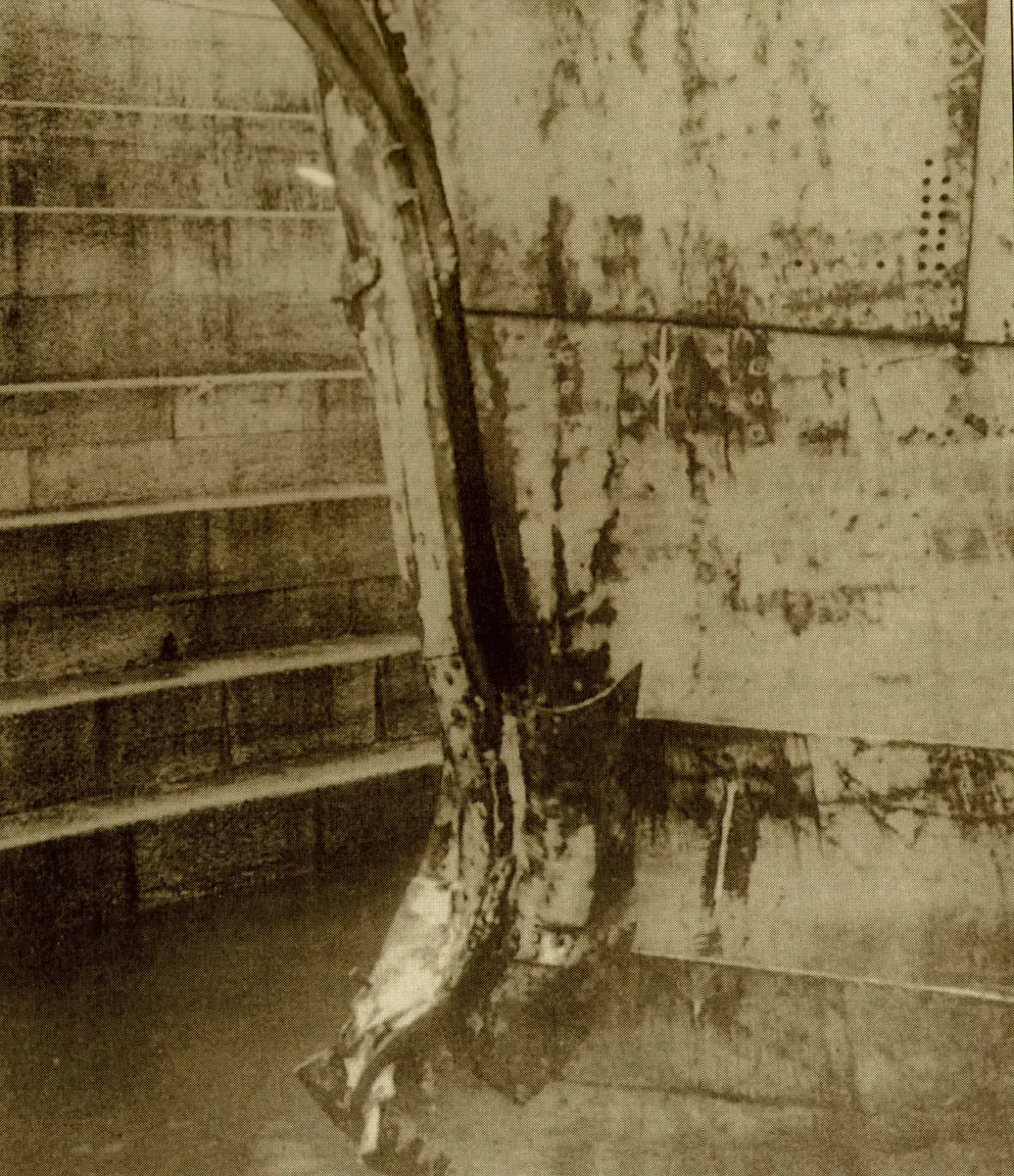
After detecting the approaching warships, Monge submerged and manoeuvred into a position from which it could launch an attack. Before it could reach a safe depth, however, an Austro-Hungarian vessel rammed the submarine and severely damaged its conning tower. Seawater entered the pressure hull, electrical systems failed and the submarine descended to an estimated depth of about 60 metres.
French accounts generally identify SMS Helgoland as the vessel that rammed Monge. Some British and Austro-Hungarian narratives instead attribute the collision to the destroyer Balaton, which certainly opened fire during the encounter. Because the surviving accounts conflict, the identity of the ramming vessel should not be presented as completely settled.
Despite the damage, Morillot and his crew managed to bring the submarine back to the surface by releasing its safety weights and emptying the ballast tanks. Austro-Hungarian vessels illuminated it with searchlights and opened fire, leaving no realistic possibility of escape.
Morillot’s final decision
Morillot ordered the crew to abandon the submarine. Once the men emerged, the Austro-Hungarian ships stopped firing and launched boats to rescue them. The survivors were picked up by boats from Csepel and Balaton and became prisoners of war.
The commander remained aboard to ensure that the damaged submarine could not be captured. According to the best-known French account, he opened a flooding valve and deliberately scuttled Monge, disappearing with the vessel.
Two quartermasters, Albert Goulard and Séraphin Morel, also died during the loss. They were not commissioned officers who deliberately remained with Morillot, as sometimes reported; testimony from a survivor indicates that they had left the submarine but drowned during the evacuation.
Morillot was posthumously awarded the Legion of Honour and Italy’s Gold Medal of Military Valour. The captured German submarine UB-26 was renamed Roland Morillot in his honour; later French submarines also carried his name.
The search for Monge
For more than a century, the precise location of Monge remained unknown. Historical descriptions generally placed its loss “off Cattaro,” but this referred to a broad maritime area outside the Bay of Kotor rather than a precisely recorded position.
In 2021, a French naval mission investigated submerged remains off Montenegro that were considered possible candidates for Monge and Fresnel. The evidence was described cautiously, and neither identification was announced as definitive.
Until diagnostic features are documented and compared with the submarine’s construction plans, Monge’s final resting place must therefore be regarded as unconfirmed.
An underwater memorial
If identified, the wreck would be both an archaeological site and a maritime war grave. Its significance extends beyond the submarine’s construction and military history: it is also the final resting place of three French sailors and a material record of the First World War in the Adriatic.
A possible depth would place the site far beyond ordinary recreational diving limits. Any investigation should be undertaken only by properly authorized archaeological, naval or highly qualified technical-diving teams, using methods that respect its historical importance and commemorative character.
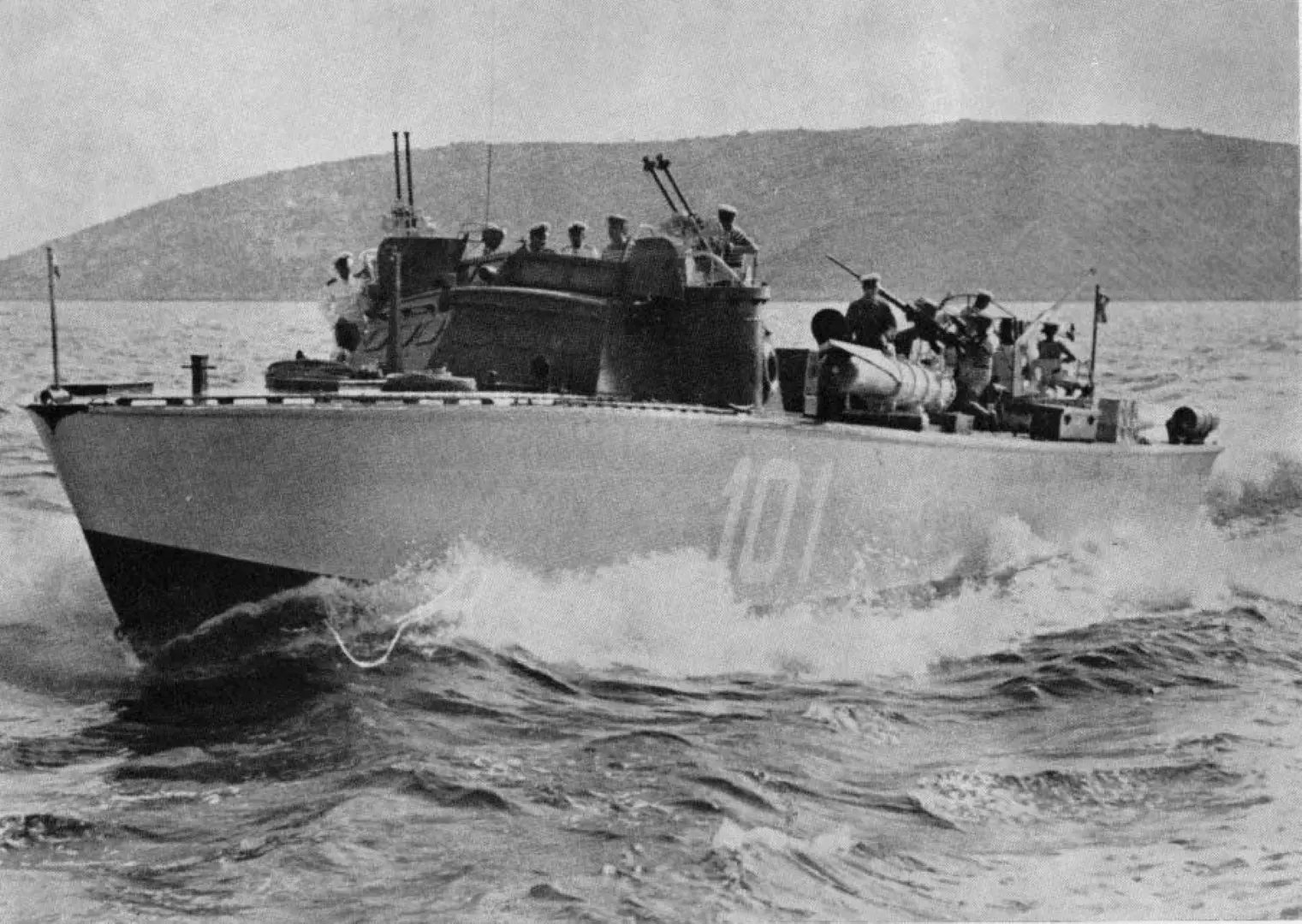 Higgins 78Torpedo boat · Bay of Kotor
 SMS HuszárDestroyer · Kalafat Reef
 Cape Kabala wreckShipwreck · Cape Kabala
 Patrol Boat PBR-512Vessel · Žanjice Bay